


Choosing between wet and dry diets can feel like a debate you’re meant to “win”. In reality, most vets focus less on format and more on whether the diet meets your cat’s needs day after day: complete nutrition, appropriate calories, and a routine you can stick to.
This guide compares canned and pouch foods with kibble in plain language, so you can weigh hydration, cost, dental realities, and convenience—then choose a plan that suits your cat and your household.
Medical note: This article is general information and not a substitute for veterinary advice. Cats with urinary disease, kidney disease, diabetes, obesity, recurrent tummy upset, or any condition requiring prescription nutrition should follow a vet-directed diet—format alone isn’t the deciding factor.
What vets look for first
Many people start with “kibble or wet?” Vets usually start with two basics:
- Is it complete and balanced for your cat’s life stage (kitten, adult, senior)?
- Does it match your cat’s health picture (weight trend, hydration, stool quality, appetite, dental history, activity level, and any diagnosed conditions)?
After that, practicality matters. Your cat’s “best” diet is the one that’s nutritionally sound and can be fed consistently—especially in busy households, multi-cat homes, or during travel.
If you’re comparing options across textures and formats, it can help to browse a curated range of cat food and treats and check calorie information, feeding guides, and ingredients side by side.
Wet food: key benefits and trade-offs
Wet meals are often favoured when hydration is a priority. Many cats have a naturally low thirst drive, and moisture-rich foods can lift total fluid intake without you having to “teach” a cat to drink more—handy in warm Australian summers or in homes where the water bowl is routinely ignored.
Where wet food shines
- Hydration support: Higher moisture content can help boost daily water intake.
- High palatability: Strong aroma and soft texture often suit fussy eaters.
- Meal structure: Serving set meals can make it easier to monitor appetite changes (useful for noticing early issues).
Trade-offs to plan for
- Cost per calorie: It’s often more expensive to meet the same energy needs compared with kibble.
- Storage and mess: Opened tins/pouches need refrigeration and timely use; bowls need more frequent washing.
- Dental expectations: Wet food doesn’t “ruin teeth”, but it also doesn’t clean teeth. Dental care usually requires brushing, targeted products, and regular vet checks.
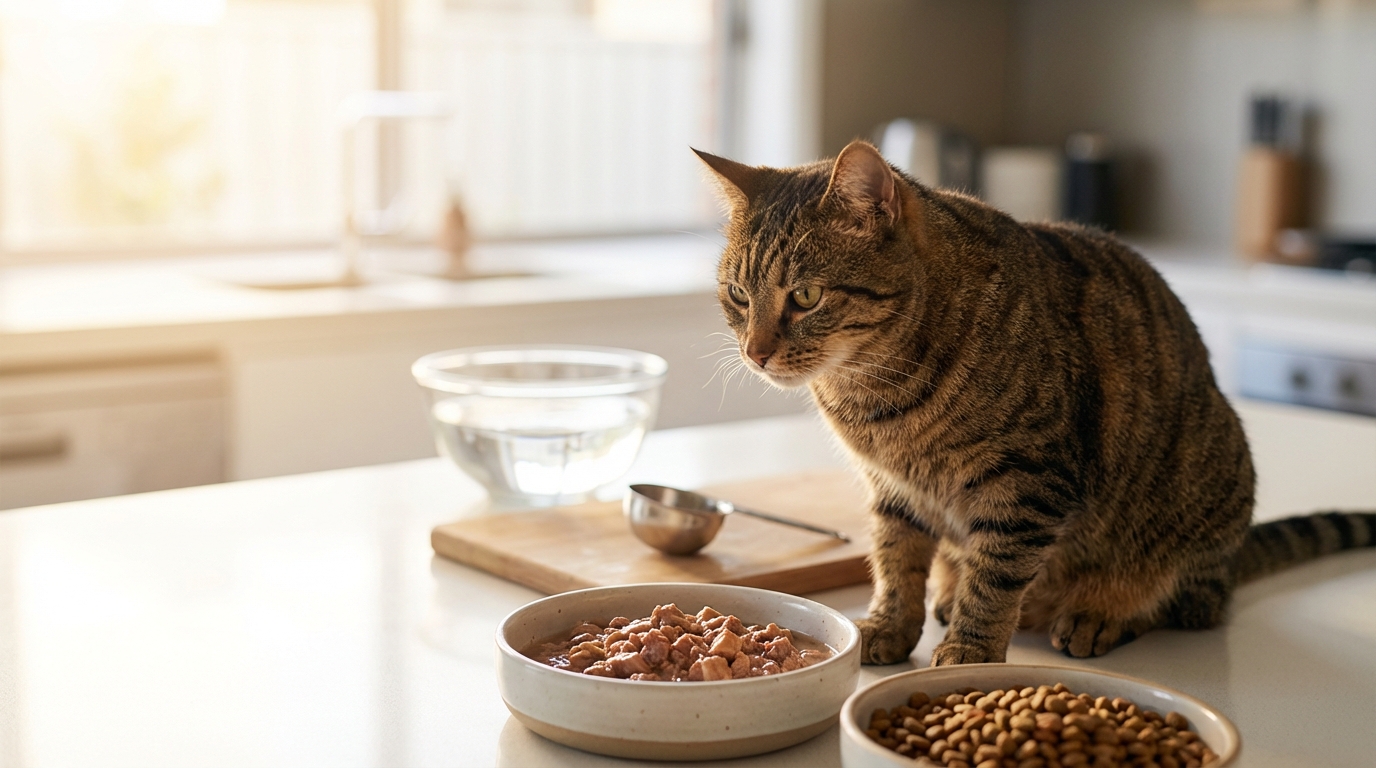
In many households, canned or pouch food becomes the main meal, with a small measured amount of dry used for convenience or enrichment.
Dry food: key benefits and trade-offs
Dry food is popular because it’s easy to store, quick to portion, and often budget-friendly per calorie. It also suits cats that like to graze (as long as the daily amount is measured) and owners who need feeding to be predictable.
Where dry food shines
- Convenience: Easy to measure, handle, and store in an airtight container.
- Cost-effective energy: Often provides more calories per dollar.
- Enrichment: Works well in puzzle feeders to slow fast eaters and add mental stimulation.
Trade-offs to plan for
- Lower moisture: Some cats won’t fully “make up” the water difference by drinking extra.
- Portion creep: Because kibble is energy-dense, small over-scoops can add up quickly.
- Dental myths: Standard kibble doesn’t automatically prevent dental disease; crunch alone usually isn’t enough.
Quick tip: If your cat eats mostly dry, set up a water station in a quiet spot (away from food and litter) and consider adding a small wet meal regularly to support moisture intake—especially during hot weather.
Think of dry as a useful tool for routine and enrichment, but not a substitute for hydration planning or dental care.
How to read labels (so you’re comparing properly)
When you compare formats, the label matters more than the texture. Use these quick checks to avoid apples-to-oranges comparisons:
- Look for “complete and balanced” (or an AAFCO/FEDIAF statement) and confirm it matches your cat’s life stage. Some products are “complementary” or intended for occasional feeding only.
- Check feeding guide and calories (kJ/kcal). Wet food often looks like a larger portion because of water content, but may deliver fewer calories per gram. Dry food is compact and calorie-dense.
- Compare on nutrition, not just ingredients: Ingredient lists can be useful, but they don’t tell you the full story. What matters is the overall nutrient profile and whether it suits your cat.
- Watch extras that can add up: Treats, toppers, and “just a little more” at night can push daily calories higher than intended.
Simple mixed-feeding calorie example (to prevent overfeeding): If your cat’s target is 200 calories/day, you might plan 140 calories from wet food plus 60 calories from dry for a puzzle feeder. If you later increase wet meals because your cat loves them, reduce the dry portion so the daily total stays about the same. (Exact needs vary—use your food’s label and your vet’s guidance, especially if weight is changing.)
So, what’s the best option for your cat?
There isn’t a single “best” format. The right choice depends on what you’re trying to achieve—hydration, weight control, convenience, appetite support—and what your cat will reliably eat.
Wet may suit your cat if:
- Your cat rarely drinks water
- You’re aiming to support hydration
- They’re fussy, older, or prefer softer textures
- You want set meal times to monitor appetite and leftovers
Dry may suit your cat if:
- You need a practical option for a busy schedule or multi-cat household
- Your cat does well with grazing and you can measure the daily amount
- You want to use puzzle feeders for slower eating and enrichment
Mixed feeding is often the most flexible: Many vets are comfortable with a combination, such as wet meals morning and evening with a small, measured amount of kibble during the day for enrichment. The key is tracking total daily calories across both formats so you don’t accidentally double up.
To make your own quick compare-formats shortlist, prioritise a complete-and-balanced claim for the right life stage, realistic feeding cost per day, and whether your cat actually eats it happily. You can explore options across textures and formats in our cat food and treats range.
How to switch foods without tummy upset
Cats can be sensitive to sudden changes. A gradual transition helps reduce the risk of soft stools, vomiting, or your cat refusing the new food.
- Days 1–3: Mix about 25% new food with 75% current food.
- Days 4–6: Move to a 50/50 mix.
- Days 7–9: Mix about 75% new food with 25% current food.
- Day 10+: Fully transition if stools and appetite look normal.
If you’re moving from dry to wet, pay attention to total calories (wet can look like “more food” because of moisture). If you’re moving from wet to dry, ensure water access is excellent and consider keeping some wet meals in the weekly routine—particularly in hot Australian climates.
Frequently Asked Questions
Is wet food always better than dry for cats?
Not always. Wet meals can be excellent for hydration and palatability, while dry can be a consistent and practical way to meet daily nutrition needs. The better option is the one that fits your cat’s health needs and your ability to measure portions reliably.
Can I feed my cat both wet and dry every day?
Yes. Many cats do well with a combination. The main trick is to track total daily calories across both formats and keep the routine consistent so your cat doesn’t overeat.
Does dry food clean a cat’s teeth?
Most regular kibble doesn’t provide meaningful dental cleaning. Oral health usually comes from brushing, targeted dental products, and regular check-ups, rather than relying on crunch alone.
Ready to choose a feeding approach that suits your cat’s routine? Browse Pacific Pet Supplies’ cat food and treats to compare wet, dry, and mixed options—then speak with your vet if you’re managing a medical condition or your cat’s weight is changing.