


Dental chews can be a genuinely useful way to reduce plaque and freshen breath—if you choose an option that suits your dog’s mouth, diet, and chewing style. This buyer’s guide explains what makes an oral-care chew effective, how to shop with safety in mind, and how to use dental treats as part of a simple routine (not a standalone fix).
What makes a dental chew actually work?
The “working” part is mostly mechanical. A good dental chew is designed to rub against the tooth surface while your dog chews, helping disrupt plaque before it hardens into tartar. In other words: contact time plus the right texture usually matters more than a trendy ingredient.
Chews that disappear in seconds rarely do much for oral hygiene. More effective options encourage steady chewing for a few minutes and have some give (rather than shattering into sharp bits or feeling rock-hard).
- Contact time matters: look for a chew that takes time, not a couple of bites.
- Texture matters: resilient, ridged or porous designs can improve tooth contact.
- Fit matters: it should suit your dog’s size so it reaches the back teeth safely.
Think of dental chews as “daily maintenance”. They can support fresher breath and cleaner teeth when used consistently, alongside regular mouth checks and (when possible) tooth brushing.
How to choose the right chew for your dog
Start with your dog’s chewing style. A gentle nibbler needs a different approach than a power chewer who can crush dense items quickly. The right match should encourage calm, controlled chewing—not frantic gulping.
Size is the next filter. Choose a chew that’s large enough that it can’t be swallowed whole, but not so large your dog gives up after a minute. As a general safety rule, bigger is usually better than borderline-small (within the product’s stated size range), because it reduces the chance of whole-piece swallowing.
- Puppies: choose softer options made for younger teeth and avoid very hard chews.
- Small breeds: look for smaller formats that still have ridges and chew resistance.
- Large breeds: opt for larger chews that promote longer chewing time.
- Seniors: consider gentler textures if there’s sensitivity or worn teeth.
If your dog treats chewing like a mission, help them slow down before the chew comes out. A short play session or a sniffy activity can take the edge off. Rotating in safe play options from our dog toys range can also help keep chewing calmer and more controlled.
Ingredients, shapes and label claims to look for
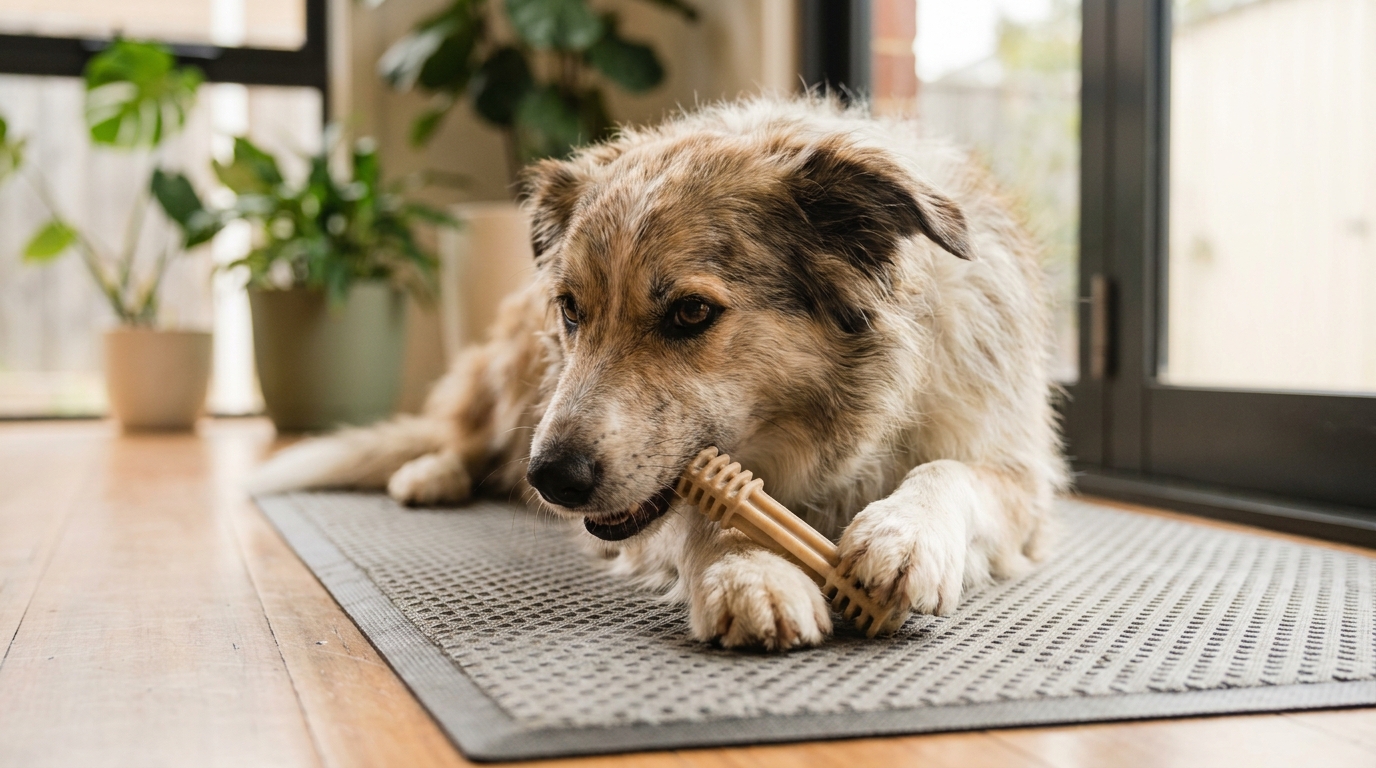
Labels can be confusing, so focus on practical signals you can evaluate at home. Purposeful shapes—ridges, grooves, nubs and porous textures—tend to increase tooth contact and encourage side-to-side chewing.
Ingredients should be easy to understand and appropriate for your dog’s diet. If your dog has known sensitivities, keep the ingredient list short and avoid anything that’s previously caused digestive upset.
- Shape cues: ridged sticks, toothbrush-style designs, or ring shapes that guide chewing along the molars.
- Texture cues: firm and resilient, not brittle or rock-hard.
- Diet cues: check calories per chew—especially if your dog is watching their weight.
- Breath support: mild deodorising ingredients can help, but mechanical cleaning is still the main event.
Avoid assuming “natural” automatically means “safe” or “effective”. Some very hard products may increase the risk of tooth damage, while very soft options may not provide much cleaning action. Aim for a chew that’s designed to be worked on, not cracked like a bone.
Quick tip: If you can’t lightly dent the chew with your fingernail (for softer styles), or it feels like it could crack a tooth (for hard styles), choose a gentler option for safer daily use—especially for seniors and enthusiastic chewers.
How to use dental chews safely (and get better results)
Consistency beats intensity. Most dogs do better with a routine—same time each day, same place—so oral-care chews become a calm, supervised habit rather than a frantic gulp-and-go.
Always supervise chewing, especially with a new product. Remove small end pieces that could be swallowed, and ensure fresh water is available—particularly during warmer Australian months when dogs can dehydrate quickly.
- Match the chew to the moment: many dogs do well after meals, when mouth debris is more likely.
- Rotate for interest: changing shapes can help reach different tooth surfaces.
- Protect tummies: introduce new chews gradually and monitor stools for a few days.
- Support calmer chewing: a quick game can reduce “panic chewing”. Try options from our dog toys collection to help burn off excess energy first.
Safety red flags: stop and reassess if your dog tries to swallow pieces whole, has repeated gagging, vomits, develops diarrhoea, or seems painful when chewing. Avoid very hard chews for dogs prone to fractured teeth, and be mindful of extra calories if weight is a concern. If your dog has a history of pancreatitis, food allergies, inflammatory bowel issues, or is on a vet-prescribed diet, speak with your vet before adding dental treats.
If your dog has persistent bad breath, reddened gums, visible tartar build-up, or bleeding, chews may not be enough on their own. Use them as one tool in a broader dental care plan, and book a vet check if anything looks or smells “off”.
Frequently Asked Questions
How often should I give my dog a dental chew?
Many households use a daily routine, but the right frequency depends on the product’s feeding guidelines and your dog’s overall diet. Dental treats still count as food, so consider the added calories and adjust meals if needed—especially for dogs prone to weight gain.
Are dental chews safe for aggressive chewers?
They can be, but choose the right size and a texture that’s designed to be chewed rather than snapped. Supervision matters: remove small pieces before they become a choking risk, and avoid ultra-hard options if your dog is likely to crunch rather than gnaw.
Do chews replace brushing?
No. Chewing can help reduce plaque through mechanical action, but it won’t clean every surface as thoroughly as brushing can—particularly near the gumline. Many owners use a mix: chews for daily support and brushing when the dog will tolerate it.
What does VOHC approval mean, and should I look for it?
VOHC stands for the Veterinary Oral Health Council. If a dental chew displays a VOHC Seal, it indicates the product has met the organisation’s standards for helping control plaque and/or tartar based on submitted trial data. Not all effective products carry the Seal (some brands don’t apply), but it’s a useful trust signal when you’re comparing options. If you’re unsure what’s appropriate for your dog—especially with existing dental disease, missing teeth, or sensitive gums—ask your vet what criteria to prioritise for your dog’s mouth.
Ready to build a practical dental routine? Start by choosing a chew that matches your dog’s size and chewing strength, then keep it supervised and consistent. For dogs that rush through chews, add a little pre-chew play from our dog toys range to encourage calmer, safer chewing—and always check with your vet if your dog has dental pain, GI issues, or complex dietary needs.