


Dog dementia can start subtly: a familiar face seems unfamiliar, nights become restless, and routines slip. When cognitive changes appear in older pets, small home adjustments can make a big difference to comfort and confidence. Here’s how to recognise senior dog confusion early and support your mate day to day.
Early signs to watch for
Cognitive decline in older dogs often shows up as “something’s a bit off” rather than one dramatic change. You might notice your dog pausing in doorways, getting stuck behind furniture, or staring at walls for longer than usual. Some dogs become clingier; others seem less interested in family interaction.
Common signs linked with dog dementia include:
- Disorientation: wandering aimlessly, getting lost in the backyard, or hesitating on familiar routes.
- Sleep changes: pacing at night, waking frequently, or napping more during the day.
- House training slip-ups: accidents indoors despite access to the yard.
- Changed social behaviour: reduced greeting, irritability when handled, or unusual vocalising.
If you’re seeing senior dog confusion on and off, start a simple notes log: what happened, time of day, and anything that seemed to trigger it (storms, visitors, heat, missed walk). Patterns make it easier to plan supportive routines and gives your vet clearer information if you need help.
What is canine cognitive dysfunction?
Canine cognitive dysfunction (CCD) is a condition seen in some older dogs where age-related changes in the brain affect memory, learning, sleep patterns, and how a dog navigates their environment. Many people call it “dog dementia”.
CCD is typically progressive and variable. Some dogs mainly struggle at night; others become more anxious, appear “lost” in familiar spaces, or forget previously solid routines. The most helpful approach is usually a mix of veterinary guidance plus practical home support: stable routines, safe movement, calm enrichment, and smart environmental set-up.
Rule out look-alike issues first
Ageing changes can mimic cognitive decline, especially when discomfort or sensory loss is involved. Stiff joints can make a dog appear “stuck” or hesitant; reduced vision can look like disorientation; and hearing loss may seem like ignoring commands.
Vet-safety note: Before assuming dog dementia, it’s important to rule out common look-alike problems such as pain/arthritis, vision or hearing loss, hypothyroidism, and urinary tract issues (which can cause accidents or restlessness). If changes are sudden, rapidly worsening, or out of character, book a prompt vet review.
Also consider everyday factors that can amplify confusion:
- Heat and humidity: Aussie summers can worsen restlessness, panting, and poor sleep.
- Diet changes: sudden switches or rich treats may upset digestion, leading to unsettled nights.
- Stress: renovations, travel, storms, or new pets can make coping harder for seniors.
Before you label it as cognitive change, focus on comfort basics: predictable meals, gentle movement, easy access to water, and a calm sleep space. Those steps help regardless of the underlying cause.
When to seek urgent help:
- Sudden, severe disorientation or inability to stand or walk normally
- Seizures, collapse, or fainting
- Signs of severe pain (crying out, shaking, guarding, refusing to move)
- Rapid behaviour change over hours to a day (especially aggression, extreme anxiety, or unresponsiveness)
- Repeated vomiting, significant diarrhoea, or suspected toxin exposure
Daily routines that reduce confusion
Predictability is your best tool when a dog is living with cognitive decline. Try to keep meals, walks, play, and bedtime at consistent times. When the day has clear “anchors”, many dogs settle faster and seem less unsettled.
Keep cues simple and consistent. Use the same words, the same hand signal, and the same reward style. If your dog hesitates, avoid repeating commands loudly; instead, gently reset by moving closer, offering a lure, or guiding them with calm body language.
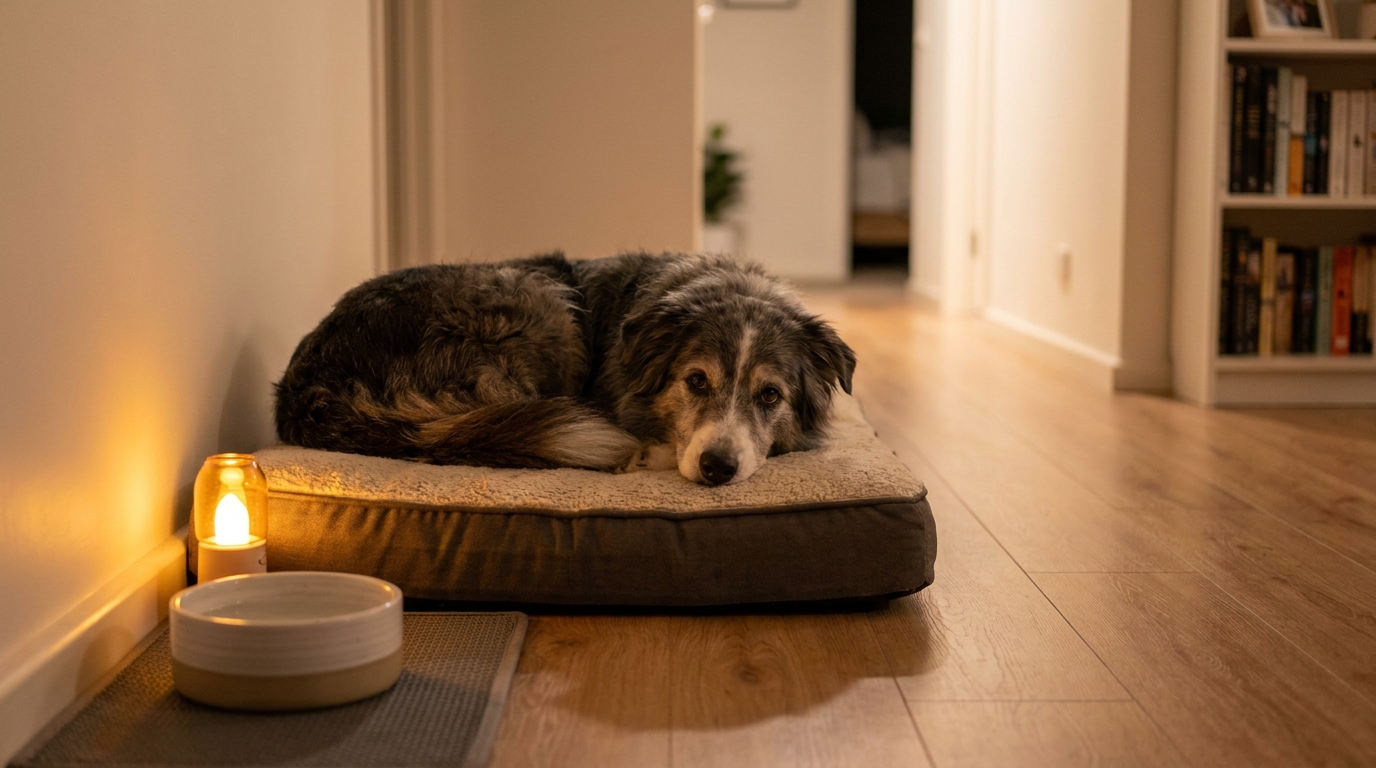
Quick tip: Add a soft night light near your dog’s bed and the closest water bowl. Low lighting can reduce nighttime pacing and disorientation, especially in homes with dark hallways.
Support joints and comfort so your dog can move without anxiety. A well-cushioned bed in a quiet corner, traction on slick floors, and shorter, more frequent walks often work better than one long outing—especially during hot weather when early mornings and cooler evenings are kinder.
To make senior care easier, browse practical staples in our Senior Pet Health range, and keep everyday essentials topped up from Premium Pet Care Products so you’re not scrambling when routines need tightening.
Home set-up for safer wandering
When senior dog confusion increases, the goal is to prevent “getting stuck” moments and reduce startle events. Think of your home as a gentle, easy-to-read map: fewer obstacles, clearer pathways, and stable landmarks.
Simple, high-impact changes include:
- Create clear lanes: keep walkways open between bed, water, food, and the door.
- Block problem areas: use a barrier to prevent access behind couches or into tight corners where your dog may panic.
- Use consistent stations: don’t move bowls and beds around; consistency supports confidence.
- Reduce slipping: add runners or mats where your dog turns or hesitates.
Outdoors, check fencing and gates, especially if your dog has started lingering at boundaries or trying unfamiliar routes. Consider escorting them for toileting at night so they don’t become disoriented in the dark.
If your dog tends to pace, choose one “safe loop” area (for example, lounge to hallway to laundry) and remove clutter so they can wander without bumping, slipping, or getting wedged.
Brain-friendly enrichment without overwhelm
Mental stimulation can be helpful for dogs with cognitive decline, but the key is calm enrichment. Choose activities that build confidence, not frustration.
Try these low-pressure options:
- Sniff walks: allow extra time for smelling (it’s naturally regulating and tiring).
- Food puzzles at an easy level: keep success rates high; swap to simpler puzzles if your dog gets stuck.
- Scatter feeding: toss part of a meal in a small area of grass or on a snuffle-style mat to encourage searching.
- Gentle training refreshers: one-minute sessions of familiar cues (sit, touch, wait) with a small reward.
Watch for “too much” signals: pacing, whining, sudden zooming, or refusing food after play. In that case, shorten sessions and return to predictable quiet time.
Rotating a few engaging options can also reduce night restlessness. A calm evening routine—light grooming, a short sniff outside, then a settled bed—often supports better sleep for dogs showing signs associated with dog dementia.
Frequently Asked Questions
How do I tell normal ageing from cognitive changes?
Normal ageing is often gradual and consistent (slower pace, more naps), while cognitive changes can look like disorientation, changed sleep patterns, or forgetting familiar routines. Keeping a weekly notes log helps you spot whether behaviours are increasing in frequency or intensity.
Why is my older dog restless at night?
Night-time restlessness can be linked with altered sleep-wake cycles, anxiety, discomfort, or difficulty seeing in low light. A steady bedtime routine, a night light, and a comfortable, supportive bed can make nights easier. If the change is sudden, talk to your vet to rule out pain or medical causes.
Can diet and enrichment really help?
They can support overall wellbeing by improving routine, comfort, and engagement, which may reduce stress and confusion. Choose gentle, success-based enrichment and keep meals consistent to avoid tummy upsets that can disrupt sleep.
Should I see the vet if I think my dog has dog dementia?
Yes—especially if changes are new, worsening, or affecting safety. Your vet can check for treatable medical issues that look similar and help you plan supportive care for quality of life at home.
When you’re ready to set up supportive routines, stock up on comfort essentials from our Senior Pet Health collection. If behaviours are worsening or you’re worried about safety, chat to your vet.