


Wondering when a dog is considered a senior and what changes to look for at home? Most dogs are considered seniors somewhere between 5–12 years old depending on their size and breed. Your dog’s later years don’t start overnight, but there are clear clues as their needs shift. Knowing the typical timeline for your dog’s size helps you act early, reduce strain on the body, and keep them comfortable through Australian summers, chilly mornings, and everything in between.
What age counts as “senior” for dogs?
There isn’t one universal birthday that flips a switch. Ageing depends heavily on size and breed, because larger dogs tend to mature faster than smaller dogs. A practical way to think about “senior” is a life stage where recovery is slower, stamina drops, and small issues (mobility, digestion, sleep) show up more often.
Use this as a simple guide:
| Dog size | Common “senior” range |
|---|---|
| Small | 10–12 years |
| Medium | 8–10 years |
| Large | 6–8 years |
| Giant | 5–7 years |
These are averages, not rules. Working or very active breeds may show joint and endurance changes earlier, even if they still seem “young” in personality. The most useful benchmark is your dog’s normal: if they’re slower to bounce back after a big walk, stiff after naps, or less keen on stairs, that matters more than the calendar.
Vet guidance: If your dog is entering this life stage, consider scheduling regular check-ups (and dental checks). Your vet may also recommend routine senior screening tests (such as blood and urine checks) to spot issues earlier—this is widely recommended in preventive-care guidance internationally, including by organisations such as the WSAVA.
Mature vs senior: what’s the difference?
“Mature” and “senior” are often used interchangeably, but they can describe slightly different stages. If you’re searching for what counts as a mature dog vs a senior dog, this is the simplest way to frame it:
- Mature (adult): Fully grown, generally steady energy and recovery, but may start to show early wear-and-tear (especially if they’re a larger breed or carry extra weight).
- Senior: Noticeable changes in recovery, stamina, comfort, or senses become more common, and supportive adjustments at home tend to make a bigger difference.
If your dog is “mature but not quite senior”, it’s still worth making small proactive tweaks—keeping weight in a healthy range, maintaining regular gentle exercise, and improving traction at home—so the transition into senior years is easier.
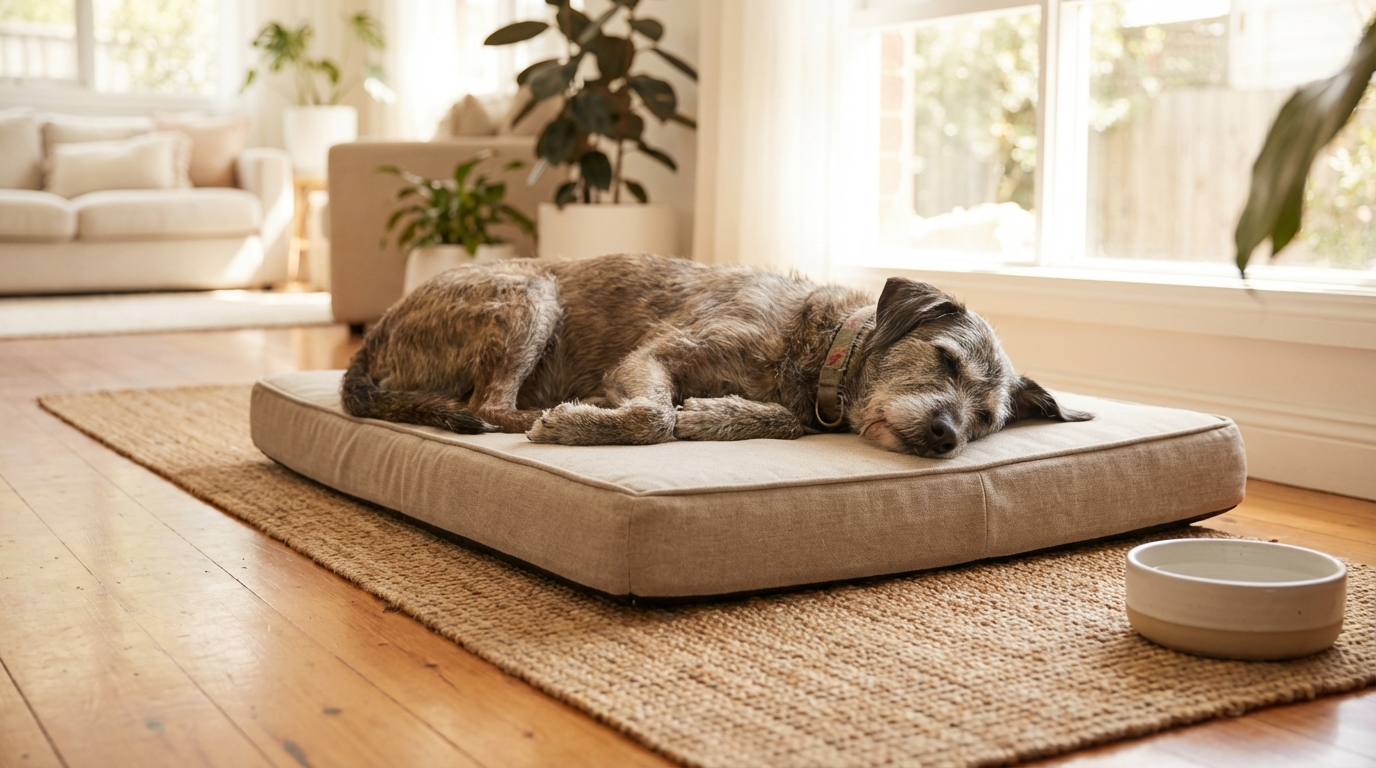
Early signs your dog is ageing
The most helpful approach is to watch for subtle shifts that creep in over months. Many changes can look like “just slowing down”, but they’re worth noting so you can adjust routines and the home environment early.
- Stiffness or limping after exercise, after rest, or first thing in the morning.
- Reduced stamina on walks (especially on warm Australian days) or needing more breaks.
- Weight changes, including gradual gain from lower activity or unexplained loss.
- Eye changes such as cloudiness, redness, discharge, or bumping into furniture in low light.
- Hearing changes like sleeping through familiar sounds or not responding to cues.
- Dental and breath changes (bad breath, dropping food, chewing on one side).
- Sleep pattern shifts, including more daytime naps or restless nights.
Medical note: Some signs that owners chalk up to “old age” can be linked to treatable conditions. Book a vet visit promptly if you notice sudden weight loss, increased thirst or urination, new toileting accidents, cloudy/red eyes, or persistent limping. This article is general information and isn’t a substitute for veterinary diagnosis.
Day-to-day changes you might notice at home
When your dog is maturing into their later years, everyday routines often reveal the biggest clues. You might notice they hesitate before jumping into the car, avoid stairs, or take longer to settle on hard floors. These are practical signals that comfort and mobility support may be needed.
Behaviour can shift as well. Some older dogs become more clingy, while others seek quiet spots away from busy areas of the house—especially during noisy storms, fireworks season, or summer heat. In multi-dog homes, seniors may opt out of rough play sooner than they used to, or become less tolerant of being bumped while resting.
Appetite and digestion can change too. A dog that once scoffed dinner might start grazing, or they may do better with more consistent mealtimes. Keep an eye on water intake and toileting habits. If your dog starts drinking noticeably more, has diarrhoea that doesn’t settle quickly, or begins having accidents indoors, speak with your vet rather than assuming it’s simply age-related.
Cognitive ageing signs: Some dogs also show changes that look like confusion or anxiety. Common owner observations include pacing, staring at walls, getting “stuck” in corners, increased vocalising, or waking more often at night. These changes deserve a calm, supportive routine—and a vet chat to rule out pain, sensory loss, or medical causes.
Quick tip: Start a “senior baseline” now: film a 10-second clip of your dog walking and sitting once a month. Small mobility changes are easier to spot when you can compare.
How to support a senior dog (products that help)
Supporting an older dog is mostly about comfort, prevention, and making everyday tasks easier. The goal is to reduce strain on joints, maintain a healthy body condition, and keep their environment predictable and easy to navigate.
- Orthopaedic bedding: A supportive bed can help reduce pressure on sore joints, especially for dogs that nap more. How to choose: look for thick, supportive foam (rather than thin padding that bottoms out), a size that lets your dog stretch out, and an easy-clean cover for accidents or muddy winter paws. Place one bed in a quiet sleeping zone and another near the family area so they don’t feel excluded.
- Ramps and steps: Helpful for cars, couches, and raised beds. They reduce repeated impact from jumping, which can be tough on ageing hips and elbows. How to choose: prioritise a stable base, a grippy surface, and a gentle incline (longer ramps are usually easier than short, steep ones). If your dog is unsure, start with treats and short sessions—encourage slow, steady use with patience rather than forcing it.
- Non-slip surfaces: Rugs or grip mats help on tiles and floorboards—common in many Australian homes. Better traction can improve confidence for dogs that hesitate or splay on smooth flooring. How to choose: place traction where it matters most—between bed and water bowl, along hallways, at door thresholds, and near steps—so your dog isn’t repeatedly scrambling to stand.
- Gentle grooming tools: Seniors may have thinner skin or sore spots. How to choose: opt for softer bristles, shorter sessions, and check for lumps or tender areas as you go.
- Targeted nutrition and supplements: Many mature dogs benefit from senior-friendly food profiles and joint, skin, or digestive support. How to choose: match food to body condition (easy keepers vs lean dogs), consider smaller meals if digestion is sensitive, and introduce changes gradually. For supplements, choose reputable products with clear ingredient labelling, and check suitability with your vet—especially if your dog has health conditions or takes medication, as interactions can occur. Avoid assuming “more is better”.
Comfort at home isn’t just about products—it’s also about setup. Keep favourite essentials (bed, water, food) on one level of the house if stairs are becoming hard work. Use consistent lighting at night for dogs with reduced vision, and keep walkways clear of clutter. In hot weather, walk early, keep water in multiple spots, and offer a cool resting area; older dogs often tolerate heat less well.
When to seek vet help: If your dog is avoiding movement, yelping, panting at rest, suddenly refusing walks, or showing ongoing soreness, book an exam. Pain management and underlying issues are best addressed early.
A simple checklist to track changes month to month
If you’re unsure whether your dog is truly entering their senior stage, tracking removes guesswork. A quick monthly check helps you link changes to lifestyle, seasons, and activity levels—and gives your vet clearer information if something changes.
- Mobility: Any stiffness after rest? Trouble with stairs? Slower sit-to-stand? Reluctance to jump?
- Energy: Shorter walks, more stops, or reluctance to play?
- Weight and shape: Can you feel ribs easily? Is the waist still visible? Any rapid change?
- Coat and skin: New dandruff, dryness, lumps, or sensitivity to brushing?
- Eyes and ears: Cloudiness, redness, discharge, head shaking, or less response to sounds?
- Toileting: New accidents, urgency, straining, or changes in stool consistency?
- Sleep and behaviour: Night waking, pacing, confusion, increased clinginess, or withdrawal?
If you notice a sudden shift (especially in drinking/urination, weight, vision, or mobility), don’t wait for the next monthly check—get veterinary advice. For gradual changes, small adjustments can make daily life easier: shorter, more frequent walks; warm-up time before activity; and extra cushioning on favourite resting spots.
Quick recap checklist for skimmers:
- Use size as a guide: many large dogs are seniors by 6–8 years; small dogs often later.
- Watch for recovery time, stiffness after rest, and changes in confidence on slippery floors.
- Make home easier: supportive bedding, stable ramps/steps, and traction in key walkways.
- Keep routines steady in heat, storms, and winter chills; adjust exercise to suit.
- Check in with your vet about preventive screening and any sudden changes.
Frequently Asked Questions
Is my dog a senior if they still act playful?
Yes—many dogs stay playful well into their later years, especially if they’ve maintained good fitness. Look for recovery time, stiffness after rest, and changes in endurance, not just enthusiasm.
Do small dogs become seniors later than big dogs?
Generally, yes. Small breeds often reach their senior stage later, while large and giant breeds can show age-related changes earlier. Your dog’s individual health, weight, and lifestyle also play a big role.
What’s the first change most owners notice?
Often it’s subtle mobility shifts: hesitating before jumping, slower starts on walks, or stiffness after naps. A close second is sleep changes, with more daytime napping and lighter sleep at night. If you notice persistent limping, new accidents, increased thirst/urination, or cloudy/red eyes, book a vet visit to check for underlying causes.
Ready to make the later years easier? Focus on comfort-first essentials like supportive bedding, mobility aids, and better footing at home—then chat to your vet if you’re concerned about any sudden or rapid changes.