


Cat dental care is one of the easiest routines to ignore—until bad breath, sore gums, or a sudden refusal to eat shows up. Because cats hide discomfort so well, small problems can quietly become expensive ones. A few simple habits can help protect your cat’s teeth, reduce tartar build-up, and support lifelong comfort.
Why dental care slips through the cracks
Most owners don’t skip dental care on purpose—they simply don’t see an obvious problem. Unlike a limp or an itchy coat, dental issues can be hidden behind closed lips and quiet behaviour. That’s why feline oral health often falls behind other routines like feeding, litter, and parasite prevention.
Another reason: cats are excellent at adapting. They may chew on one side, swallow food whole, or avoid crunchy treats without making a fuss. By the time you notice something, plaque may have already hardened into tartar and started irritating the gumline.
Finally, many people assume dry food “cleans teeth”. While some dental diets can help, most kibble shatters and doesn’t provide the consistent scraping action needed to reduce build-up. Regular home care still matters for healthier gums and fresher breath.
Early signs your cat’s mouth needs attention
Dental problems don’t always look dramatic. Watch for small changes that suggest discomfort or inflammation.
- Bad breath that’s persistent (not just after a strong-smelling meal)
- Red or swollen gums—a common early sign of cat gingivitis
- Yellow-brown tartar along the gumline
- Drooling or pawing at the mouth
- Messy eating, dropping food, or suddenly preferring soft food
- Face sensitivity—pulling away when you touch the cheeks
Australia-specific note: if your cat is panting or mouth-breathing during hot, humid days (more common in parts of QLD and the NT), you may notice mouth odour or drool more readily. Even so, persistent bad breath, visible tartar, or gum redness shouldn’t be dismissed as “just the heat”.
One more condition to be aware of: tooth resorption can be very painful and may not be obvious at home. If your cat suddenly avoids dry food, chatters their jaw, or reacts strongly when you touch their mouth, book a vet check.
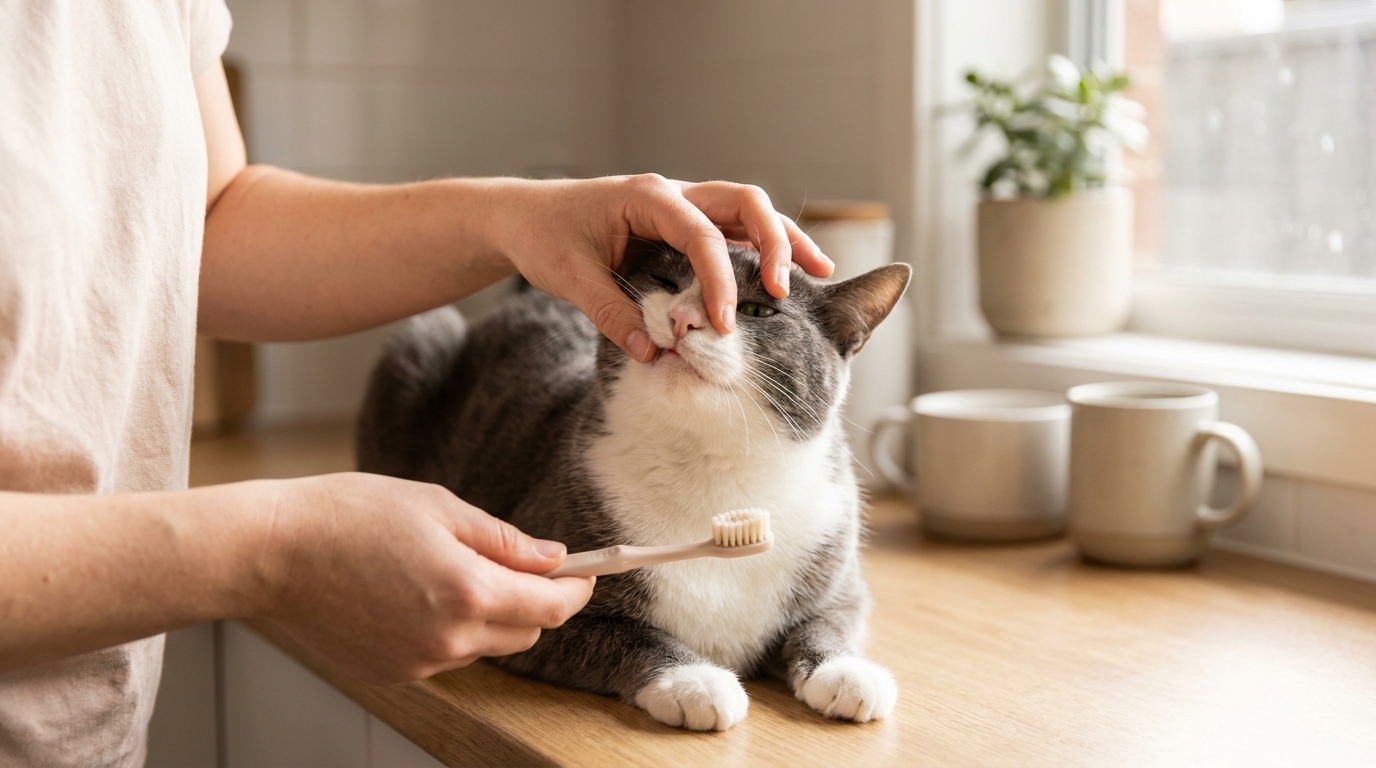
A realistic at-home teeth-cleaning routine
The most effective cat teeth cleaning routine is the one you can actually stick to. Daily brushing is ideal, but even a few times a week can make a meaningful difference to plaque levels and gum comfort over time.
Start small: aim for calm handling first, not brushing. Gently lift the lip for one second, reward, and finish. Over several days, build up to touching the outer teeth with a finger, then a soft brush.
Quick tip: Focus on the outside surfaces of the back teeth—this is where tartar builds fastest. A 10–20 second brush on each side is a strong “minimum effective dose” for busy households.
Safety first: If your cat shows signs of pain, yelps, struggles suddenly, or you see bleeding that doesn’t quickly settle, stop the session and book a vet appointment. Pushing through discomfort can create long-term brushing resistance and may worsen an underlying problem.
Keep it low-stress. Choose a quiet time (after play or a meal), keep sessions short, and stop before your cat gets annoyed. Consistency beats intensity—especially for cats that dislike being restrained.
If brushing isn’t possible yet, use it as a long-term goal and start with supportive options like dental wipes or oral gels. These don’t replace brushing, but they can help reduce bacteria and freshen breath while you train the habit.
Brushing training timeline (week-by-week)
Many cats don’t accept brushing immediately. A short, predictable plan helps you progress without turning dental care into a daily battle. Move at your cat’s pace—if they resist, step back a stage for a few sessions.
- Week 1: Comfort with handling — Once a day (or a few times a week), do a one-second lip lift, reward, and stop. The goal is a calm cat, not a long session.
- Week 2: Finger contact — Briefly rub the outside of the teeth and gums with a clean finger. Keep it gentle and focus on the back teeth area.
- Week 3: Introduce taste and tools — Let your cat lick a tiny smear of cat-safe toothpaste from your finger, then from the toothbrush/finger brush. End the session before they get impatient.
- Week 4: “Two-tooth” brushing — Brush just a couple of outer teeth on one side, reward, and finish. Rotate sides on different days to keep it manageable.
- Week 5+: Build to a full routine — Gradually increase coverage across the outer surfaces of the back teeth on both sides. Maintain the habit with short, consistent sessions rather than occasional long ones.
Kitten vs adult tip: kittens usually learn faster because handling feels normal, while adults may need more repetition to trust the process. For seniors, keep sessions extra gentle and watch for signs of discomfort—if your cat suddenly can’t tolerate touch they previously accepted, that’s a cue to book a vet check.
Products that make feline oral care easier
There’s no single “best” product for every cat. The right choice depends on temperament, age, and what you can do consistently. A simple toolkit makes cat dental care feel less daunting.
Toothbrushes and finger brushes: Look for soft bristles and a small head that fits comfortably in a cat’s mouth. Finger brushes can feel less intrusive for beginners, while a small handled brush can be more precise once your cat is comfortable.
Cat-safe toothpaste: Use toothpaste made for cats (never human toothpaste). Many are flavoured to encourage acceptance, which helps turn brushing into a routine rather than a wrestling match.
Dental treats and chews: The best options are designed to encourage chewing and have a texture that helps reduce plaque. For cats that bolt their food, larger or more textured dental treats can slow them down and create more contact with the teeth.
Dental water additives and oral gels: These can support fresher breath and reduce bacterial load, especially for cats that won’t tolerate brushing. They’re useful “background helpers” but work best alongside mechanical cleaning like brushing or targeted chews.
Dental diets: Some diets are structured to help with plaque management. If your cat already needs a specific diet for other reasons, consider whether a dental-support option fits your overall plan.
Safety note: Where possible, choose products that are recognised by the Veterinary Oral Health Council (VOHC) and follow label directions. VOHC acceptance is product-specific, so it’s worth verifying that the exact item you’re buying is currently listed by VOHC. Availability may also vary in Australia depending on suppliers and stock. Avoid human toothpaste (it can contain ingredients that aren’t suitable for cats). If you’re considering water additives, gels, or any oral product and your cat has kidney disease, is on long-term medication, or has other health conditions, check with your vet first.
When building a routine, pick just one or two products to start. Too many changes at once can make a cautious cat suspicious and reduce compliance.
When to get professional help
Home care is powerful for prevention, but it can’t remove hardened tartar or fully assess what’s happening under the gumline. If you notice bleeding gums, obvious tartar, mouth pain, or ongoing bad breath despite consistent care, it’s time for a professional assessment.
At the vet, a dental check may start with an oral exam while your cat is awake, followed by recommendations based on what’s visible. If a full dental procedure is needed, it commonly involves a thorough clean (scaling and polishing) under anaesthesia so the vet team can safely examine each tooth and the gumline.
Importantly, problems can sit below the surface. Dental X-rays help assess tooth roots and bone health—areas you can’t see just by looking in the mouth. Your vet may also identify issues such as broken teeth, resorptive lesions, or gum disease that require treatment beyond a standard clean. Ask what’s included in the dental plan (for example: pre-anaesthetic assessment, monitoring, dental charting, and whether X-rays are recommended), so you know what to expect.
Professional dental cleaning cost varies depending on your cat’s needs, whether dental X-rays are performed, and whether extractions or other treatments are required. If you’re budgeting, ask your clinic for an estimate after an exam.
Older cats and flat-faced breeds can be more prone to crowded teeth or gum issues, which may need closer monitoring. If your cat has stopped grooming, is hiding more than usual, or seems reluctant to chew, don’t wait it out—mouth pain can quickly impact appetite and wellbeing.
Frequently Asked Questions
How often should I brush my cat’s teeth?
Daily brushing is ideal, but brushing a few times a week is still beneficial. The key is consistency—regular light plaque removal helps slow tartar build-up and supports healthier gums.
Is bad breath always a dental problem?
Bad breath is commonly linked to plaque, tartar, and gum inflammation, so it’s a strong clue to check the mouth. Occasional odour can happen after certain foods, but persistent smell is worth investigating.
My cat hates brushing—what can I do instead?
Start with short training sessions (lip lift, touch, reward), then work up to brushing over time. In the meantime, consider dental wipes, oral gels, and dental treats as supportive options to help manage bacteria and plaque.
Want an easier routine? Stock up on cat-friendly dental essentials and build a simple weekly plan—then chat to your vet if you’re unsure what your cat’s mouth needs next.