


The Russian Blue cat is famous for its plush silver-blue coat, bright green eyes, and quietly devoted nature. If you’re looking for a low-drama companion that bonds deeply with its people, this breed often fits beautifully. This guide covers Russian Blue cat temperament and care in a practical, Australian-home context—so you can plan feeding, enrichment, grooming, and preventive routines with confidence.
Considering a kitten or adopting an adult? Kittens need more frequent meals, training, and supervised play, while adult Russian Blues are often more settled and predictable. Costs can also vary widely depending on whether you adopt through a rescue or purchase from a breeder, plus ongoing expenses like food, litter, vet care, and enrichment. Wherever your cat comes from, set up a calm routine early to help this sensitive breed feel secure.
Breed snapshot (quick facts)
| Trait | Typical for the breed |
|---|---|
| Adult weight range | Typically around 3–6 kg (varies by sex, genetics, and body frame) |
| Typical lifespan | Often 15–20 years with good care (individuals vary) |
| Coat | Short, dense double coat with a silvery sheen |
| Grooming frequency | Low to moderate (usually 1–2 brushes per week) |
| Indoor suitability | High, with daily play and climbing/scratching outlets |
Note: Size and lifespan ranges are broad because they’re influenced by diet, lifestyle, genetics, and preventive care. Figures above align with commonly published breed summaries (for example, CFA and other cat-fancy organisations), but your cat may sit outside these ranges.
Breed overview: looks, size, and lifestyle fit
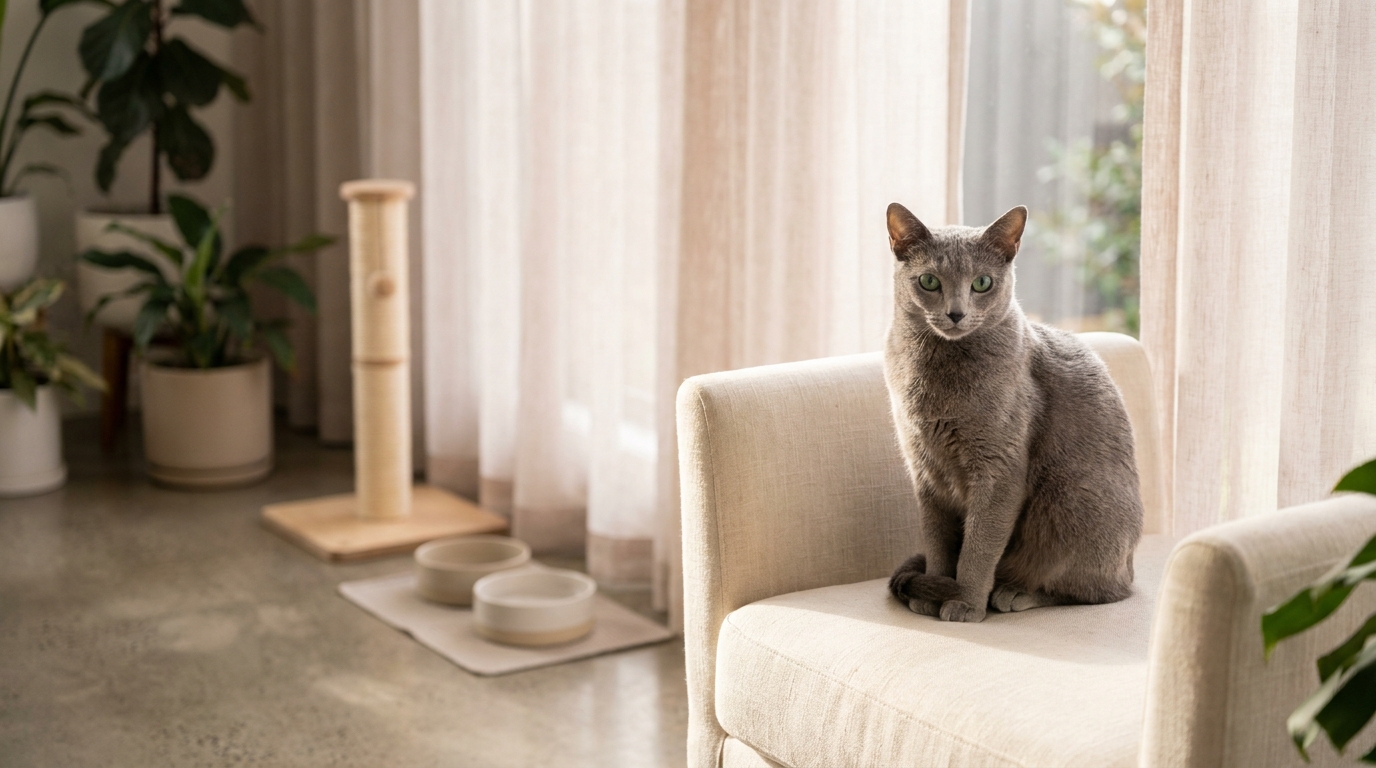
Russian Blues are medium-sized cats with a fine-boned, athletic build and a dense coat that feels almost like velvet. Their coat colour is a cool blue-grey with a silvery tip that catches the light—especially in bright Queensland mornings or a sunny lounge room in Perth.
As a lifestyle fit, this breed generally suits calmer households, apartments, and families who enjoy a predictable routine. They’re often more reserved with strangers than some breeds, but typically warm up once they feel safe and can choose the pace of interaction.
- Best for: people who want a loyal, gentle companion
- Energy level: moderate; playful bursts with lots of lounge time
- Coat: short but very dense; regular brushing helps reduce loose hair
Temperament: what living with a Russian Blue is like
The Russian Blue temperament is often described as affectionate, observant, and a little selective. Many bond strongly to one or two people and enjoy being nearby rather than constantly on top of you. Think “shadow in the same room” more than “lap cat all day”.
They tend to appreciate calm voices, predictable schedules, and respectful handling. If you have kids, it helps to teach gentle pats and give the cat an easy escape route and elevated resting space so they never feel cornered.
Because Russian Blues can be sensitive to change, they may hide during noisy gatherings or when tradies come and go. With patience, consistent routines, and safe spaces, most regain confidence quickly and return to their usual affectionate self.
Care guide: feeding, grooming, enrichment, and home setup
A good Russian Blue cat care routine starts with meeting needs for quality nutrition, predictable play, and a low-stress environment. They’re usually tidy and self-maintaining, but they thrive when the home supports natural behaviours like climbing, scratching, stalking, and resting up high.
Feeding: Choose a complete and balanced diet matched to age and activity (kitten, adult, or senior). Many Russian Blues have a hearty appetite, so measured portions and regular mealtimes can help prevent unwanted weight gain. For everyday options, browse our cat food and treats range and use treats mainly for training, enrichment, or bonding.
Grooming: Their dense coat benefits from brushing once or twice a week to lift loose hair and distribute natural oils. Keep sessions brief and positive, especially in warmer months when some cats shed more. Check ears, eyes, and nails regularly; gentle, routine handling helps them stay relaxed about care.
Quick tip: If your cat bolts treats, use puzzle-style feeding (or simply scatter a few pieces around the house) to slow eating and add daily enrichment.
Enrichment and play: Aim for two short play sessions a day (5–10 minutes) using interactive games that mimic hunting: stalk, chase, pounce, then a small meal. Russian Blues are often clever problem-solvers, so rotate toys to keep things interesting. A predictable play schedule can also reduce attention-seeking meowing or late-night zoomies.
Home setup (AU safety): Provide a stable “safe zone” with a bed, water, and litter tray in a quiet area—useful during storms, fireworks, or busy weekends. For apartment living, make window and balcony access secure and supervised; even confident cats can slip when startled by birds, loud noises, or sudden wind gusts.
Litter and scratching basics: Most Russian Blues prefer a clean, consistent toilet area. Place the tray away from food and heavy foot traffic, keep it easy to access, and scoop daily where possible to reduce odours and stress. For scratching, offer at least one sturdy scratcher plus a vertical or tall option so they can fully stretch—then position it near favourite rest zones to encourage use. If you’re adding climbing space, stable platforms or perches help give shy cats a sense of control in multi-person homes.
Heat and hydration: In Australian summer heatwaves, prioritise cool resting spots, shaded windows, and fresh water in more than one location. If your cat tends to drink less, try offering water away from food, refreshing bowls more often, and keeping the home cooler where possible (closed blinds in the afternoon, good airflow, and avoiding intense play at the hottest part of the day).
Training: Many Russian Blues respond well to reward-based training like coming when called or waiting calmly for meals. Keep sessions short, use small rewards from your cat food and treats stash, and end on a success to build confidence.
Health: common concerns and preventive care
Russian Blue cat health is generally robust, but like any breed, they do best with steady preventive habits and early attention to changes. The most common day-to-day challenge for many is maintaining a healthy weight, especially for indoor cats with a strong appetite and a relaxed lifestyle.
Weight management: Use portion control, regular play, and occasional weigh-ins to catch small changes early. If you can’t easily feel ribs with light pressure, or your cat’s waistline disappears, it’s time to reassess feeding and activity. Any significant diet change or weight-loss plan should be guided by your vet—rapid restriction can be risky for overweight cats.
Dental care: Gum disease can affect cats of any breed. If your cat tolerates it, tooth brushing is ideal, but even simple steps help: regular mouth checks, watching for bad breath or red gums, and booking dental assessments when advised. If you notice drooling, pawing at the mouth, or reluctance to eat, seek veterinary advice promptly.
Desexing and life-stage check-ups: Your vet can advise on the right timing for desexing and what’s appropriate for your individual cat. As a general routine guide, many owners book a vet check at least yearly for healthy adults, and more often for kittens, seniors, or cats with ongoing conditions. Regular check-ups help catch dental issues, weight creep, heart murmurs, skin problems, and pain that cats can hide well.
Parasite prevention (Australian conditions): Fleas can be a year-round issue in many parts of Australia, and intestinal worms are common in cats that hunt or share environments with other animals. Your vet can recommend a prevention plan suited to your location, lifestyle (indoor vs outdoor), and household risk—especially if you have children or immunocompromised family members.
Stress and change: Because many Russian Blues are sensitive, sudden routine shifts can show up as hiding, overgrooming, or changes in appetite. Keep introductions (new pets, new homes) gradual, maintain stable feeding and play times, and ensure they have quiet retreat spaces.
Frequently Asked Questions
How big do Russian Blue cats get?
Most adults sit roughly in the 3–6 kg range, with males often heavier than females. Their dense coat can make them look bigger than they are, so body condition (waistline and rib feel) matters more than appearance.
Are Russian Blues good indoor cats?
Yes—many adapt very well to indoor living, especially with climbing spaces, scratching options, and daily interactive play. Indoor life can also reduce exposure to fights, parasites, and extreme weather.
Do Russian Blues shed a lot?
They have a dense double coat, so they do shed, but regular brushing usually keeps it manageable. You may notice extra shedding during seasonal changes or warmer weather.
Are Russian Blues hypoallergenic?
No cat is truly hypoallergenic. Some people find they react less to certain cats, but sensitivities vary widely, so it’s best to spend time with the breed before committing.
If you’re preparing your home for a Russian Blue, start with a quality everyday diet and reward-friendly treats from our cat food and treats selection. For personalised advice based on your cat’s age, weight, and history, chat to your vet.