


When your dog has sore or stiff joints, movement can feel risky—but the right kind of activity is often part of staying comfortable. Smart routines for dog exercise with joint problems focus on gentle strength, steady conditioning, and keeping mobility without flare-ups. Below are low-impact options that support day-to-day function, especially for older dogs and those managing arthritis-like stiffness.
Why low-impact movement helps sore joints
Joint issues often create a cycle: discomfort leads to less movement, which can reduce muscle support around the joints, making everyday activities harder. Joint-friendly activity aims to maintain muscle tone, range of motion, and circulation without pounding forces.
Compared with sprinting or hard jumping, low impact dog exercise keeps paws on the ground more often, uses controlled pace, and avoids sudden twists. That can be especially helpful in Australian summers when heat can sap energy and change your dog’s gait (more shuffling, more slipping).
Watch for signs the session is too much: lagging behind, frequent sitting, limping that increases during the walk, or stiffness that’s noticeably worse later that day. The goal is “better after,” not “worse after.”
Warm-up and cool-down (the joint-friendly basics)
A good warm-up prepares tissues for movement and reduces the chance of overloading sore areas. Start with 3–5 minutes of slow, flat walking—think driveway pace, not exercise pace—then gradually increase speed.
- Choose grippy surfaces: grass, rubber matting, or textured paths. Avoid slippery tiles and polished floors.
- Keep turns wide: tight circles can stress hips, knees, and elbows.
- Finish gently: 3–5 minutes of easy walking, then settle with water and rest.
If your dog is stiff when rising, use the first minute as a “starter lap” around the yard. Dogs with joint problems usually do best when intensity ramps up slowly and ends slowly.
The best low-impact exercises to try
Mix and match a few options rather than relying on one long outing. Short, frequent sessions tend to suit dog exercise with joint problems because they spread the workload across the week.
- Sniff walks (decompression walks): Let your dog stop and sniff often on a loose lead. Sniffing naturally slows pace, encourages gentle head and neck movement, and reduces frantic pulling.
- Controlled leash walking on flat ground: Aim for an even rhythm. Choose a shorter route and repeat it so you can compare how your dog feels day-to-day.
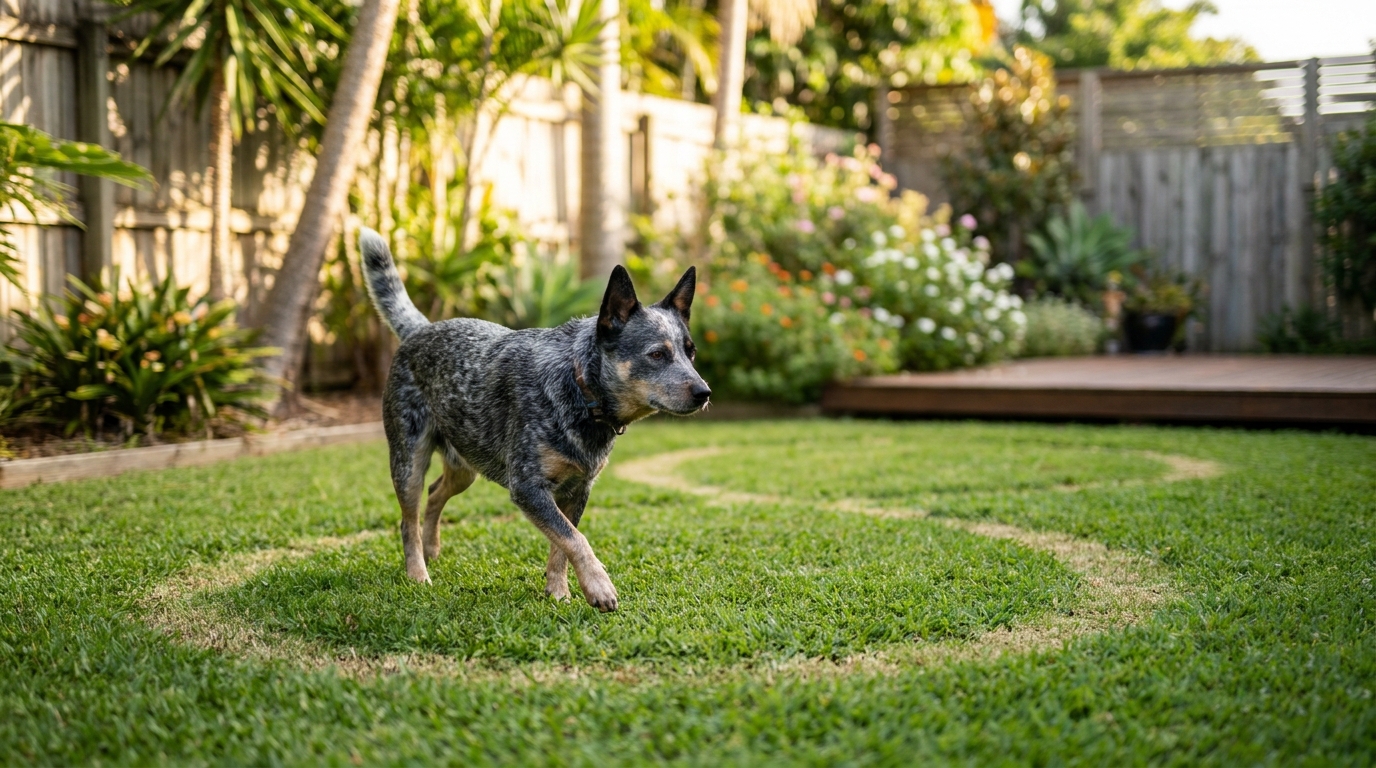
- Figure-eights (wide): Walk wide figure-eights around two objects (esky and pot plant) to build coordination without sharp turns. Keep the loops large and slow.
- Hill “micro reps” (very gentle inclines): A mild slope strengthens rear-end muscles that support hips and knees. Do 1–3 short inclines, then stop—avoid steep sand dunes or long climbs.
- Underwater treadmill or shallow water walking: Water reduces joint loading while still working muscles. If you don’t have facility access, shallow wading at a calm, safe spot can be a mild option.
- Indoor slow games: Scatter feeding, treat trails, or a few minutes of basic cues (sit/stand transitions if comfortable) keeps movement controlled and prevents explosive bursts.
Quick tip: After any new activity, check how your dog moves 4–6 hours later and again the next morning. If stiffness is noticeably worse, reduce duration or intensity by about a third next time.
For dogs that love to chase, swap high-speed fetch for rolling a toy along the ground at a walking pace, or short “find it” searches in the lawn. The theme is predictable movement: no launching, skidding, or sudden pivots.
How to build a routine for senior dog fitness
Consistency beats big weekends. A simple pattern—10 to 20 minutes most days, broken into two shorter sessions—often supports senior dog fitness better than one long hike that triggers soreness.
- Start small: Begin at a level your dog finishes comfortably (even if it seems “too easy”).
- Increase one variable at a time: Add time or add a gentle incline, not both in the same week.
- Keep a two-week note: Track distance, surface, and how your dog moves later that day.
- Use the “talk test”: Your dog should be able to move with a relaxed mouth and steady breathing, not panting hard from effort (heat is separate—plan early mornings in summer).
If your dog has a “good day / bad day” pattern, build your plan around the average day. On sore days, do a shorter sniff walk and a few gentle indoor activities instead of pushing through.
Remember that low impact dog exercise isn’t about doing nothing—it’s about doing the right kind of movement, often enough to keep supporting muscles switched on.
Home setup and gear that makes movement easier
Small changes at home can make joint-friendly activity safer and more comfortable. Prioritise traction, easy access, and supportive rest so your dog can recover well between sessions.
- Non-slip runners or mats: Place them on common paths (bed to water bowl, hallway corners) to reduce slipping.
- Supportive bedding: A quality orthopaedic bed helps your dog settle and rise more comfortably, especially during winter in southern states.
- Ramps and step aids: Use them for couches and cars to reduce repeated jumping.
- Well-fitted harness: A harness can reduce neck strain and help you guide pace on walks.
If you’re shopping for joint support essentials, start with our Joint & Mobility range and pair it with comfort basics from Dog Beds to make rest as joint-friendly as exercise.
Also consider nail care: overlong nails can change foot posture and increase strain. Keeping nails neat helps your dog grip and push off evenly, which matters for dogs managing joint problems.
Frequently Asked Questions
How do I know if my dog is getting enough exercise with sore joints?
Look for stable energy, good sleep, and consistent movement quality rather than a big step count. If your dog seems looser after a gentle walk and stiffness isn’t worse later, you’re likely in a good zone.
Is swimming always safe for dogs with joint issues?
Swimming can be excellent, but not every dog swims with a smooth, relaxed stroke—some panic or overuse the front end. Start with calm, supported water walking or short swims and stop if you see frantic paddling or heavy fatigue.
Should I stop walks altogether if my dog limps?
Not always, but you should reduce intensity and keep movement gentle and controlled. If limping is new, worsening, or your dog won’t bear weight, pause the exercise plan and get tailored advice.
Ready to make movement easier? Explore Pacific Pet Supplies’ Joint & Mobility picks for everyday support, and choose traction and comfort essentials to match—then chat to your vet if you’re unsure what level of activity is appropriate for your dog.