


Noticing subtle changes early can make day-to-day life far more comfortable for your best mate. Arthritis in dogs (most commonly osteoarthritis) is gradual wear-and-tear inflammation in the joints that can cause pain, stiffness and reduced mobility over time.
Medical note: many arthritis signs can also overlap with injuries, spinal issues or neurological problems, so a vet check is the safest way to get the right diagnosis and plan.
Seek urgent vet care if your dog is not weight-bearing, has sudden severe pain, a hot/swollen joint, yelps when touched, or shows weakness/paralysis (including dragging a leg).
This guide breaks down early clues, what they can look like at home, and practical steps to support comfort and mobility while you organise veterinary advice.
Early clues that can look “normal”
Early arthritis can be easy to miss because it often looks like “just getting older”, a lazy day, or your dog being a bit stubborn. The key is consistency: small changes that keep repeating usually mean something is going on, especially in larger breeds, very active dogs, or pets carrying extra weight.
Look for subtle shifts in routine, such as taking longer to stand after a nap, hesitating before jumping into the car, or choosing the shortest path to the water bowl. In many parts of Australia, cooler winter mornings can make stiffness more obvious, while damp weather may make some dogs seem slower or less keen to move.
Another early giveaway is avoiding certain positions. Your dog might sit slightly crooked, stretch one back leg out rather than tucking it under, or always flop onto the same side to rest.
Quick symptom checklist
If you want a simple summary to compare against what you’re seeing at home, here are common early signs:
- Stiffness after rest (morning or after naps)
- “Warming up” after a few minutes of walking
- Reluctance with stairs, jumping up, or getting into the car
- Shorter steps, uneven gait, or an on-and-off limp
- Slowing down on walks or turning back early
- Slipping or scrambling on tiles/laminate
- Less interest in play or quicker fatigue
- Licking at a joint, or sensitivity when touched
- Restlessness overnight or difficulty settling
- Muscle loss around hips/thighs, or uneven nail wear
One sign on its own doesn’t confirm arthritis. Several signs together—especially if they’re happening most weeks—are worth a vet chat.
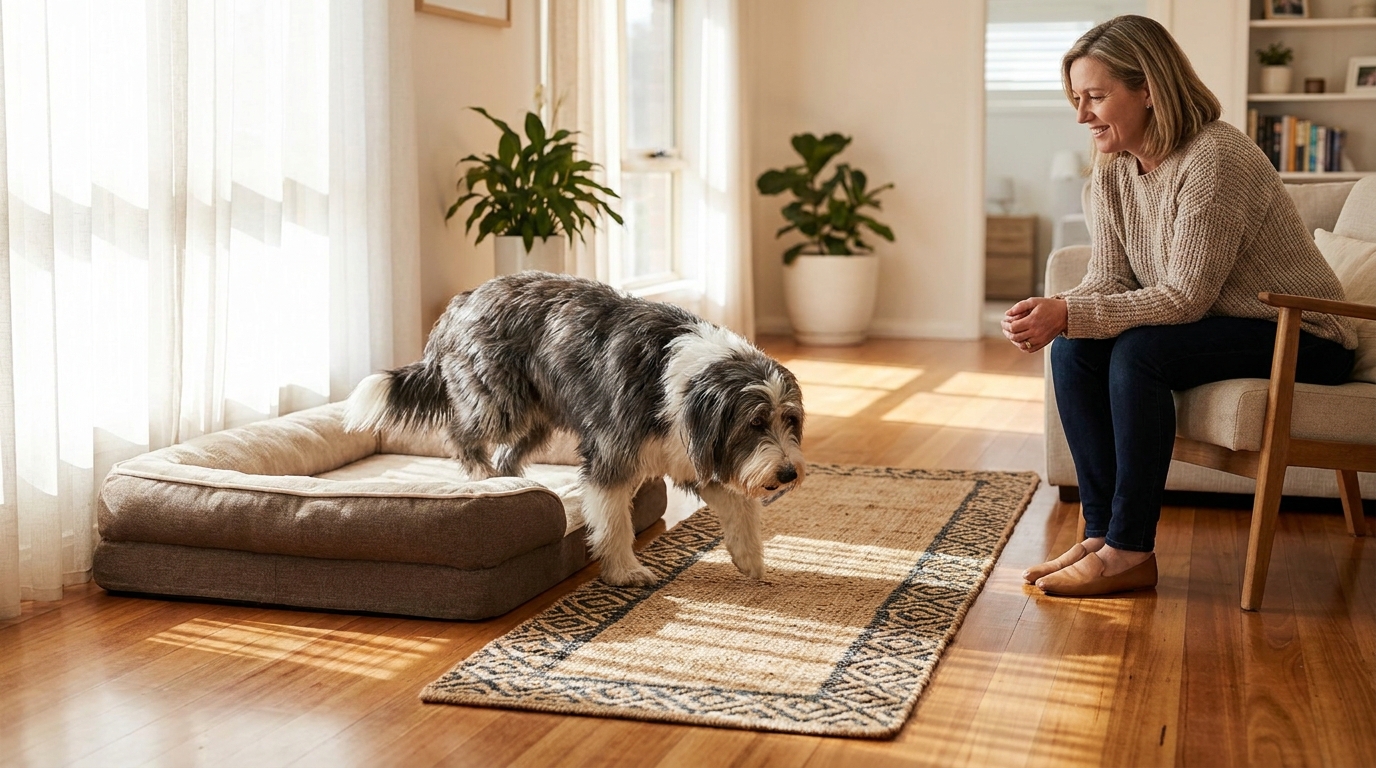
Movement changes: stiffness, limping and slowing down
When most people think of arthritis, they picture obvious pain. In reality, the first thing you may notice is stiffness after rest—first thing in the morning, after a long nap, or after a big play session. Some dogs will also develop a mild limp that comes and goes.
Common movement changes include:
- “Warming up” effect: stiff at first, then moving better after a few minutes
- Shortened stride: smaller steps, often in the back legs
- Reluctance on stairs: slowing down, pausing midway, or taking them one at a time
- Changes on slippery floors: toe-splaying, cautious walking, or scrambling on tiles
- Different pace on walks: lagging behind, stopping more, or turning for home early
A pattern of “good days and bad days” can happen with joint discomfort, but it’s not exclusive to arthritis—another reason it’s worth checking in with your vet if it keeps recurring.
Quick tip: Take a 20–30 second video of your dog getting up, walking away from you, then trotting back. Small gait changes are easier to spot on replay, and the clip is helpful to share with your vet.
Behaviour and body changes that can point to joint pain
Arthritis signs aren’t only about walking. Many dogs mask discomfort by quietly changing their behaviour, particularly if they’re usually friendly, stoic or eager to please.
Watch for:
- Less interest in play: stops fetching early, avoids tug, or won’t chase like before
- Grooming changes: licking one joint area, or struggling to reach hips/back legs
- Sleep disruption: restlessness, frequent repositioning, or avoiding hard floors
- Touch sensitivity: flinching when patted over hips/shoulders, or guarding a leg
- Grumpiness: especially when approached while resting
Body condition matters too. Muscle loss around the hindquarters (even if weight stays the same) can occur when a dog unloads sore joints. You may also notice uneven nail wear because their gait has changed, or that one paw lands more heavily than the other.
Season and routine changes can play a role. Cooler, wet conditions may coincide with more stiffness for some dogs, while hot Aussie summers can reduce walk time and conditioning, which can affect overall mobility.
At-home checks and tracking (without guessing)
You don’t need to diagnose anything at home, but you can gather useful information to bring to your vet. Consistent tracking is one of the best ways to notice trends early and act before mobility drops off.
Try a simple weekly check-in:
- Rise test: how quickly they stand after a nap (smooth vs slow/awkward)
- Stair hesitation: any pausing, side-stepping, or refusal
- Jump confidence: can they get into the car/onto a bed without a run-up?
- Walk quality: do they loosen up after 5 minutes, or stay stiff?
- Recovery: are they more sore the day after a longer walk?
Note patterns rather than one-off moments. A single slip on the tiles doesn’t equal arthritis—but repeated hesitation, stiffness after rest, or an “off” step that keeps returning is worth attention.
Also consider triggers in your dog’s environment and routine. Slick floors, repeated jumping on and off sofas, and sudden “weekend warrior” exercise can all aggravate sore joints (whatever the underlying cause), even in younger dogs.
What to do next: comfort, routines and mobility support
If you suspect arthritis, aim to reduce strain while keeping movement steady and controlled. Over-resting can lead to deconditioning, while intense bursts (big beach sprints, long hikes, chasing balls for ages) can flare discomfort.
Practical changes that help many dogs:
- Warm-up walks: start slow for 5 minutes before picking up pace
- Shorter, more frequent outings: instead of one huge walk
- Supportive bedding: thicker beds may reduce pressure on hips and elbows
- Floor grip: runners or mats on common pathways to help prevent slips
- Ramps/steps: for cars and couches to reduce jumping impact
It’s also worth asking your vet about a broader management plan. Depending on your dog, that may include weight management, a tailored exercise program, physiotherapy or hydrotherapy, and medication when appropriate.
For everyday support items, you can browse our Joint & Mobility range. For rest and recovery, comfort-focused essentials in our Dog Beds collection can help your dog settle more easily after walks.
Finally, don’t underestimate body weight. Even small reductions (if your dog is overweight) can reduce load through hips, knees and elbows—particularly for medium to large breeds.
Frequently Asked Questions
At what age can arthritis start in dogs?
Arthritis can appear at any age, but it’s more common in middle-aged and senior dogs. Previous injuries, joint development issues, body shape, and high-impact activity can contribute to earlier joint changes.
Is limping always arthritis?
No. Limping can come from strains, paw injuries, nail issues, ligament problems, spinal pain or other conditions. If a limp lasts more than a day, keeps returning, or your dog won’t put weight on the leg, book a vet check.
Should I stop walking my dog if I suspect arthritis?
Usually, consistent gentle movement helps maintain mobility, while sudden big sessions can increase stiffness. Aim for steady, low-impact routines and adjust distance and pace based on how your dog recovers. Your vet (and a qualified physio, if recommended) can help you build a plan that suits your dog.
If you’re seeing signs that could fit arthritis in dogs, start by improving comfort at home and keeping activity consistent—then explore supportive options in our Joint & Mobility collection. For personalised guidance on pain and long-term management, speak with your vet.