


Choosing Starmark toys can feel like paying more upfront—until you compare how long they last, how much they engage your dog, and how often you replace cheaper options. This guide breaks down where the range tends to deliver better value (and when it doesn’t) for Australian households.
Safety first: No dog toy is indestructible. Supervise play, choose the correct size for your dog, and discard toys that show deep cracks, sharp edges, or missing chunks—especially for determined chewers.
If you’re weighing up Starmark against other options, the goal isn’t “cheapest today”—it’s the best cost per week of safe, enriching play.
What “better value” really means for dog toys
Value is a mix of durability, safety, and how much your dog actually uses the toy. A toy that’s half the price but lasts a quarter of the time is rarely a win—especially for strong chewers.
For many Aussie homes, value also includes how well a toy handles real-life conditions: hot summer afternoons, backyard play on rough ground, and the “left outside overnight” reality. If your dog loses interest quickly, even a tough toy can become wasted spend.
When comparing Starmark to alternatives, ask:
- Replacement rate: How often do you rebuy?
- Engagement: Does it keep your dog busy or get ignored?
- Risk management: Does it break into swallowable pieces?
- Versatility: Can it be used for fetch, chewing, and food stuffing?
Common alternative toy types (and how they stack up)
Not every “alternative” is the same. Here are four common categories people compare against Starmark, using the same value criteria (durability, engagement, safety, and versatility).
- Rubber treat-dispensing toys: Often great for enrichment and can be very cost-effective if your dog enjoys food puzzles. Durability varies by rubber thickness and your dog’s chewing style; some dogs focus on gnawing edges, which can shorten lifespan. Typically high engagement, good versatility, and easy to rotate with different fillings.
- Nylon-style chew toys: Usually strong on longevity and can be a smart buy for dogs who like steady, repetitive chewing. Engagement is more “calming chew” than playful. Safety depends on choosing the right size and monitoring wear; replace when sharp ridges develop or small pieces start coming away.
- Rope and tug toys: High interaction value for games with you (tug, chase, training rewards). They can be lower value for solo play because fraying can happen quickly, especially outdoors. Best for supervised sessions and dogs that love social play rather than long independent chewing.
- Plush and squeaky toys: Excellent for gentle chewers and dogs that enjoy carrying, shaking, and comfort. They can be poor value for power chewers due to fast tearing and stuffing loss. Safety hinges on supervision and prompt removal if seams split or squeakers become exposed.
Thinking in categories helps you avoid overpaying for toughness your dog doesn’t need—or underbuying for a dog who destroys “cute” toys in minutes.
Where Starmark usually outperforms alternatives
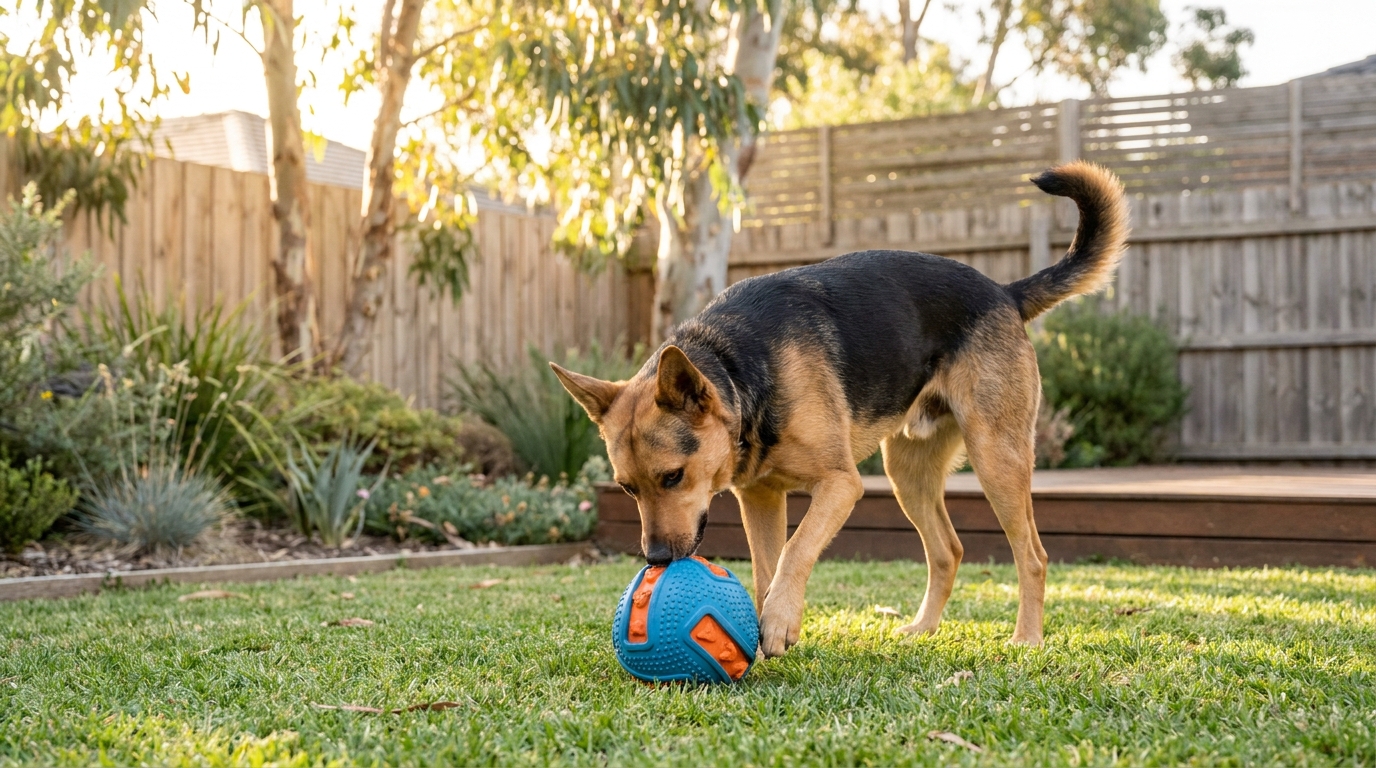
In many households, Starmark’s strongest point is longevity for dogs that chew hard and play rough. Several designs are built to stay interesting (shape, bounce, texture) rather than being a single-purpose chew.
That matters because value can come from reduced boredom behaviours. A toy that reliably redirects chewing away from shoes, outdoor furniture, or the kid’s footy can pay for itself quickly—especially in high-energy breeds or young dogs going through a mouthy phase.
Compared with many plush, rope, or lightweight rubber options, Starmark toys often hold up better to backyard conditions: grit, dry grass, and the rough-and-tumble play that happens in Australian gardens. They also tend to suit a “two-toy system”: one for active play (bounce/fetch) and one for downtime enrichment (chew/food engagement).
Another consistent strength is lower-maintenance enrichment. Food-compatible shapes can help occupy dogs during work calls or rainy weekends, without needing constant input from you. (You should still supervise any new toy until you’re confident it’s safe for your dog’s play style.)
If you’re already narrowing down the brand, browse the range of Starmark options and compare by your dog’s play style (chewer, chaser, or problem-solver) rather than by price alone.
Quick tip: To test value quickly, track “weeks of use” in your phone notes. If a toy lasts 8–12 weeks of regular sessions, it often beats replacing a cheaper one every fortnight—especially if it stays interesting.
When alternatives can be better value
Starmark isn’t automatically the best-value choice for every dog. If your dog is gentle, only plays in short bursts, or prefers soft-mouth carry and comfort play, you may not get the return on premium durability.
Alternatives can also win on value when you need a very specific feature:
- Ultra-soft mouth feel for senior dogs or dogs that dislike firm textures (plush-style toys may be more motivating).
- Training-focused toys you want to keep “special” and only bring out during sessions (a simple tug or soft reward toy can be perfect).
- Interactive, people-led play where the main value is your involvement (rope/tug toys can shine here).
And sometimes the best value is variety. Rotating two or three simpler toy types can keep novelty high, which may outperform one premium toy that becomes “background noise” after a week. This is particularly true in busy homes where dogs get lots of stimulation and short, frequent play breaks.
If you’re comparing against Starmark, look for alternatives that:
- Match your dog’s chewing intensity (don’t overbuy toughness for a gentle dog)
- Suit your environment (quiet bounce for indoors, higher visibility for grass)
- Are easy to clean (especially if used with wet food or outdoors)
How to choose the right option for your dog
Start with your dog’s chewing profile. A determined chewer who destroys toys quickly is where Starmark typically offers strong value—less frequent replacements, fewer broken pieces, and more consistent engagement.
Next, decide what you need the toy to do. These quick pairings can help:
- Independent enrichment: Consider durable, food-compatible toys (often where Starmark performs well) or rubber treat-dispensers if your dog loves puzzle eating.
- Calm downtime chewing: Nylon-style chews can be cost-effective if your dog is a steady chewer.
- Interactive play with you: Rope/tug styles can deliver great value when they’re used for short, supervised sessions.
- Comfort and carry: Plush toys can be “high value” emotionally for gentle dogs, even if they don’t last as long.
Finally, match the toy to your climate and habits. In Australian summers, toys left outdoors can heat up, collect grit, or degrade faster. If your dog plays mainly in the yard, prioritise durable materials and easy-rinse shapes. If play is mostly indoors, focus more on noise, bounce control, and floor safety.
When you’re ready to compare options, it’s easiest to start with the full Starmark collection and shortlist by size and play type—then weigh price against how long you realistically expect it to last for your dog.
Frequently Asked Questions
Are Starmark toys worth paying more for?
They can be—especially for strong chewers or dogs that need longer-lasting enrichment. The best value usually shows up when a toy reduces how often you replace it and keeps your dog engaged longer.
Which dogs get the best value from Starmark toys?
High-energy dogs, determined chewers, and dogs that enjoy problem-solving tend to get the most out of Starmark designs. Gentle chewers may be better served by simpler options where you’re paying for variety rather than toughness.
How do I make any dog toy last longer?
Rotate toys so your dog doesn’t have 24/7 access to the same one, and pick the right size to reduce edge-chewing. Inspect regularly and replace if you see cracking, sharp edges, or chunks coming off.
What’s the safest way to trial a new toy?
Introduce it during a supervised session, confirm your dog can’t fit it fully in their mouth, and watch how they interact (chewing edges, trying to tear, or attempting to swallow pieces). If it’s used with food, rinse after use and check for damage before the next session.
Explore the latest Starmark range at Pacific Pet Supplies and choose based on your dog’s play style, not just the price tag. If you’re unsure what’s safest for your dog’s chewing habits, chat to your vet.