


When an older dog starts getting lost in familiar rooms or waking unsettled at night, it may be more than “just ageing”. Dog dementia can show up as small behaviour changes that gradually affect daily life. With the right routine and supportive products, many families can make cognitive decline in dogs feel far more manageable.
Common signs to watch for
Cognitive changes often creep in slowly, so it helps to look for patterns rather than one-off “odd” days. Many owners first notice senior dog confusion at night, or a new clinginess that wasn’t there before.
- Disorientation: pacing, getting stuck behind furniture, staring at walls, seeming “lost” in the backyard.
- Sleep changes: restless nights, vocalising after dark, sleeping more during the day.
- House-training slips: accidents indoors despite previously reliable habits.
- Changed social behaviour: less interest in pats or play, or increased anxiety when left alone.
- Activity shifts: reduced curiosity, slower response to cues, or repetitive behaviours (like circling).
Keep a simple diary for two weeks: note sleep times, appetite, accidents, pacing episodes, and triggers (storms, visitors, hot days). This makes it easier to tell whether cognitive decline in dogs is progressing or whether something else (pain, vision/hearing loss, stress) may be contributing.
Set up a calmer, safer home
As confusion increases, your home layout matters more. Small adjustments can reduce stress and help your dog succeed, especially in open-plan living spaces and slippery modern flooring.
- Improve traction: add runners or non-slip mats in hallways and near the water bowl so your dog feels stable.
- Create a “base camp”: choose one quiet area with a bed, water, and familiar scents. Keep it consistent.
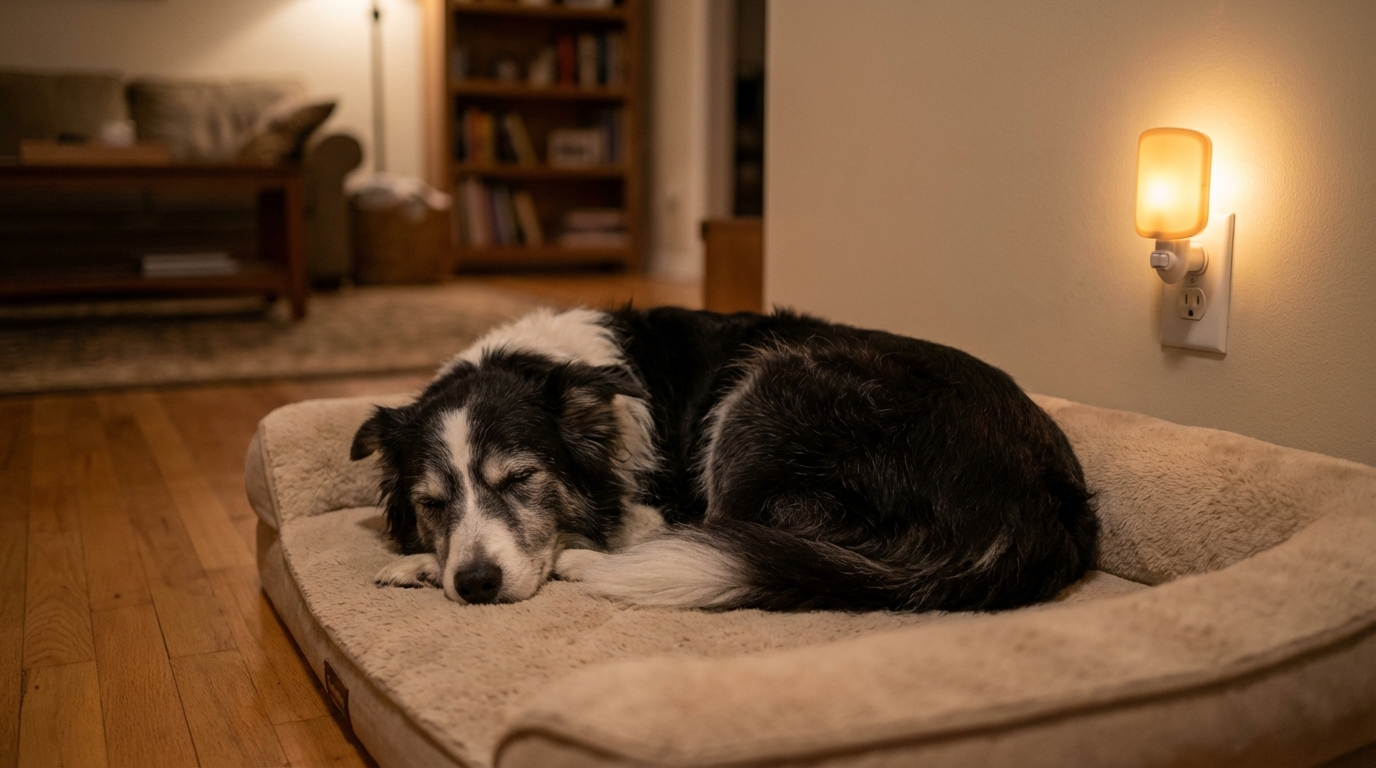
- Night-time guidance: use soft lighting for midnight toilet trips and keep pathways clear of clutter.
- Block off hazards: baby gates can prevent wandering into stairs, pools, or tight corners where they may get stuck.
Comfort can also reduce pacing. Consider supportive bedding and calming aids from our dog beds range, especially options designed for older joints and easier “step-in” access.
Quick tip: If your dog seems most unsettled after sunset, try a predictable “wind-down” routine: short toilet break, small drink, then settle on the same bed with a familiar blanket and low household noise.
Routine, enrichment and gentle brain work
Dogs experiencing dog dementia often cope best with a steady rhythm: same mealtimes, same walking route, same bedtime. Predictability reduces anxiety and can lessen senior dog confusion around transitions (visitors arriving, kids getting ready for school, or evening TV time).
Enrichment still matters, but keep it easy and frustration-free. Short, successful activities are better than complex challenges that can increase stress.
- Short sniff walks: 10–20 minutes of slow sniffing is calming and mentally engaging, even if the distance is small.
- Scatter feeding: toss part of their meal on a grass patch or snuffle-style mat to encourage natural foraging.
- Simple “find it” games: hide a few treats in obvious spots and gradually increase difficulty only if they’re enjoying it.
- Gentle training refreshers: easy cues like “touch” or “sit” help confidence—keep sessions under two minutes.
On hot Australian summer days, switch to indoor brain games to avoid heat stress. A lick mat or slow-feeding puzzle can keep your dog occupied without overexertion—browse options in our dog toys selection.
Nutrition and daily support options
While there’s no instant fix, everyday support can make a real difference in comfort and function. For cognitive decline in dogs, the goal is to back up brain health, reduce stress, and make eating and drinking easy and consistent.
- Senior-friendly meals: choose diets suited to older dogs, with quality ingredients and a digestible profile. If appetite is patchy, warming food slightly can boost aroma.
- Supplements: some owners use senior support supplements to complement diet and routine. Introduce one change at a time so you can judge what helps.
- Hydration support: place extra water stations around the home, especially if your dog seems unsure where the usual bowl is.
- Comfort and anxiety management: calming tools can help dogs settle during storms, fireworks, or busy weekends when confusion worsens.
Practical feeding setup matters too. A stable, non-slip bowl and a consistent feeding location can reduce frustration for a dog who’s becoming more disoriented. If you’re upgrading daily essentials, explore our dog feeding range.
If accidents are becoming frequent, focus on management rather than punishment. Take your dog out more often, reward toileting outdoors, and consider washable covers for favourite resting spots to keep everyone comfortable.
Frequently Asked Questions
How do I tell normal ageing from cognitive issues?
Normal ageing might mean slowing down, greying, and needing more rest. Cognitive changes are more about disorientation, altered sleep patterns, new anxiety, and behaviour shifts that don’t match your dog’s usual personality.
Why does my older dog seem more confused at night?
Many dogs show increased restlessness after dark due to lower visibility, fatigue, and disrupted sleep cycles. Gentle lighting, a predictable bedtime routine, and a clear path to their bed can reduce night-time pacing.
What can I do today to help my dog cope better?
Pick one simple improvement: add a non-slip runner, introduce a short sniff walk, or set up a consistent “base camp” resting area. Small changes that reduce stress often help more than big, sudden overhauls.
If you’re ready to make day-to-day life easier, start with comfort essentials like supportive bedding and enrichment from our dog beds and dog toys collections, and chat to your vet if symptoms are rapidly worsening or you notice sudden changes.