


When you’re managing dog exercise with joint problems, the goal isn’t to stop moving—it’s to move smarter. The right low-stress activities can keep your dog comfortable while supporting strength, balance, and confidence. Below are practical, easy-to-start options that suit everything from mild stiffness to ongoing mobility challenges.
Why low-impact movement matters for sore joints
Joint issues often create a frustrating loop: less movement leads to weaker muscles, and weaker muscles place more strain on joints. Gentle activity helps maintain muscle support around hips, knees, elbows, and spine—without the pounding that can flare discomfort.
For older pets, this is a cornerstone of senior dog fitness. Regular, controlled movement can also support healthy body weight, which is one of the biggest day-to-day factors affecting joint comfort.
Think of low impact dog exercise as “easy on the joints, useful for the body”: smooth, steady motion; good traction; and plenty of breaks. It should leave your dog brighter afterwards, not stiff and flat.
Best low-impact exercises to try at home and outdoors
Not all “gentle” activities are equal. The best options are predictable, low-slip, and adjustable in duration, so you can tailor them to your dog’s good days and off days.
- Sniff walks (slow and steady): Let your dog set the pace while they explore scents. Shorter routes with more sniffing can be more tiring (and satisfying) than a brisk march.
- Figure-8 walking: On grass or a grippy indoor surface, walk gentle figure-8s around cones (or pot plants). This encourages controlled turning and balance without speed.
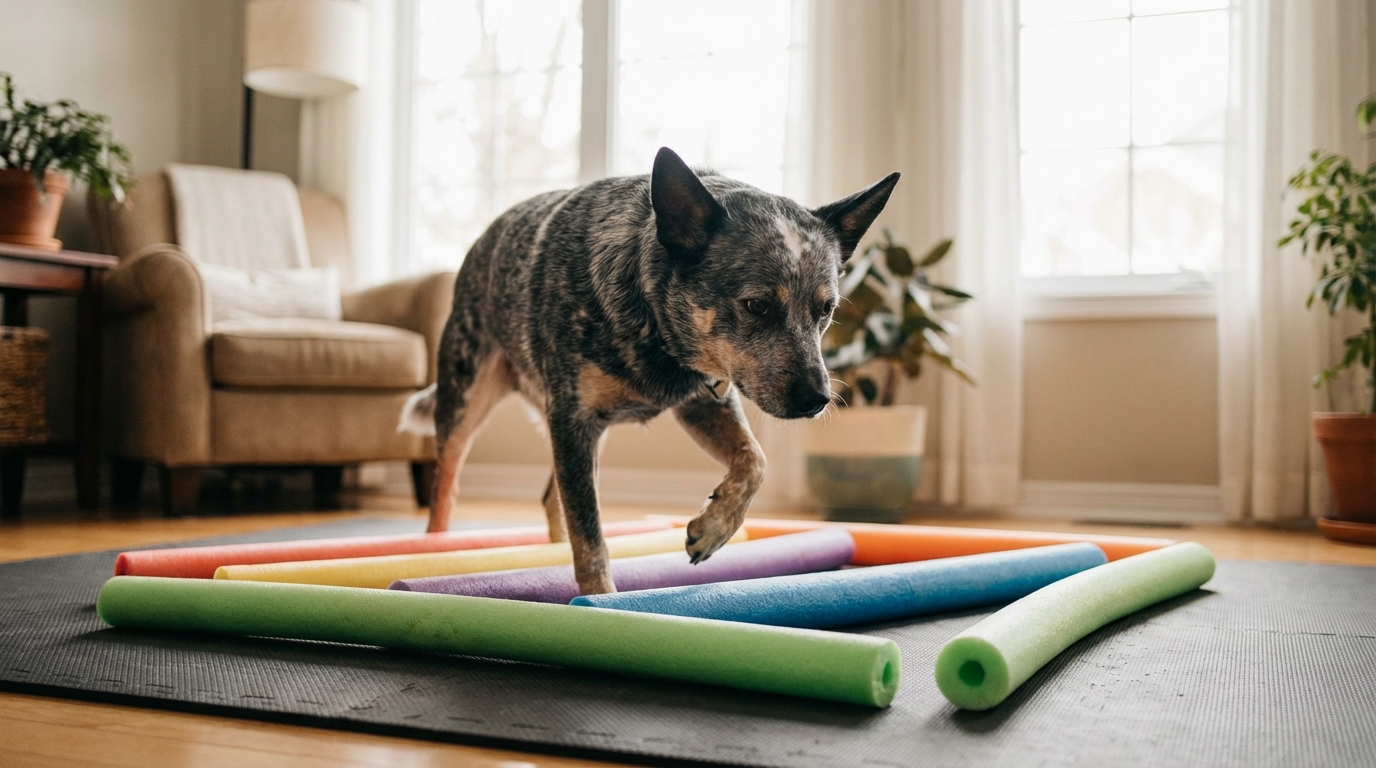
- DIY cavaletti poles (very low): Use broom handles or pool noodles on the ground for slow step-overs. Keep height minimal; the aim is careful foot placement, not “jumping”.
- Hydro sessions (swimming or underwater treadmill): Water supports body weight and reduces joint load. Stick to calm entry/exit points and towel-dry well in cooler Aussie months.
- Hill walking (tiny inclines only): A gentle slope builds rear-end strength, but avoid steep climbs and fast descents. Downhill can be harder on joints than up.
- Enrichment over cardio: Food puzzles, scatter feeding on a mat, and “find it” games keep your dog mentally busy without high-impact bursts.
If you’re shopping to support mobility, explore our Joint & Mobility collection to find everyday aids designed for comfort and movement. For dogs that struggle on slick floors, our Dog Accessories range can also help you set up a safer home routine.
Quick tip: Start every session with 3–5 minutes of very slow walking to “warm” the body, and finish with a calm sniff-and-stroll cool-down. Consistency beats intensity for sore joints.
How to build a safe weekly routine
The most common mistake with dog exercise for joint problems is doing too much on a “good day” and paying for it the next. Instead, aim for small, repeatable sessions that you can keep up across the week.
- Start with time, not distance: Try 8–12 minutes, then reassess. Add 1–2 minutes every few days if your dog stays comfortable.
- Use the “two-out-of-three” rule: If your dog has stiffness or fatigue after two of the last three sessions, reduce time or difficulty.
- Split activity: Two short outings (morning/evening) are often better than one longer walk—especially in hot Australian summers.
- Schedule rest days: Rest doesn’t mean zero movement; it can mean a shorter sniff walk plus enrichment indoors.
For senior dog fitness, routine is protective. Dogs tend to move more evenly when they know what to expect, and you’ll spot changes in comfort sooner.
Supportive gear and home setup for easier movement
Low-impact activity becomes much easier when the environment supports it. Small changes at home can reduce slips, awkward positions, and “stop-start” strain on sore joints.
- Traction first: Add runners or non-slip mats along high-traffic paths (bed to water bowl, bed to back door). This helps your dog move confidently instead of tensing up.
- Supportive bedding: A firm, well-cushioned bed helps reduce pressure points and can make standing up less of a struggle.
- Ramps and steps: Use a ramp for the car or couch rather than repeated jumping. Lowering impact here can make your daily low impact dog exercise more effective overall.
- Harness for steady assistance: A well-fitted harness gives you better control on uneven ground and can help prevent sudden lunges that jar joints.
Browse supportive options in our Joint & Mobility collection if you’re looking for practical ways to make movement feel easier day-to-day.
Signs you’re overdoing it (and what to do instead)
With joint concerns, your dog might look fine during the activity and only show discomfort later. Watch for subtle changes in posture and behaviour over the next 24 hours.
- New or increased limping during or after exercise
- Slower “sit to stand” transitions, or hesitation on stairs
- Lagging behind on walks when they usually keep up
- Licking a joint or avoiding being touched around hips/shoulders
- Stiffness the next morning after a “big” day
If you notice any of these, reduce the next few sessions: shorten time, stay on flat ground, and focus on sniff walks and enrichment. Think “maintain comfort first”, then rebuild gradually once they’re moving smoothly again.
Frequently Asked Questions
How often should I exercise a dog with sore joints?
Most dogs do best with frequent, short sessions—often daily—rather than occasional long walks. Start small and build slowly based on how your dog feels later that day and the next morning.
Is swimming always safe for dogs with mobility issues?
Swimming is often low-load, but safety depends on calm water, easy entry/exit, and your dog’s confidence. Use a floatation vest if needed and keep sessions short to avoid fatigue from paddling.
What surfaces are best for low-impact movement?
Flat, even ground with good grip is ideal—think grass, rubber matting, or firm sand. Avoid slippery tiles and steep, uneven tracks that force sudden twisting or rapid braking.
Ready to make everyday movement easier? Explore our Joint & Mobility collection for comfort-focused essentials, and chat to your vet if your dog’s limp or stiffness is worsening or sudden.