

If you've been wondering why your dog is scratching constantly, you're not alone — itchy skin is one of the most common complaints among Australian dog owners. The good news is that once you understand what's driving the itch, there are plenty of effective dog itchy skin remedies you can try at home. Let's break down the most likely causes and the steps you can take to bring your pup some real relief.
Common Causes of Itchy Skin in Dogs
There's rarely a single answer to why a dog is scratching excessively. The itch can stem from allergies, parasites, infections, or even dry skin caused by low humidity. Understanding the root cause is the first step toward lasting relief.
Allergies are the most frequent culprit. Dogs can react to environmental allergens like pollen, dust mites, and mould, or to specific ingredients in their food. Flea allergy dermatitis — where a single flea bite triggers an outsized reaction — is also extremely common in Australia's warmer regions.
Parasites such as fleas, ticks, and mites burrow into or feed on the skin, causing intense irritation. Even dogs on a regular parasite prevention programme can occasionally pick up unwanted hitchhikers at the park or the beach.
Bacterial or yeast infections often develop as a secondary problem. When a dog scratches or licks broken skin, opportunistic bacteria and yeast can move in, making the itch worse and creating a frustrating cycle.
Seasonal and Environmental Triggers in Australia
Australia's climate plays a big role in skin and coat health. Spring and early summer bring a surge in grass pollens — particularly from ryegrass and Bermuda grass — that can leave sensitive dogs miserable for months.
Humidity along the east coast can encourage yeast overgrowth on the skin, while dogs in drier inland areas may suffer from flaking and dryness during winter. Coastal dogs who love a swim can also develop irritation from salt water and sand if their coat isn't rinsed properly afterwards.
Flea season in subtropical areas like South East Queensland and Northern NSW can stretch almost year-round, making consistent prevention essential. Staying on top of these environmental factors makes a genuine difference to how comfortable your dog feels.
At-Home Remedies for Dog Skin Itch Relief
Before reaching for anything complicated, start with the basics. A gentle, soap-free oatmeal shampoo can soothe inflamed skin and wash away surface allergens after a walk. Bathing every one to two weeks is a good baseline — too often and you risk stripping the coat of its natural oils.
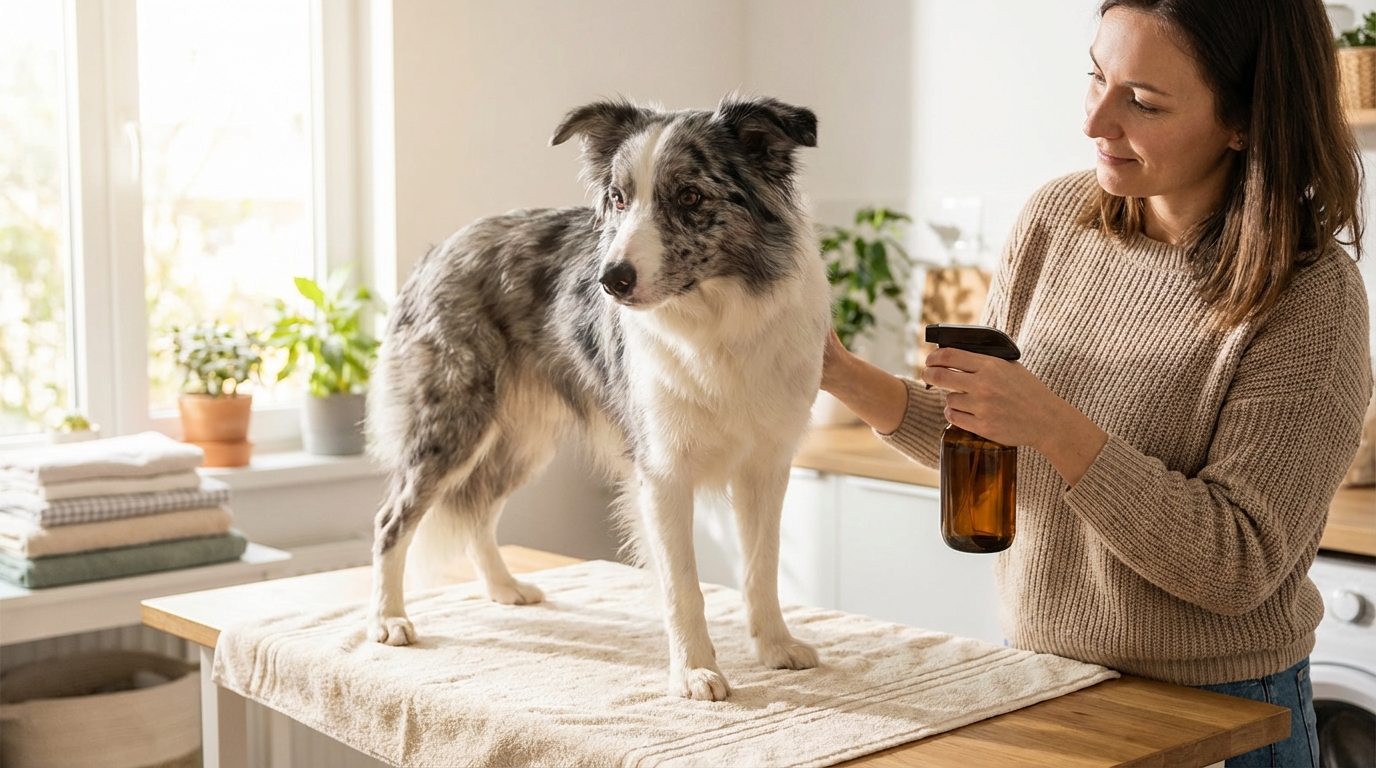
Topical skin sprays and balms formulated with soothing ingredients like aloe vera, chamomile, or colloidal oatmeal can provide targeted dog skin allergy relief between baths. These are especially handy for hot spots or localised patches of irritation on the belly and paws.
Quick tip: After every outdoor walk, wipe your dog's paws and underbelly with a damp cloth. This simple habit removes pollen and grass allergens before they have a chance to irritate the skin.
Omega-3 and omega-6 fatty acid supplements — often derived from fish oil or flaxseed — support the skin's natural barrier and help reduce inflammatory responses from the inside out. Look for supplements specifically designed for dogs, as the concentrations differ from human products.
Keeping your dog's nails trimmed also minimises damage from scratching, giving irritated skin a better chance to heal.
The Role of Diet and Nutrition
What goes into the bowl matters just as much as what goes on the coat. Food sensitivities — commonly to beef, chicken, dairy, or wheat — can manifest as persistent itching, redness around the ears, and recurring paw licking.
An elimination diet is the gold standard for identifying food-related triggers. This involves feeding a single novel protein and carbohydrate source for six to eight weeks, then gradually reintroducing ingredients to pinpoint the offender.
High-quality, limited-ingredient diets can make life much easier if your dog has confirmed sensitivities. Pairing a clean diet with a dedicated health support routine — including gut-friendly probiotics — often delivers noticeable improvements within a few weeks.
Always ensure fresh water is available, too. Proper hydration supports skin elasticity and helps the body flush out inflammatory compounds more efficiently.
When to Take Action
Mild, occasional scratching is normal. But if your dog is scratching to the point of hair loss, broken skin, or visible distress, it's time to step things up.
Watch for these warning signs:
- Red, inflamed, or thickened skin
- Persistent paw chewing or face rubbing
- Foul odour from the skin or ears
- Scabs, crusts, or oozing patches
- Significant hair thinning or bald spots
Many of these issues respond well to a combination of topical soothing products, dietary adjustments, and consistent parasite control — all things you can start at home. Building a solid skin care routine now can prevent minor irritation from snowballing into something more serious.
Frequently Asked Questions
Can I use human moisturisers on my dog's dry skin?
No. Human skincare products often contain fragrances, preservatives, and pH levels that aren't suitable for dogs. Stick to products specifically formulated for canine skin, such as oatmeal-based balms or veterinary-grade skin sprays.
How quickly do omega-3 supplements improve itchy skin?
Most dogs show improvement within four to six weeks of consistent daily supplementation. Omega-3s work by modulating the inflammatory response, so patience and regularity are key to seeing results.
Is it normal for my dog to scratch more in spring?
Yes, seasonal scratching is very common in Australia, especially during the spring pollen peak. If the scratching is mild and manageable, regular bathing and paw wipes may be enough. If it's severe or worsening each year, have a chat with your vet to explore longer-term management options.
Ready to give your dog's coat the care it deserves? Browse our full range of skin and coat health products to find soothing shampoos, supplements, and topical treatments that can make a real difference.