

Wondering when a dog is considered a senior in real life, not just on paper? The most accurate answer is: it depends. Senior thresholds vary by breed, size and individual health, so it’s often more helpful to watch for gradual changes in comfort, energy and routine. Below you’ll find a practical age guide, early signs of ageing to spot at home, and simple care upgrades that keep your mate confident and comfortable.
What “senior” means (and why age isn’t the whole story)
If you’re trying to pin down the senior dog age, start with a reality check: there isn’t one universal number. Smaller dogs generally age more slowly than large breeds, and even within the same size group, genetics, previous injuries and lifestyle all influence ageing pace.
Rather than focusing on a birthday alone, think in terms of functional age: how easily your dog gets up, how long they can walk, how well they recover after activity, and whether daily habits have shifted. This approach answers the question most people actually mean: “Do we need to change our care plan yet?”
- Small breeds: may stay sprightly for longer, but can still develop dental and vision changes.
- Medium breeds: often show gradual changes in stamina and body condition through mid-life.
- Large and giant breeds: commonly benefit from mobility and weight support earlier to stay comfortable.
Credibility note: because health needs can change quickly with age, many vets recommend twice-yearly check-ups for senior dogs. It’s a practical way to catch dental disease, arthritis changes, weight shifts and organ health issues early—especially if you’ve noticed any new stiffness, appetite changes, or altered sleep.
A simple size guide: typical ages dogs enter senior years
Every dog is different, but this broad guide can help you know when to start watching more closely and planning small upgrades. For mixed breeds, your vet can help estimate likely adult size and ageing pace.
- Small dogs (adult weight under ~10 kg): often enter their senior years around 8–10+ years.
- Medium dogs (adult weight ~10–25 kg): often around 7–9 years.
- Large dogs (adult weight ~25–40 kg): often around 6–8 years.
- Giant dogs (adult weight 40 kg+): often around 5–7 years.
Important: these are typical ranges, not rules. Some dogs feel “older” earlier due to arthritis, previous injuries or chronic conditions, while others stay energetic well past these ages.
Common ageing changes to look for at home
Ageing changes are often easy to miss because they show up as small “quirks” first. The key is noticing patterns: what’s new, what’s becoming more frequent, and what’s affecting quality of life.
- Slower movement: taking longer to stand, stiffness after naps, or hesitating before stairs or jumping into the car.
- Changes in activity: shorter play sessions, less interest in long walks, or needing more rest after normal exercise.
- Weight and muscle shifts: gradual weight gain, a softer body shape, or muscle loss over the back legs.
- Sleep and routine changes: sleeping more during the day, restlessness at night, or wanting to be closer to you.
- Coat and skin changes: duller coat, more shedding, dry skin, or slower coat regrowth after clipping.
- Dental and breath changes: bad breath, dropping kibble, chewing one-sided, or preferring softer foods.
- Sense changes: not hearing cues as well, bumping into objects in dim light, or being startled more easily.
In Australia, seasonal heat can make these changes feel more dramatic. If your dog seems to “age overnight” during a humid summer in Brisbane or a string of hot days in Adelaide, it may be heat stress revealing underlying discomfort rather than a sudden decline.
When to check in with your vet: book a visit promptly if you notice persistent mobility changes (limping, stiffness that lasts), unexplained weight loss, increased thirst or urination, coughing, new confusion or disorientation, or sudden appetite changes. These can be signs of conditions that need medical attention, not just normal ageing.
Simple upgrades to daily care that make a big difference
Once you suspect your dog is entering their senior stage, small tweaks can protect joints, support digestion and keep confidence high. These changes are often cheaper and easier than dealing with a bigger problem later.
- Make movement easier indoors: place non-slip runners on slick tiles or floorboards, especially along high-traffic routes (bed to water bowl, hallway to back door). If your dog slips, they may start avoiding movement altogether.
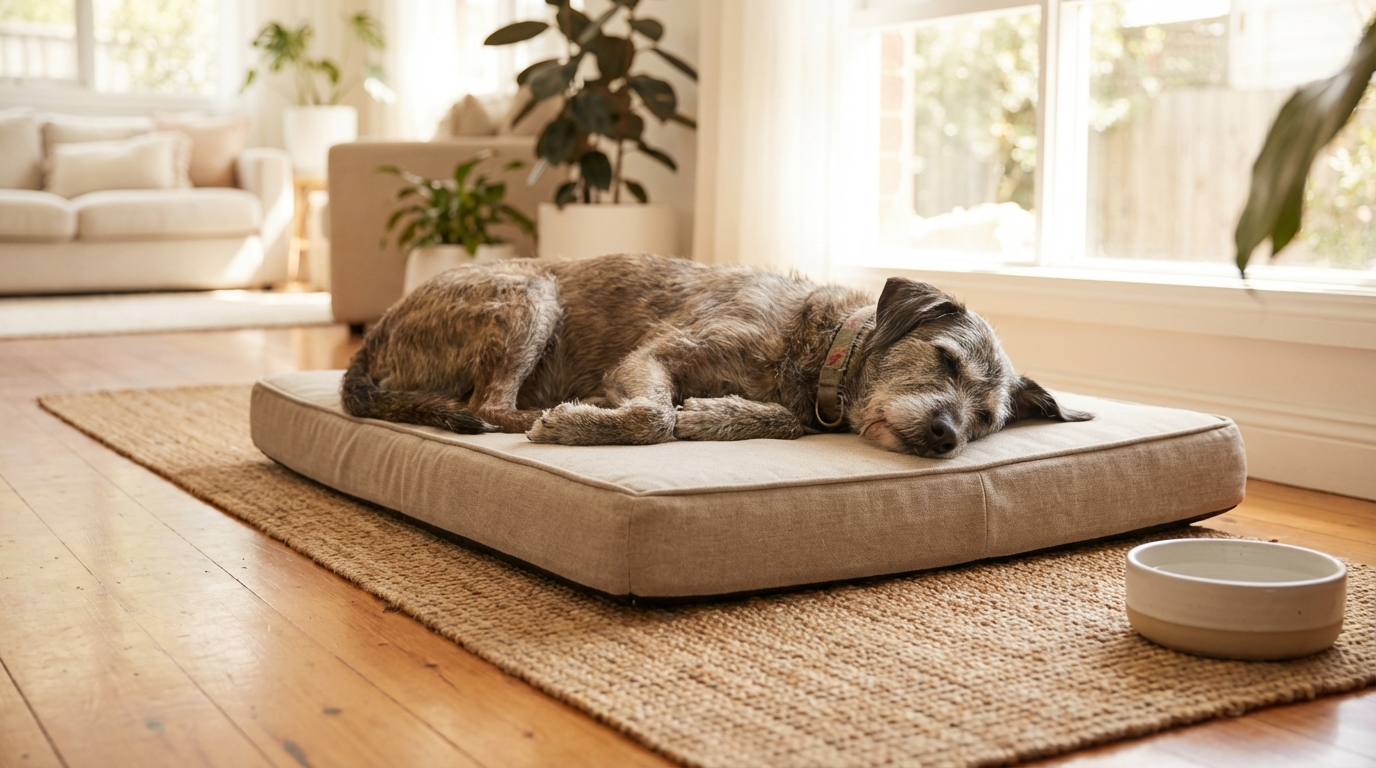
- Choose a supportive bed: look for a mattress-style bed with enough depth that hips and shoulders don’t “bottom out”. Orthopaedic foam can be helpful for pressure relief, while bolsters suit dogs that like to curl and feel secure. Position bedding away from draughts in winter and offer a cooler spot in summer.
- Add a ramp where it counts: for cars, couches or a few backyard steps, a ramp can reduce repetitive impact. As a practical guide, gentler is usually better: aim for a low angle if you can, and choose a surface with good grip so paws don’t slide.
- Warm up and cool down: start walks slowly, keep sessions shorter, and swap big “fitness” walks for multiple gentle outings with sniff breaks. In summer, walk early or late and avoid hot footpaths that can burn pads.
- Protect paws and nails: keeping nails trimmed improves traction and posture. Check paw pads for dryness or cracks, especially after beach walks or very hot days.
- Prioritise dental comfort: daily brushing is ideal, but even a few times a week helps. Dental-friendly chews can support routine care, but ongoing bad breath, drooling or reluctance to chew needs a vet dental check.
- Keep minds busy without overdoing it: use slow feeders, puzzle toys and “find it” sniff games. Short, upbeat training sessions (sit, touch, gentle targeting) keep confidence up while respecting lower stamina.
Quick tip: Track three things for two weeks: walk duration, appetite, and how quickly your dog gets up from lying down. A simple note in your phone makes gradual changes much easier to spot and explain to your vet if needed.
If you’re shopping for comfort upgrades, start with the basics and build from there. A supportive bed, better traction, and easier access to favourite spots can transform daily movement—especially for dogs that are stiff first thing in the morning.
Food and supplements: what to prioritise for older dogs
Nutrition is one of the most practical levers you can pull as your dog gets older. The goal is to maintain lean muscle, support mobility and keep digestion steady while avoiding unnecessary weight gain.
- Healthy weight: extra kilos add load to joints and can make older dogs reluctant to move. If treats are part of your routine, reduce meal portions slightly or switch to lower-calorie reward options.
- Muscle maintenance: consistent, high-quality protein supports strength and stability. If your dog is losing muscle (especially over the back end), it’s worth discussing diet and activity changes with your vet.
- Digestive ease: some seniors do better with more digestible ingredients and added fibre. Signs you may need to review food include frequent soft stools, gassiness, or irregular appetite.
- Mobility support: some diets and joint-support supplements are designed to support comfort and everyday movement. Choose reputable options and introduce changes slowly; if your dog is on medication or has health conditions, check with your vet before adding new products.
How your dog eats can matter as much as what they eat. Many seniors prefer smaller meals more often, a raised feeder to reduce neck strain, or slightly softened food if dental sensitivity is developing. Keep fresh water easily accessible, especially during hot Australian weather.
Treat choices matter too. Swap overly rich treats for simpler options that are easier on digestion, and use treats strategically for gentle training and enrichment rather than “extra calories on top”.
Frequently Asked Questions
Is there a single age when a dog becomes a senior?
Not really. It varies with breed and size, so the best guide is a mix of calendar age and changes in mobility, stamina and recovery. If you’re unsure whether your dog has entered their senior years, watch for consistent shifts in daily comfort and routines.
What are the earliest signs of ageing I’ll notice?
Often it’s subtle: taking longer to get up, hesitating on stairs, sleeping more, or needing longer breaks on walks. Appetite changes and increased fussiness with food can also be early clues, especially if dental discomfort is developing.
Should I change my dog’s routine as soon as they seem older?
Yes, but keep it gradual. Start with small improvements like softer bedding, shorter walks with more sniff breaks, and weight management, then adjust as you learn what helps. The aim is to preserve enjoyment and confidence, not to “wrap them in cotton wool”.
When should I be concerned rather than assuming it’s normal ageing?
Seek veterinary advice if symptoms are sudden, worsening, or persistent. Red flags include ongoing limping or stiffness, unexplained weight loss, increased thirst or urination, coughing, confusion, or sudden appetite changes.
If you’re ready to support your dog’s next life stage, start by prioritising traction at home, easier access (ramps or steps), and a bed that supports hips and shoulders. Then consider senior-friendly add-ons like joint-support supplements, non-slip mats, and raised feeders based on what you’re noticing day to day. If any changes feel sudden or severe, chat to your vet.