

Getting the right fit on a dog harness can make the difference between enjoyable walks and a frustrating tug-of-war. Whether you've just adopted a new pup or you're upgrading your gear, this dog harness fitting guide will walk you through every step so your four-legged mate stays comfortable, safe, and secure on every outing.
Why Harness Fit Matters
A poorly fitted harness doesn't just look wrong — it can cause real problems. If it's too loose, your dog can slip out mid-walk, which is a genuine safety risk near busy roads or off-lead areas. If it's too tight, it can restrict breathing, chafe the skin, and cause long-term discomfort.
A well-fitted harness distributes pressure across the chest and shoulders rather than concentrating it on the throat, the way a collar sometimes can. This is especially important for breeds prone to respiratory issues, smaller dogs, and enthusiastic pullers. It's also a key part of effective lead training, giving you more control without causing your dog distress.
Measuring Your Dog for the Right Size
Before you even look at harness styles, you need two key measurements: the girth (the widest part of your dog's ribcage, just behind the front legs) and the neck circumference. Use a flexible fabric tape measure and keep it snug but not tight — you should be able to slide one finger underneath.
Write down these numbers and compare them against the manufacturer's sizing chart. Every brand sizes slightly differently, so don't assume your dog is always a "medium." If your dog falls between two sizes, it's generally better to size up and adjust the straps down.
Keep in mind that puppies grow quickly, so revisit your measurements every few weeks. Australian summers can also mean thicker or thinner coats depending on the season, which may subtly affect fit.
Step-by-Step: How to Fit a Dog Harness
Once you have the right size harness in hand, follow these steps for a secure and comfortable fit:
- Identify the top and bottom. Locate the D-ring (leash attachment point) — this typically sits on the back, between the shoulder blades. Some front-clip harnesses have a ring on the chest piece instead.
- Loosen all straps. Open all buckles and loosen every adjustable strap before you start. This makes it much easier to slip on without a wrestling match.
- Slip it over the head or step in. For over-the-head styles, gently guide your dog's head through the neck loop. For step-in harnesses, place your dog's front paws into the leg holes and lift the straps up around the body.
- Clip and adjust. Fasten the side or belly buckles, then begin tightening the straps evenly on both sides. Aim for a snug fit that isn't pinching.
- Do the two-finger test. Slide two fingers flat under any strap. They should fit comfortably without forcing. If you can't fit two fingers, it's too tight. If you can fit more than two, it's too loose.
Once everything is buckled, ask your dog to walk around the house for a few minutes. Watch for any signs of rubbing, awkward movement, or the harness shifting to one side.
Quick tip: Pair your new harness with a quality lead from our range of dog collars and leads for the best walking experience. A 1.2-metre to 1.8-metre lead gives you solid control without restricting your dog's ability to explore.
Common Fitting Mistakes to Avoid
Straps sitting on the windpipe. The front chest strap should rest on the breastbone, not up against the throat. If it rides too high, your dog is essentially being choked the same way a collar would.
Ignoring the "wiggle test." After fitting, gently try to pull the harness over your dog's head. If it slides forward, the girth strap needs tightening. Many escape artists manage to back out of harnesses that pass the two-finger test but fail the wiggle test.
Not rechecking fit regularly. Dogs change shape — through growth, weight fluctuations, or seasonal coat changes. Make it a habit to check the fit every couple of weeks, especially for younger dogs.
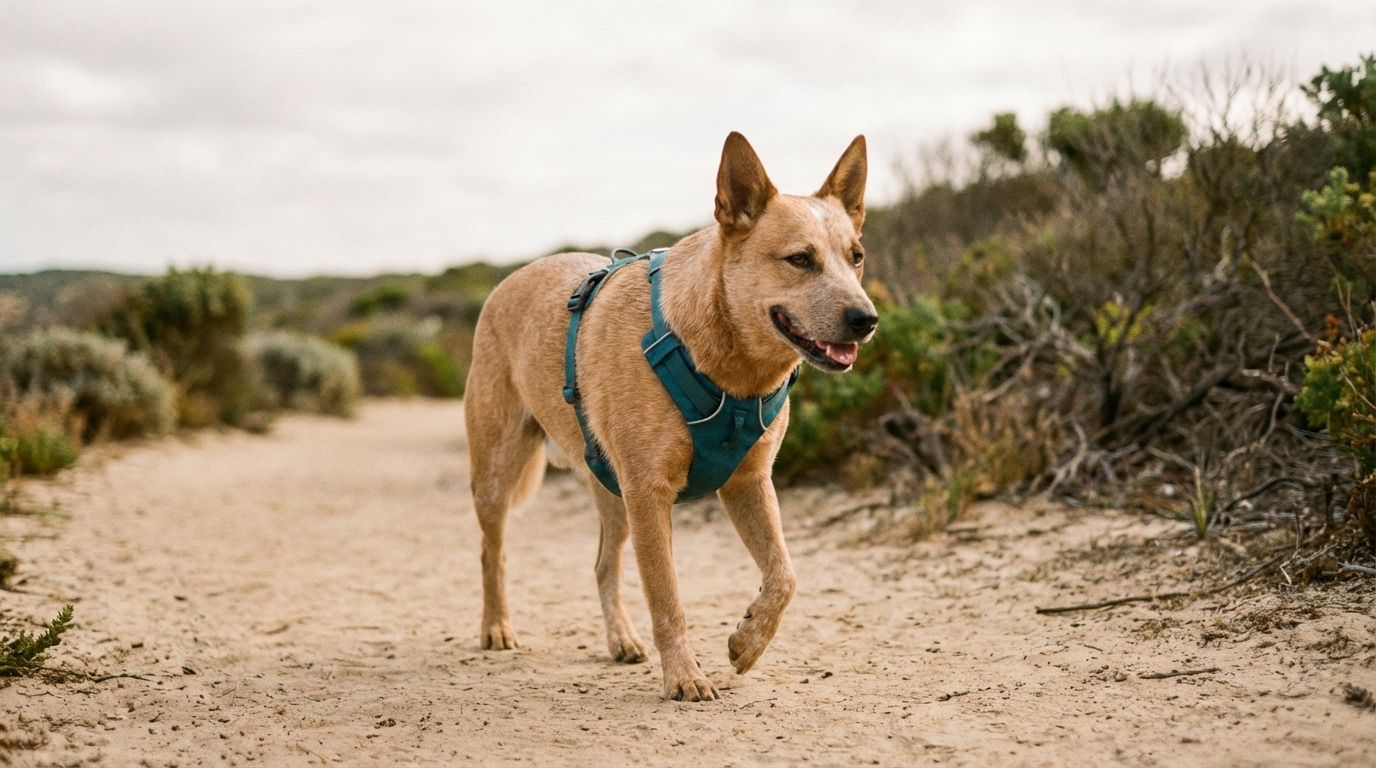
Using the wrong style for the activity. A lightweight, minimalist harness might be fine for calm neighbourhood walks but won't provide enough support for a high-energy kelpie bounding through bushland. Match the harness to your dog's activity level and pulling tendencies.
Tips for Choosing the Best Dog Harness
Not all harnesses are created equal. Here are some practical tips to guide your choice:
- Front-clip harnesses are ideal for dogs that pull, as they redirect forward motion back towards you.
- Back-clip harnesses suit well-trained dogs who walk calmly and don't need pulling correction.
- Padded harnesses are worth considering for dogs with short coats or sensitive skin, particularly during Australia's warmer months when less fur means more direct contact with straps.
- Reflective stitching or bright colours are a smart choice if you walk during early mornings or after sunset, which is common in southern states during winter.
Browse our full collection of dog supplies to find harnesses, leads, and accessories suited to your dog's size and temperament.
If your dog is between a front-clip and back-clip style, look for dual-clip harnesses that offer both attachment points. These give you flexibility as your training progresses.
Frequently Asked Questions
How tight should a dog harness be?
You should be able to slide two flat fingers between any strap and your dog's body. The harness should be snug enough that it doesn't shift or rotate during movement, but loose enough that it doesn't restrict breathing or leave marks on the skin.
Can a dog wear a harness all day?
It's best to remove the harness when your dog is resting at home. Prolonged wear can cause chafing, matting of the fur, and skin irritation — especially in warm, humid conditions common across much of Australia during summer. Put it on for walks, training, and outings, then take it off when you're back inside.
How do I stop my dog from slipping out of the harness?
Start by performing the wiggle test — gently pull the harness forward over the head. If it moves too freely, tighten the girth strap behind the front legs. If your dog is a persistent escape artist, consider a harness with a secondary belly strap or a more secure three-point design. Ensuring you have the correct size from the start is the most effective prevention.
A properly fitted harness transforms your daily walks and training sessions. If you're ready to find the perfect fit, explore our range of harnesses, collars, and leads at Pacific Pet Supplies — and if your dog has specific health concerns that might affect harness choice, have a quick chat with your vet for tailored advice.