
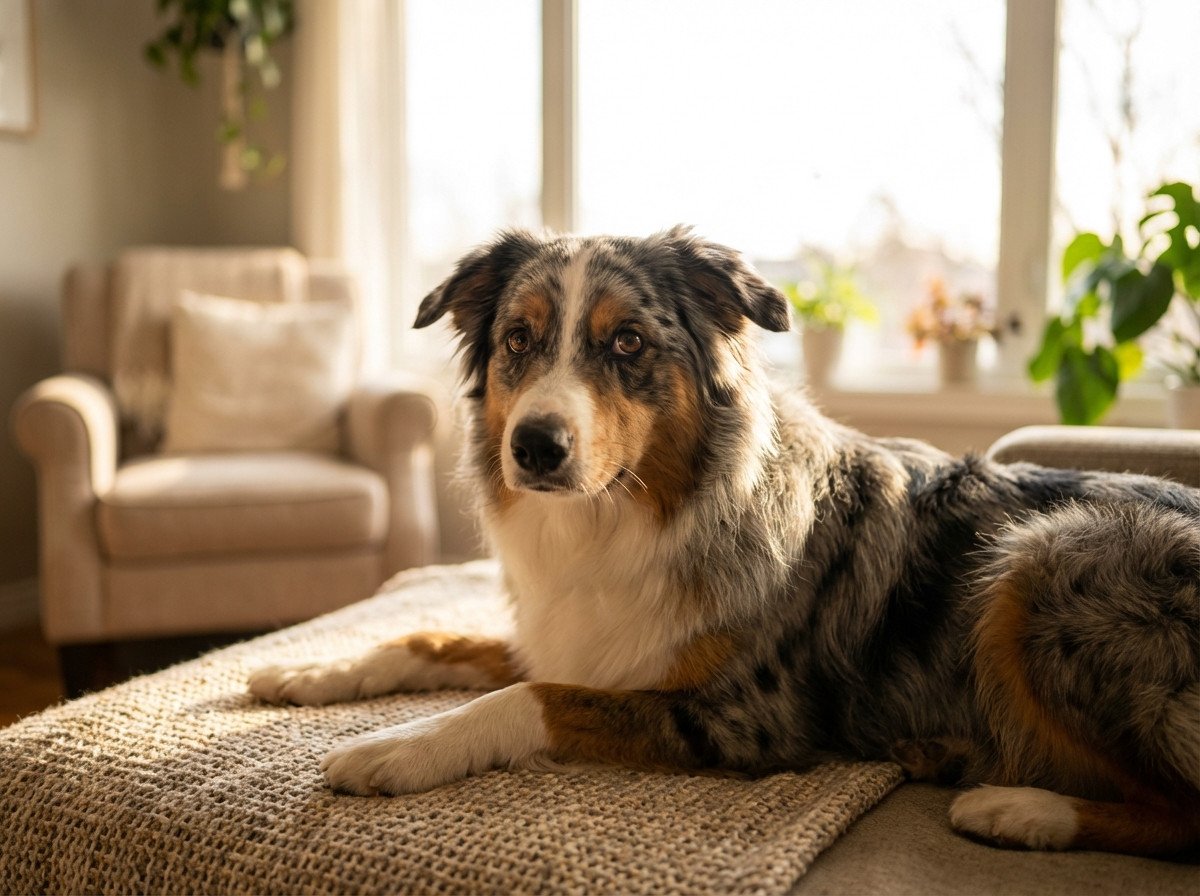
If your dog paces, pants, or destroys furniture the moment you leave, you could be dealing with common dog anxiety symptoms that affect thousands of Australian pets every year. Recognising these signs early — and knowing which treatments actually work — can transform your dog's quality of life. Below, we break down exactly what to look for and how to calm an anxious dog using practical, everyday strategies.
Common Signs Your Dog Is Anxious
Anxiety in dogs doesn't always look dramatic. Sometimes the symptoms are subtle — a tucked tail, lip-licking, or yawning when your dog isn't tired. Learning to read these early signals helps you act before the behaviour escalates.
More obvious symptoms of dog anxiety include:
- Excessive barking or whining when left alone
- Destructive chewing, scratching at doors, or digging
- Panting, drooling, or trembling without a physical cause
- Pacing in repetitive patterns
- Loss of appetite or sudden toileting accidents indoors
- Attempting to escape the house or yard
Some dogs display only one or two signs, while others show a cluster. The key is to notice changes in your dog's baseline behaviour. A dog that suddenly becomes clingy or withdrawn is telling you something.
What Triggers Anxiety in Australian Dogs
Understanding the root cause makes treatment far more effective. In Australia, some triggers are seasonal — summer storm season across Queensland and New South Wales, for instance, sends countless dogs into a panic every year. New Year's Eve fireworks are another reliable trigger nationwide.
Separation anxiety is the most common form. It tends to develop in dogs that have experienced rehoming, changes in routine, or prolonged time with their owners (as many experienced during lockdowns). Dogs left alone for extended work days are particularly vulnerable.
Other frequent triggers include car travel, unfamiliar visitors, moving house, the arrival of a new baby or pet, and visits to the groomer. Rescue dogs and certain breeds — including Border Collies, German Shepherds, and Cavalier King Charles Spaniels — may be genetically predisposed to heightened anxiety.
Proven Strategies to Calm an Anxious Dog
You don't need to overhaul your life to help an anxious dog. Small, consistent changes often make the biggest difference.
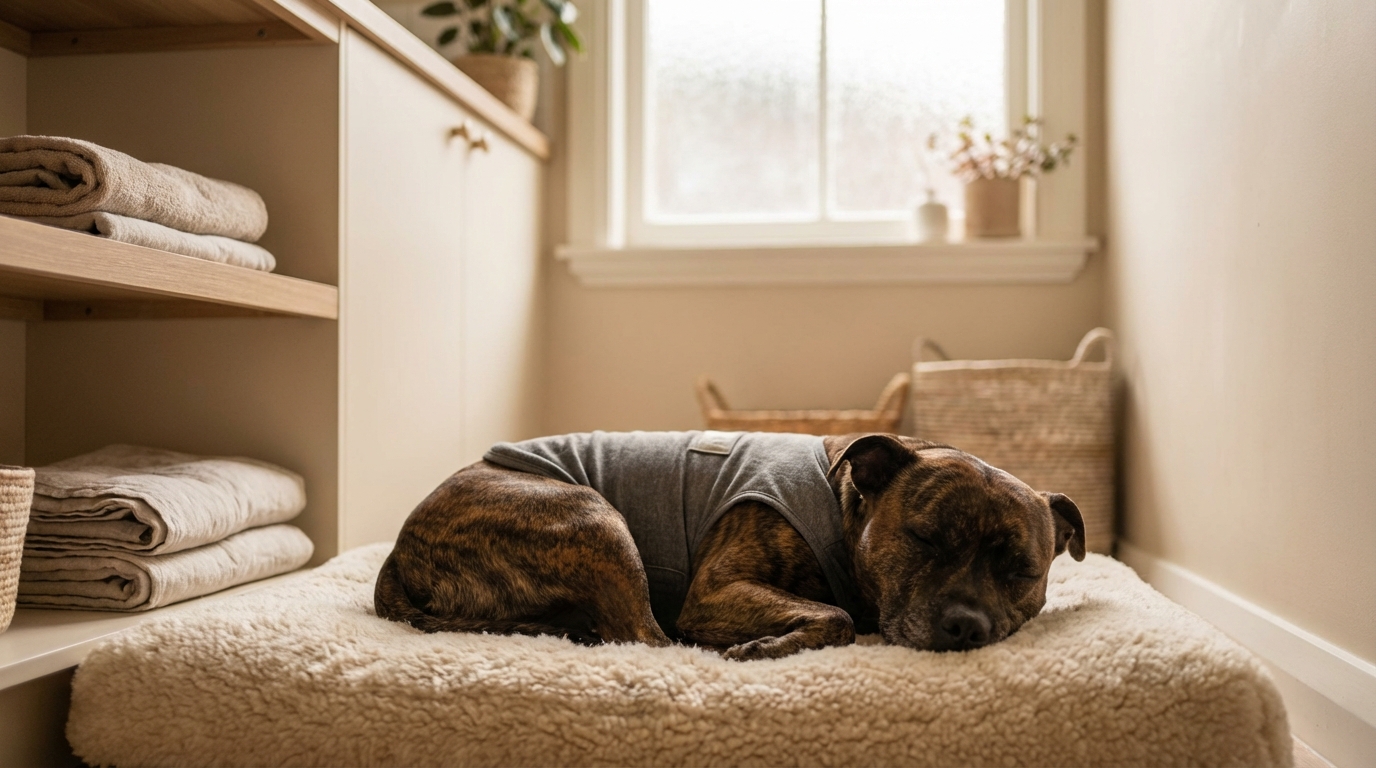
Create a safe space. Give your dog a quiet retreat — a crate covered with a blanket, a corner of a room with their bed, or a sheltered spot away from windows. During storms, an interior room with background music or white noise can significantly reduce stress.
Desensitise gradually. If your dog panics when you pick up your keys, practise picking them up without leaving. Build up departure cues slowly so they lose their association with being left alone. Pair these exercises with positive reinforcement and you'll see real progress. Our guide to dog behaviour and training covers these techniques in more detail.
Exercise before stressful events. A tired dog is a calmer dog. A long walk or a session of fetch before you leave for work can burn off the nervous energy that fuels anxious behaviour. In warmer months, schedule this for early morning or evening to avoid the heat.
Quick tip: Practise short departures of just 2–5 minutes and gradually increase the time. Reward your dog with a treat or calm praise when you return and they've stayed settled. Consistency over days and weeks is what builds lasting confidence.
Maintain a routine. Dogs thrive on predictability. Feeding, walking, and play at consistent times each day helps reduce the uncertainty that feeds anxiety.
Anxiety Treatment Products That Actually Work
When behavioural strategies need a boost, the right products can make a meaningful difference to your dog's anxiety treatment plan.
Calming supplements containing ingredients like L-tryptophan, chamomile, or valerian root support relaxation without sedation. They're ideal for everyday stress or predictable events like travel or grooming appointments.
Pheromone diffusers and sprays mimic the natural calming pheromones produced by nursing mothers. Plug a diffuser into the room where your dog spends most of their time for continuous, passive support.
Pressure wraps apply gentle, even pressure around the torso — similar to swaddling a baby. Many dogs respond remarkably well during thunderstorms or fireworks when wearing one.
Enrichment toys and lick mats redirect nervous energy into a focused, soothing activity. Freezing a lick mat with dog-safe yoghurt or peanut butter gives your pet a calming task to work through while you're away.
Browse our full range of dog anxiety and stress relief products to find the right combination for your pet.
Building a Long-Term Management Plan
Anxiety rarely disappears overnight. Think of management as layering strategies: routine, exercise, training, and calming products all work together over time.
Track your dog's triggers and responses in a simple journal or phone note. Over weeks, you'll spot patterns — perhaps your dog is worse on windy days, or only destructive in the first 20 minutes after you leave. These insights let you fine-tune your approach.
Celebrate small wins. If your dog went from destroying a shoe every day to only whining at the door, that's genuine progress. Gradual improvement is the most sustainable kind.
If your dog's anxiety is severe — causing self-harm, extreme weight loss, or constant distress — it's worth having a chat with your vet to rule out underlying health issues and discuss additional support options.
Frequently Asked Questions
How can I tell if my dog's behaviour is anxiety or just boredom?
Boredom-related behaviour tends to stop once your dog gets more exercise and mental stimulation. Anxiety-driven behaviour often includes physical signs like trembling, panting, or drooling, and typically worsens around specific triggers such as departures or loud noises.
Can puppies develop anxiety, or is it only an adult dog issue?
Puppies can absolutely develop anxiety, especially during critical socialisation periods between 8 and 16 weeks. Early positive exposure to new people, sounds, and environments helps build resilience. If you notice fearful behaviour in a young pup, address it early with gentle desensitisation.
How long does it take for calming products to show results?
Pheromone diffusers and pressure wraps often show effects within the first use, though full benefits may take a week or two of consistent use. Calming supplements typically need 4–6 weeks of daily use before you notice a clear difference in your dog's demeanour.
Helping your dog feel safe and settled is one of the most rewarding things you can do as a pet owner. Explore our anxiety and stress relief collection to find calming solutions tailored to your dog's needs — and start making a difference today.