


There's nothing quite like packing the car, leashing up your best mate, and heading into the bush for a weekend under the stars. Camping with dogs is one of the most rewarding ways to bond with your four-legged companion — and Australia has no shortage of spectacular spots to do it. With a little preparation, you can make sure the trip is safe, comfortable, and genuinely enjoyable for everyone.
Choosing a Dog-Friendly Campsite in Australia
Not every campground welcomes pets, so research is your first step. National parks across most Australian states have strict rules — many prohibit dogs entirely to protect native wildlife. Instead, look for state forests, private campgrounds, and council-managed reserves that explicitly allow dogs on lead.
Popular dog-friendly camping destinations include parts of the Murray River region in Victoria, selected spots along the NSW South Coast, and numerous bush camps throughout Queensland's Sunshine Coast hinterland. Always check current fire restrictions and seasonal closures before booking, especially during the hotter months from November to March.
Many campgrounds require proof of registration and up-to-date vaccinations, so keep that paperwork handy. Booking ahead during school holidays is essential — pet-friendly sites fill up fast.
Packing Essentials for Your Dog
Your dog's camping kit should cover the basics: food, water, shelter, restraint, and first aid. Bring more fresh water than you think you'll need — not all creek or dam water is safe for dogs to drink, particularly in areas with blue-green algae warnings during warmer months.
Pack enough quality food and treats for the entire trip plus an extra day's worth, just in case. Stick with your dog's regular diet rather than introducing anything new — an upset stomach in a tent is nobody's idea of fun.
A sturdy collar and lead are non-negotiable. Even if your dog has reliable recall, most campgrounds require dogs to be on lead at all times. Bring a long line so they can still explore within a safe radius. A portable tie-out stake works brilliantly for keeping your dog secure while you set up camp.
Don't forget a dog-specific first aid kit with tick tweezers, antiseptic wipes, bandages, and any regular medications your dog takes. A lightweight, packable dog bed or mat gives them a comfortable, familiar spot to sleep.
Quick tip: Freeze a portion of your dog's wet food before you leave. It doubles as an ice pack in the esky during transit, and you'll have a cool, ready-to-serve meal when you arrive at camp.
Keeping Your Dog Safe at the Campsite
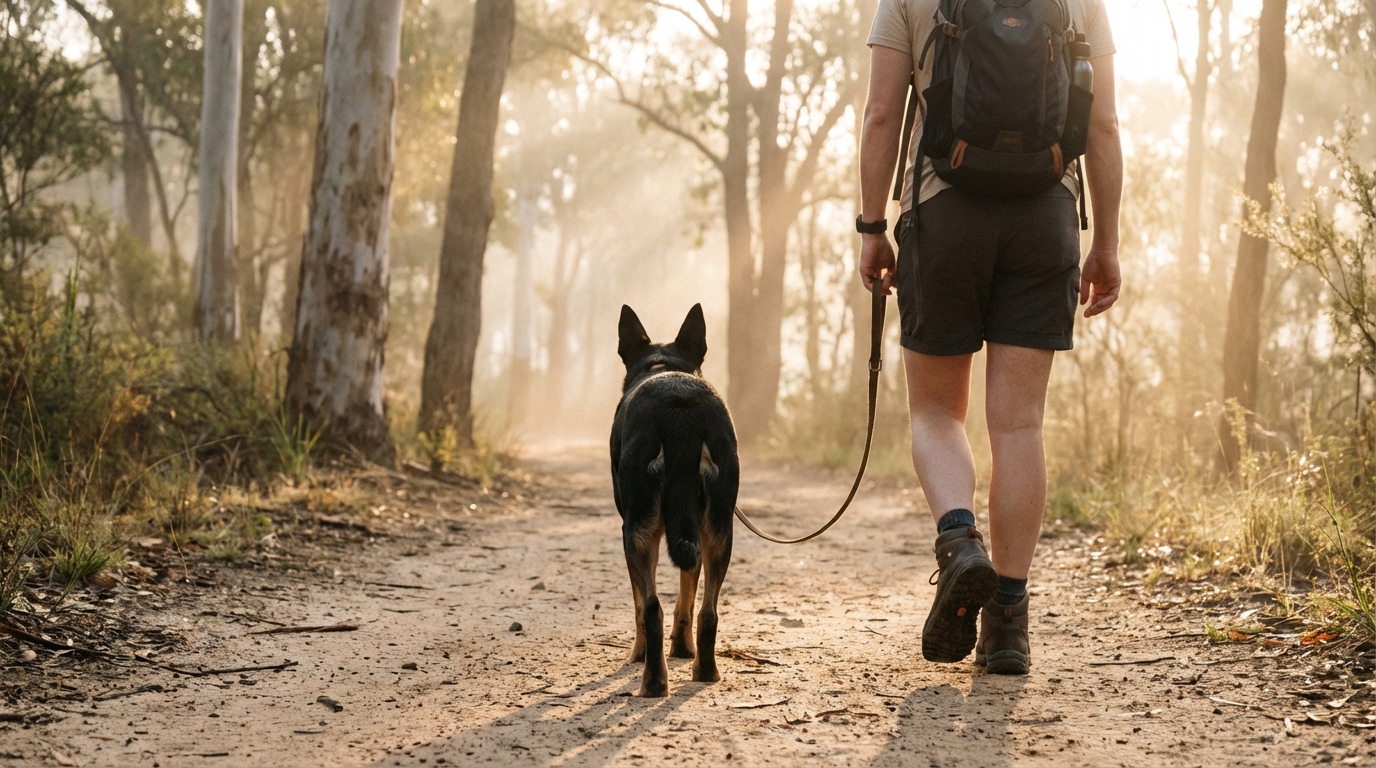
Australia's outdoors comes with hazards that city dogs rarely encounter. Paralysis ticks are a serious threat along the eastern seaboard, particularly in coastal and bushland areas from spring through autumn. Make sure your dog's tick prevention is current before you head out, and do thorough tick checks at least twice daily — paying close attention to ears, gums, armpits, and between toes.
Snakes are active in warmer weather and tend to shelter under logs, rocks, and long grass. Keep your dog close, stick to cleared paths around camp, and avoid letting them investigate hollow logs or rock crevices. If you suspect a snake bite, keep your dog as still as possible and get to a vet immediately.
At the campsite itself, store all food securely. Dogs can be surprisingly resourceful when it comes to raiding cooler bags, and human foods like onions, grapes, chocolate, and macadamia nuts are toxic to dogs. Keep rubbish sealed and out of reach too.
Temperature management matters. In summer, ensure your dog has constant access to shade and fresh water. In cooler alpine regions during winter, a warm jacket and insulated sleeping mat will help them stay comfortable through chilly nights.
Trail Etiquette and Wildlife Awareness
Being a responsible dog owner on the trail protects both wildlife and your dog's reputation as a welcome campground guest. Always keep your dog on lead in shared areas and on marked trails. Even the friendliest dog can startle other hikers, chase wildlife, or stumble into a dangerous situation off-lead.
Australia's native animals — from wombats and echidnas to kangaroos and koalas — are easily stressed by dogs. Many ground-nesting birds are particularly vulnerable. Keeping your dog leashed and on designated tracks minimises disturbance and helps preserve these environments for future visits.
Pick up after your dog every single time, even on bush trails. Carry biodegradable waste bags and pack out everything you bring in. This simple act of courtesy goes a long way toward keeping campgrounds open to pets.
If you encounter other dogs on the trail, ask before allowing any interaction. Not every dog is comfortable meeting strangers, and a calm, controlled greeting prevents unnecessary conflict.
Post-Trip Care and Clean-Up
Once you're home, give your dog a thorough once-over. Check their paws for cuts, grass seeds (especially between toes), and burrs. Grass seeds are notorious in Australia for burrowing into skin and ears, sometimes requiring professional removal if left unnoticed.
A good bath will remove dirt, sap, and any hitchhiking insects. Pay attention to ears — floppy-eared breeds are particularly prone to picking up debris and developing infections after outdoor adventures.
Do one final tick check even if you've been diligent throughout the trip. Paralysis tick symptoms can take several days to appear, so monitor your dog for any lethargy, wobbliness, or changes in breathing over the following week.
Finally, wash and dry all your dog's camping gear — bedding, leads, harnesses, and bowls — so everything is fresh and ready for the next adventure.
Frequently Asked Questions
Can I take my dog to national parks in Australia?
Most Australian national parks do not permit dogs, with a few exceptions in certain states. Victoria, for example, allows dogs in selected park areas. Always check the specific park's regulations on the relevant state parks website before planning your trip.
What should I do if my dog gets a tick while camping?
Remove the tick as quickly as possible using fine-tipped tweezers or a tick removal tool. Grasp the tick close to the skin and pull steadily without twisting. Monitor your dog closely for symptoms like weakness, vomiting, or difficulty breathing, and seek veterinary attention if any signs develop.
How do I keep my dog calm at a busy campground?
Bring familiar items from home — their regular bed, a favourite toy, and a worn piece of your clothing can all help reduce anxiety. Setting up a shaded, quiet spot at your campsite with a secure tie-out gives your dog a predictable home base. A long walk or swim before settling in for the evening also helps burn off excess energy.
Ready to gear up for your next outdoor adventure with your dog? Browse our range of leads and collars built for the trail, and stock up on quality treats to keep tails wagging around the campfire. If your dog has any underlying health concerns, have a quick chat with your vet before heading out.