


When dog anxiety around storms hits, it can feel like there’s nothing you can do but wait it out. The good news: with the right setup, you can reduce stress and help your dog feel safer when thunder rolls or fireworks start. This guide focuses on practical, purchase-ready ways to support dogs with noise sensitivity at home.
Spot the signs and triggers
Noise sensitivity often looks different from dog to dog. Some pace, pant, and cling; others hide, tremble, drool, or try to escape. If your dog becomes distressed with thunder, wind, rain on the roof, or sudden booms, you may be dealing with dog anxiety during storms rather than simple “nerves”.
Fireworks can be especially tough because the sound is unpredictable and often paired with flashes and vibrations. Many owners notice fireworks anxiety in dogs ramps up on weekends, holidays, or during local events. Keep a quick note of when it happens (time, intensity, and recovery) so you can prepare earlier next time.
- Early signs: lip-licking, yawning, pinned ears, whale eye, scanning
- Escalation: shaking, barking, bolting, scratching doors, toileting indoors
- After-effects: fatigue, clinginess, reduced appetite, startling easily
Set up a calm “safe zone” before the noise starts
Preparation matters most. If you wait until the first thunderclap or firework, your dog’s stress response may already be surging. Aim to create one consistent space that signals “quiet and secure” even when the weather changes.
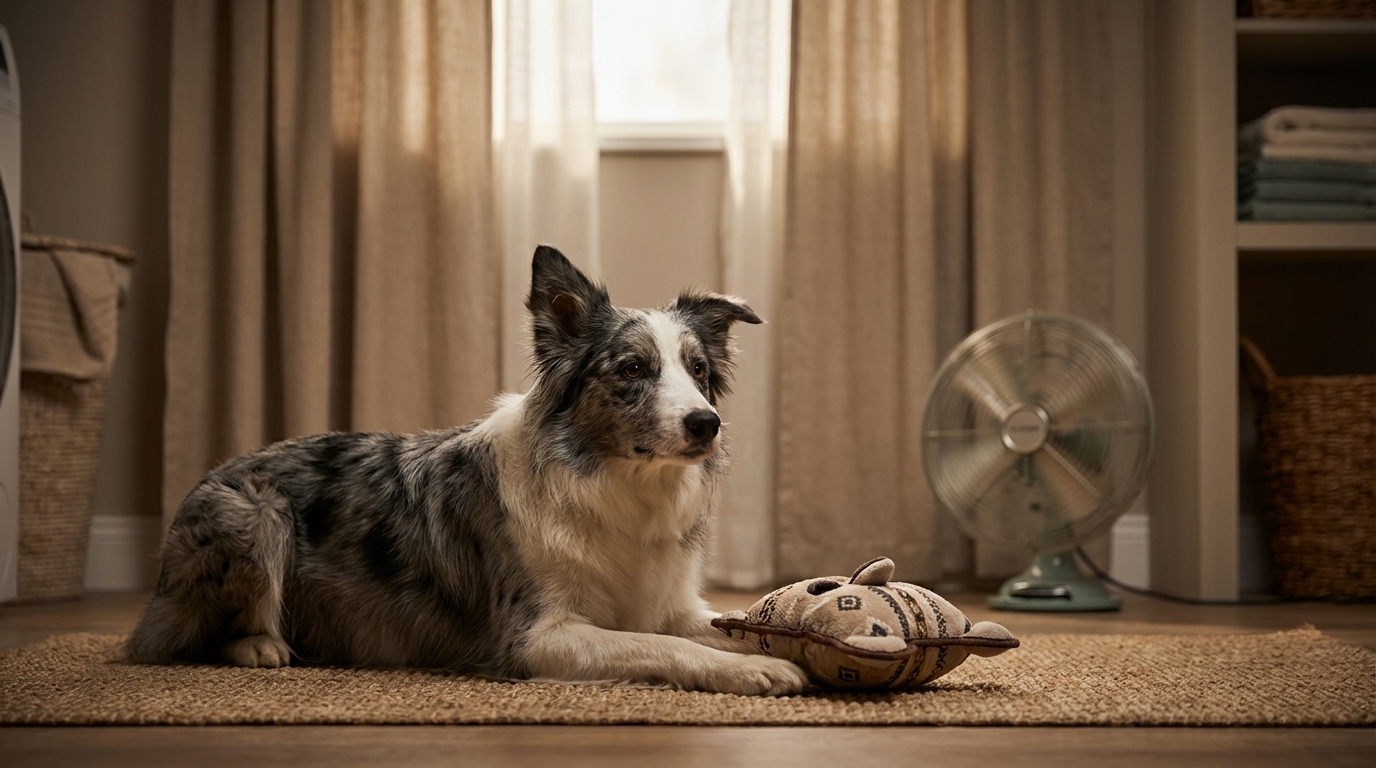
Pick an interior room (laundry, hallway, or bathroom) that’s naturally muffled. Add soft bedding, a covered crate if your dog likes it, and something that smells like you (an unwashed tee works well). Close curtains to reduce flashes and use a fan or air purifier for steady background sound.
- Sound buffering: rugs, towels along door gaps, closed windows
- Lighting: warm lamp instead of bright overheads
- Safety: remove access to balconies, dog doors, and escape points
Quick tip: If storms are forecast (common in many Aussie summers), set up the safe zone earlier in the day and encourage your dog to nap there with a chew before any noise starts.
Calming tools that support noise phobias
For calming a dog with noise phobia, the goal is to lower arousal and add predictable comfort cues. Tools work best when introduced on calm days first, so they become familiar rather than “a sign something scary is coming”.
Pheromone support can be a helpful, low-fuss option for many households. Consider a plug-in diffuser for the room your dog uses most, or a spray for bedding and carriers. You can explore options in our Adaptil range and start using them ahead of storm season or known fireworks periods.
Comfort wraps and snug layers help some dogs feel more secure. Fit is important: snug but not restrictive, and always supervised at first. If your dog freezes or struggles to move, remove it and try a different approach.
Enrichment chews and calming routines give your dog something safe to focus on. Long-lasting chews, lick mats, or stuffed toys can keep them occupied, especially when paired with the safe zone. Choose options that suit your dog’s chewing style and always supervise if they tend to gulp.
- Background audio: steady “brown noise” or a calm playlist to mask booms
- Routine cues: a specific mat, blanket, or bedtime ritual used only for quiet time
- Home setup: secure collars/harnesses; microchip details up to date in case of bolting
What to do during storms or fireworks
When the noise starts, focus on reducing intensity and helping your dog feel protected. Bring them to their safe zone, close up the house, and turn on the pre-chosen background sound. Stay calm and predictable—your dog is reading your body language closely.
If your dog seeks contact, you can offer gentle reassurance and slow pats, especially on the chest or shoulders. If they prefer space, let them hide safely and avoid dragging them out. For many families dealing with fireworks anxiety in dogs, the biggest wins come from consistency: same room, same sound masking, same calming activities each time.
- Do: keep them indoors, offer water, use leashed toilet breaks only if needed
- Do: give a chew/lick activity early (before peak panic), if your dog will take it
- Don’t: punish barking or trembling—fear behaviours aren’t “naughty”
- Don’t: open the front door during peak booms; block access to gates
Build a long-term plan for noise sensitivity
Lasting improvement usually comes from gradual desensitisation and changing the emotional response to sound. Start with low-volume recordings (thunder or fireworks) while your dog is relaxed and engaged in something enjoyable, then slowly increase volume over sessions. Keep sessions short and stop while your dog is still comfortable.
Also build “calm skills” into everyday life: mat training, settle cues, and rewarding relaxed body language. These foundations make your in-the-moment strategy more effective when a real storm hits. If your dog’s fear is severe, persistent, or escalating, a qualified trainer can tailor a plan to your dog and home environment.
- Timing: practise in the off-season, not during a noisy week
- Progress: tiny steps—if your dog stops eating, the sound is too loud
- Consistency: repeat the same safe-zone routine for every event
Frequently Asked Questions
Should I cuddle my dog during thunder or fireworks?
If your dog comes to you for comfort, calm reassurance is fine and often helpful. Aim for slow, steady attention rather than frantic soothing, and let your dog choose whether they want closeness or space.
Why is my dog worse with fireworks than storms?
Fireworks are typically more unpredictable—random bangs, whistles, and flashes—so dogs can’t “track” the pattern. That unpredictability can heighten startle responses and make anxiety build faster than with a steady storm.
How early should I start preparing for storm season?
Ideally, start a few weeks before periods you expect noise (summer storm season or known fireworks dates). Introducing the safe zone and calming tools early helps them become normal parts of your dog’s routine rather than a warning sign.
For extra support, explore our Adaptil calming options and start your storm-and-fireworks kit before the next weather change. If your dog’s distress is intense or they’re trying to escape, chat to your vet for personalised guidance.