

If you share your home with a dog, you share it with loose fur — on the couch, in your car, and woven into every piece of clothing you own. Understanding why dogs shed, which breeds shed most, and how to manage all that hair can make life easier for both you and your pet. Consider this your complete dog coat care guide to tackling shedding at the source.
Why Dogs Shed (and When It Gets Worse)
Shedding is a natural process. Dogs lose old or damaged hair to make room for new growth, regulate body temperature, and keep their coat healthy. The amount of fur your dog drops depends on breed, coat type, age, and overall health.
Certain triggers can increase shedding beyond the norm. Stress, poor nutrition, hormonal changes, allergies, and parasites like fleas can all cause a dog to lose more hair than usual. Even a change of environment — such as moving house — can temporarily ramp up hair loss.
Shedding by Breed: Heavy, Moderate, and Low
Not all dogs shed equally. Knowing where your breed falls on the shedding spectrum helps you choose the right grooming routine and products.
Heavy shedders: Double-coated breeds like German Shepherds, Huskies, Golden Retrievers, Labrador Retrievers, and Border Collies are notorious for blanketing your home in fur. They have a dense undercoat that sheds in large volumes, particularly during seasonal coat changes.
Moderate shedders: Breeds such as Beagles, Bulldogs, Dalmatians, and Australian Cattle Dogs shed consistently but in smaller quantities. Regular brushing keeps things manageable.
Low shedders: Poodles, Maltese, Schnauzers, and Portuguese Water Dogs shed very little. They still need grooming — their coats can mat easily — but you won't find tumbleweeds of fur under the couch.
If you're considering a lower-shedding breed, keep in mind that "hypoallergenic" doesn't mean "no shedding" — it simply means less dander is released.
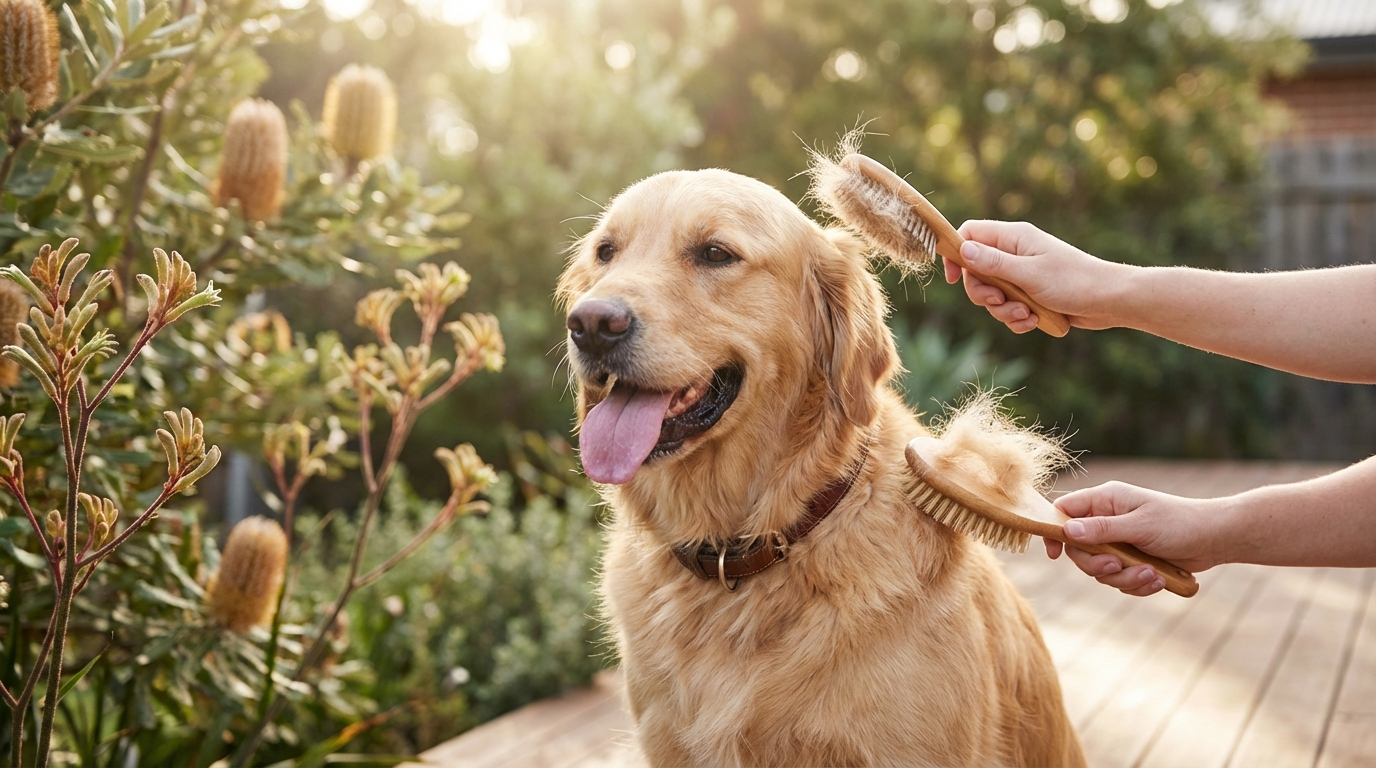
Seasonal Shedding in the Australian Climate
In Australia, seasonal shedding tends to peak twice a year. Most double-coated dogs blow their undercoat in spring (September–November) and again in autumn (March–May). However, dogs that live primarily indoors with air conditioning and artificial lighting may shed more consistently year-round instead of in dramatic seasonal bursts.
Climate varies widely across the country, and that affects coat behaviour. The table below summarises what to expect in different regions.
| Region | Climate | Shedding Pattern | Key Tip |
|---|---|---|---|
| QLD, NT, northern NSW | Tropical / subtropical — warm and humid year-round | Lighter coat overall; shedding can be continuous, often heavier as wet-season humidity builds from October | Prioritise regular brushing and parasite prevention, as fleas thrive in humidity |
| VIC, TAS, southern SA | Temperate — distinct seasons with cold winters | Pronounced spring blow (mid-Sep onward, lasting 6–8 weeks); noticeable autumn shed as winter coat grows in | Switch to daily brushing during spring and autumn coat blows |
| Inland and arid areas (western NSW, central Australia) | Dry with low humidity | Moderate shedding compounded by dry, flaky skin | Supplement with omega fatty acids and ensure constant access to fresh water |
Spring coat blow tip for double-coated breeds: During the peak spring shed (September–November), switch to daily brushing with an undercoat rake or de-shedding tool designed for thick double coats. Follow up with a de-shedding shampoo and conditioner at bath time to help release the loose undercoat more efficiently. Browse our grooming tools and de-shedding products to find the right match for your dog's coat type.
Practical Tips to Reduce Dog Shedding
You can't stop shedding entirely, but you can reduce the amount of loose fur that ends up on your furniture. Here are proven strategies for keeping your dog's coat in top shape.
Brush regularly. This is the single most effective thing you can do. For heavy shedders, brush every day or every second day. For moderate shedders, two to three times a week is usually enough. Use a slicker brush or de-shedding tool suited to your dog's coat type — you'll find a solid range of dog brushes, shampoos, and grooming tools to match different coats and needs.
Bathe on a schedule. Regular baths (every four to six weeks for most breeds) help loosen dead fur and wash away dander. Use a gentle, soap-free dog shampoo to avoid stripping natural oils from the skin.
Feed a quality diet. Nutrition plays a huge role in coat health. Diets rich in omega-3 and omega-6 fatty acids support a strong, shiny coat and can noticeably reduce excess shedding. Look for high-quality food or targeted skin and coat health supplements designed for dogs.
Keep hydrated. Dehydrated skin is flaky skin, and flaky skin sheds more. Make sure fresh water is always available, especially during hot Australian summers.
Manage parasites. Fleas, ticks, and mites irritate the skin and cause scratching, which accelerates hair loss. Stay on top of parasite prevention year-round — particularly important in Australia's warmer regions where fleas and paralysis ticks are active for much of the year.
Reduce stress. Dogs that are anxious, bored, or under-exercised may shed more. Regular walks, mental enrichment, and a calm home environment all contribute to a healthier coat.
When Shedding Signals a Health Problem
Normal shedding is even and gradual. But if you notice bald patches, red or inflamed skin, excessive scratching, or a sudden increase in hair loss, something else may be going on.
Common culprits include allergies (environmental or food-related), fungal infections, thyroid imbalances, and contact dermatitis. Persistent dandruff or a dull, brittle coat can also indicate nutritional deficiencies.
⚠️ See your vet promptly if you notice: large bald patches appearing quickly, broken or bleeding skin from scratching, open sores or a foul odour from the coat, lethargy or appetite loss alongside increased shedding, or excessive hair loss after starting a new medication. These signs may point to an infection, hormonal disorder, or allergic reaction that needs professional diagnosis and treatment.
If your dog's shedding seems abnormal or is accompanied by other symptoms, a vet check is the best next step to rule out underlying health issues.
Frequently Asked Questions
How often should I brush my dog to reduce shedding?
For heavy shedders, daily brushing is ideal — especially during spring and autumn coat blows. Moderate shedders benefit from two to three sessions a week. Even low-shedding breeds should be brushed weekly to prevent matting and distribute natural oils.
Does shaving my dog reduce shedding?
Shaving a double-coated breed is generally not recommended. The undercoat acts as insulation against both heat and cold. Shaving can damage the coat's texture permanently and may actually worsen shedding as the coat grows back unevenly.
Can diet really make a difference to how much my dog sheds?
Absolutely. A balanced diet rich in essential fatty acids, biotin, and zinc supports healthy skin and a strong coat. Dogs on poor-quality food often shed more and have dull, dry fur. Switching to a premium diet or adding a coat-care supplement can produce visible results within a few weeks.
Is year-round shedding normal?
It can be. Dogs that spend most of their time indoors under artificial lighting and climate control often lose the strong seasonal shedding cycle and instead drop fur steadily throughout the year. This is common in Australia, where many dogs live inside. As long as the coat looks healthy and there are no bald patches or skin irritation, consistent low-level shedding is usually nothing to worry about.
What's the best brush for a Labrador?
Labradors have a short, dense double coat. A rubber curry brush works well for everyday sessions — it loosens dead fur and stimulates the skin. During heavy shedding periods, pair it with an undercoat rake or a stainless-steel de-shedding comb to remove the thick undercoat more effectively.
Ready to get your dog's shedding under control? Browse our full range of grooming tools and shampoos to find the right products for your dog's coat type and start seeing less fur around the house.