

Bringing home a new kitten is one of the most exciting moments for any pet lover — but a little preparation goes a long way. Having a checklist of kitten essentials ready before arrival day means less stress for you and a smoother transition for your tiny new housemate. Whether you're a first-time cat owner or adding to your fur family, here's everything you need to know about preparing for a kitten.
Feeding Essentials for Growing Kittens
Nutrition is the foundation of a healthy start. Kittens have different dietary needs to adult cats — they require higher levels of protein, fat, and specific nutrients like taurine and DHA to support rapid growth and brain development.
Choose a high-quality wet or dry food that's specifically formulated for kittens. Look for Australian-made options where possible, and always check that the product meets AAFCO nutritional standards for growth. Browse our full range of kitten food and treats to find age-appropriate meals your little one will love.
You'll also need a shallow food bowl and a separate water dish. Kittens have small mouths, so flat or saucer-style bowls are ideal. Stainless steel or ceramic options are easy to clean and more hygienic than plastic. Place food and water away from the litter tray — cats are naturally fussy about this separation.
Feed kittens under six months three to four small meals per day, then gradually reduce to twice daily as they approach twelve months.
Comfort, Warmth, and Sleep Setup
Kittens sleep up to 20 hours a day, so a cosy, quiet sleeping spot is essential. A soft bed with raised sides gives them a sense of security, especially during those first few nervous nights away from their littermates.
Place the bed in a warm, draught-free area of your home. During cooler Australian months — particularly in southern states like Victoria and Tasmania — a self-warming pet mat can make a real difference. Avoid placing beds near noisy appliances or high-traffic areas.
A small blanket or towel from the breeder or rescue organisation, carrying the scent of their mother or siblings, can help ease the transition. If you don't have one, an old t-shirt you've worn works surprisingly well as a comforting scent substitute.
Quick tip: Set up a dedicated "kitten room" for the first few days. A single room with food, water, litter, and a bed lets your kitten adjust at their own pace before exploring the rest of the house.
Litter and Hygiene Must-Haves
A litter tray is non-negotiable from day one. For kittens, choose a tray with low sides so they can climb in and out easily. Covered trays may feel too enclosed for a young cat still learning the ropes, so an open style is usually the better starting point.
Opt for a soft, unscented, clumping litter. Some kittens are sensitive to heavily fragranced varieties, and strong scents can actually deter them from using the tray. Scoop daily and do a full litter change at least once a week to keep things fresh.
If you have a multi-storey home, consider placing a tray on each level. The general rule is one tray per cat, plus one extra. Even with a single kitten, having a backup tray reduces the chance of accidents.
Add a small pet-safe cleaning spray to your new kitten list for inevitable mishaps on furniture or flooring. Enzyme-based cleaners are the most effective at neutralising odours.
Safety and Kitten-Proofing Your Home
Kittens are curious, fearless, and astonishingly small — a combination that leads to mischief. Before your kitten arrives, walk through each room at ground level and identify potential hazards.
Secure loose electrical cords with cable tidies or cord covers. Kittens love to chew, and exposed wiring is a serious risk. Store cleaning products, medications, and small objects like hair ties or rubber bands well out of reach.
Check that your houseplants are non-toxic. Common Australian garden favourites like lilies are extremely dangerous to cats — even small amounts can cause kidney failure. The RSPCA maintains a helpful list of toxic plants worth reviewing.
If you have a balcony or open windows, install secure mesh or cat-proof screens. Falls from heights are a common emergency, particularly in apartment living. Also ensure your washing machine and dryer doors stay closed — warm, dark spaces are irresistible to kittens.
Stock up on all the kitten supplies you'll need before bringing your new arrival home, so you're not scrambling on day one.
Play, Enrichment, and Early Socialisation
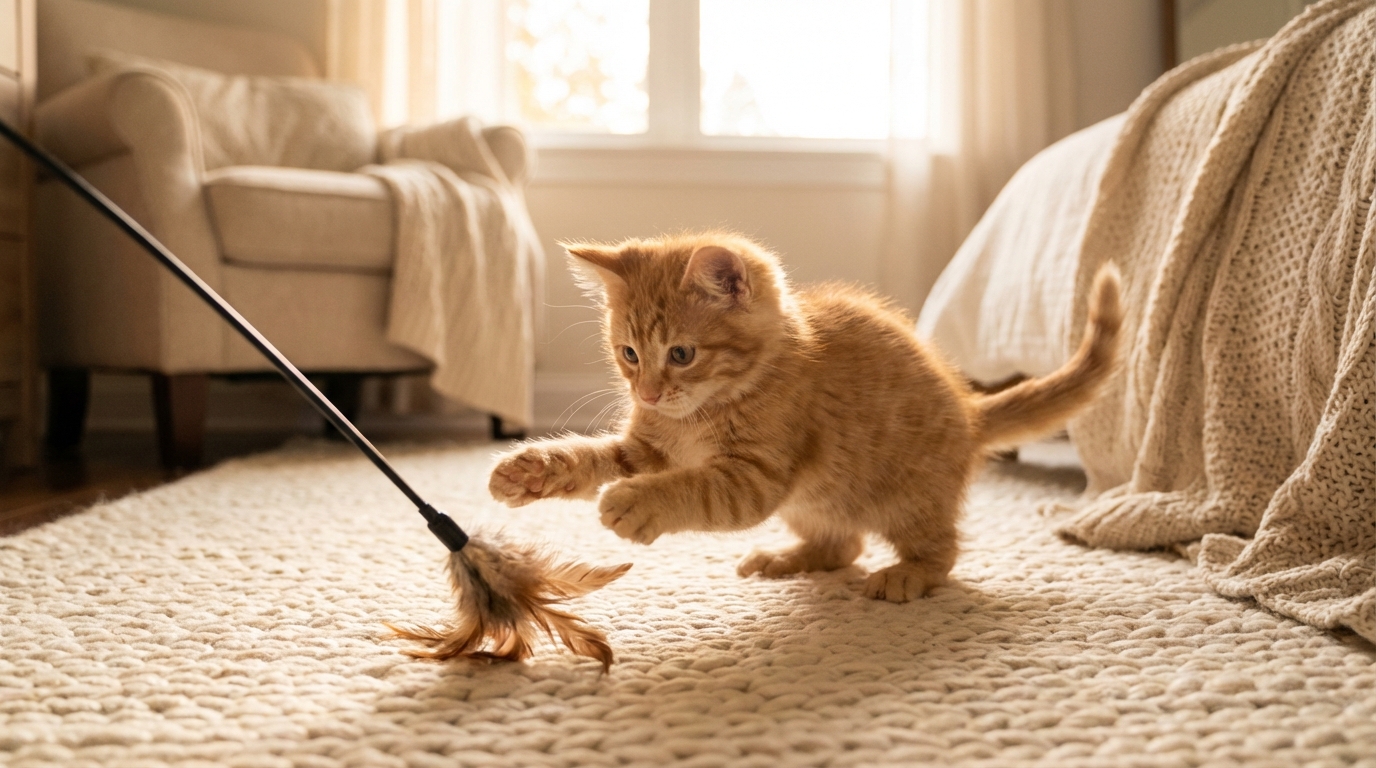
Play isn't just fun — it's essential for your kitten's physical and behavioural development. Interactive toys like feather wands, crinkle balls, and small plush mice encourage natural hunting instincts and help burn off that boundless kitten energy.
Rotate toys every few days to maintain interest. Kittens get bored quickly, and a "new" toy that reappears after a week's absence is just as exciting as one fresh out of the packet.
A sturdy scratching post is another essential item on any kitten list. Scratching is a natural behaviour that helps kittens stretch their muscles, maintain their claws, and mark territory. Provide a post from the very beginning to save your furniture from becoming the preferred scratching surface.
Socialisation between two and seven weeks is critical, but the learning continues well into their first year. Gently expose your kitten to different sounds, textures, people, and experiences. Handle their paws, ears, and mouth regularly so they become comfortable with grooming and future health checks.
If you have other pets, introduce them slowly and under supervision. Use scent swapping — exchanging bedding between animals — before any face-to-face meetings. Patience during this phase pays off with harmonious long-term relationships.
Frequently Asked Questions
What age should a kitten be before coming home?
Kittens should stay with their mother and littermates until at least eight weeks of age, though many breeders and rescue organisations recommend ten to twelve weeks. This extra time supports healthy socialisation and weaning.
How do I help my kitten settle in on the first night?
Keep your kitten in their designated room with food, water, litter, and a warm bed. A ticking clock wrapped in a towel can mimic a heartbeat and provide comfort. Avoid the temptation to let them roam the entire house — smaller spaces feel safer to a nervous kitten.
When should I start grooming my kitten?
Start gentle brushing from the first week at home, even if their coat doesn't need it yet. Short, positive sessions help your kitten become accustomed to being handled. This makes grooming far easier as they grow, especially for longer-haired breeds.
Ready to tick every item off your kitten essentials list? Explore our full range of kitten supplies at Pacific Pet Supplies and give your new arrival the best possible start. If you have specific health concerns, have a quick chat with your vet before bringing your kitten home.