

Most cats are meticulous self-groomers, but there are times when they need a helping hand. Whether your feline has rolled in something unpleasant or their coat is looking dull and matted, knowing how to bathe a cat safely makes the whole experience less stressful — for both of you. This grooming guide covers everything you need to keep your cat clean, comfortable, and looking their best.
When Does Your Cat Actually Need a Bath?
Cats spend a significant chunk of their day grooming themselves, so full baths aren't usually necessary on a regular schedule. However, certain situations call for a proper wash.
If your cat has gotten into something sticky, greasy, or smelly — a common occurrence for adventurous outdoor cats during warm Australian summers — a bath is the safest way to remove the substance. Cats with longer coats, older cats who struggle with self-grooming, and those with skin conditions may also benefit from occasional bathing.
Hairless breeds like the Sphynx are a special case. Without fur to absorb natural oils, they can develop a greasy buildup on their skin and typically need bathing every one to two weeks.
Preparing for Bath Time
Success starts well before the water runs. Gather everything you need in advance so you're not scrambling mid-bath with a wet, unhappy cat.
Here's your checklist:
- A cat-specific shampoo (never use human products — the pH is wrong for feline skin)
- Two towels — one for the base of the sink or tub, one for drying
- A small jug or handheld sprayer for rinsing
- A non-slip mat or folded towel in the basin
- Cotton balls to gently protect ears from water
- Treats for positive reinforcement
Browse our range of cat shampoos, brushes, and clippers to find gentle formulas designed specifically for feline skin and coats. Using the right products makes a genuine difference to how your cat tolerates the process.
Trim your cat's claws a day or two before the bath. This won't stop them from wriggling, but it will protect your arms from scratches if they panic.
Step-by-Step Cat Bathing Tips
Choose a quiet room with a door you can close — the laundry or bathroom works well. A sink is often easier to manage than a full bathtub, as it keeps your cat at a comfortable height and feels less overwhelming for them.
1. Fill with warm water first. Run a few centimetres of lukewarm water into the sink before bringing your cat in. The sound of running water can be a major stress trigger, so minimise it wherever possible.
2. Lower your cat in gently. Support their chest with one hand and ease them into the water. Speak calmly and move slowly. If your cat is extremely anxious, enlist a helper to hold them steady.
3. Wet the coat gradually. Use a jug or low-pressure sprayer to wet your cat from the shoulders down. Avoid the head and ears entirely at this stage.
4. Apply shampoo. Work a small amount of cat-specific shampoo through the coat using gentle, massaging motions. Focus on areas that tend to get oily — the base of the tail, the chin, and behind the ears.
5. Rinse thoroughly. Residual shampoo can irritate skin and cause flaking, so rinse until the water runs completely clear. This is the most important step.
6. Clean the face separately. Use a damp washcloth to gently wipe your cat's face. Never pour or spray water directly over their head.
Quick tip: Keep the entire bath under ten minutes. Short, efficient sessions are far less stressful than drawn-out ones, and your cat will be more cooperative next time if the experience isn't prolonged.
7. Dry promptly. Wrap your cat in a warm, dry towel immediately. Most cats dislike hairdryers, but if yours tolerates one, use the lowest heat and speed setting, held well away from their skin. In cooler months — particularly during a chilly Melbourne or Hobart winter — make sure the room is warm and draught-free while your cat dries off.
Grooming Beyond the Bath
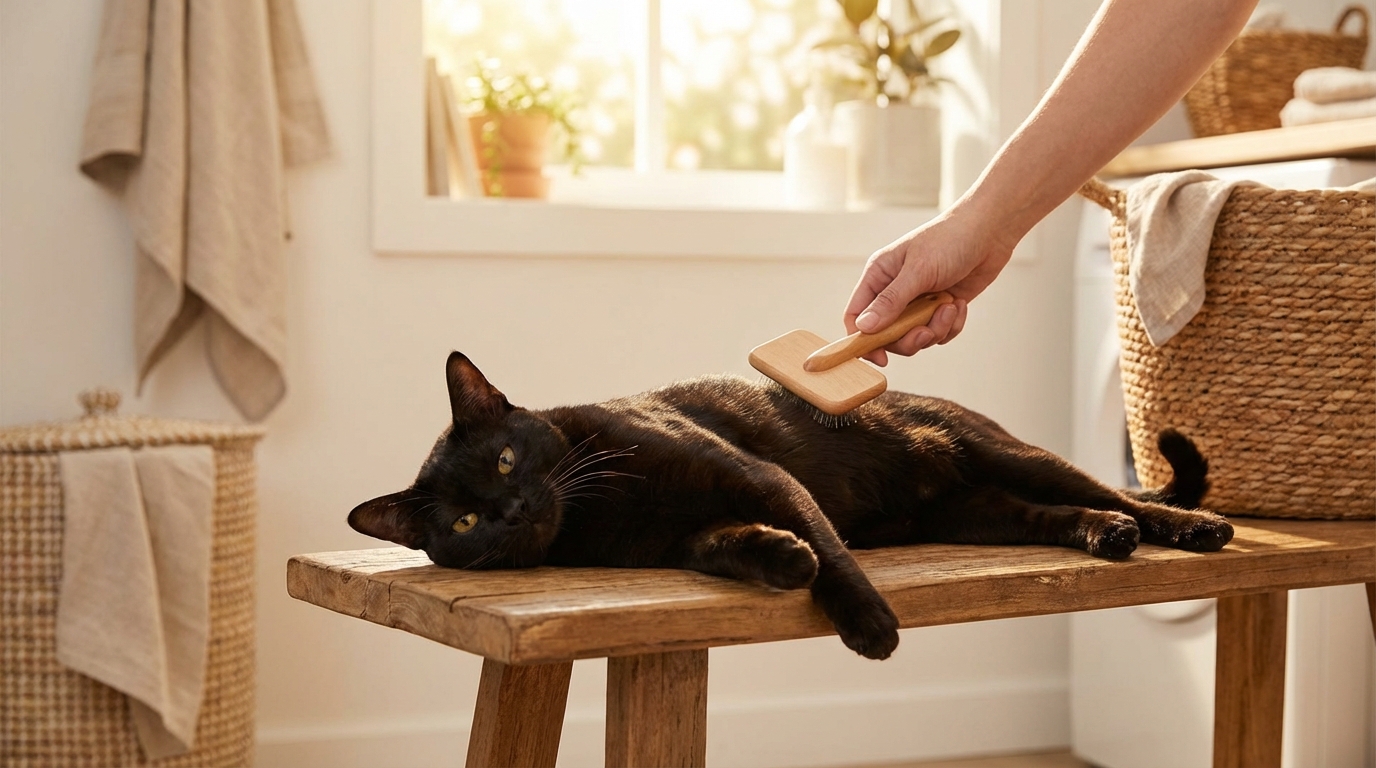
Bathing is only one piece of a complete cat grooming routine. Regular brushing is arguably more important for most cats and should happen far more frequently than baths.
Short-haired cats benefit from a weekly brush to remove loose fur and distribute natural oils. Long-haired breeds like Persians and Ragdolls need brushing every day or two to prevent mats from forming, especially during seasonal coat changes in spring and autumn.
A good grooming session also includes checking your cat's ears for wax buildup, inspecting their teeth and gums, and monitoring claw length. These quick checks help you spot potential issues early.
You'll find everything you need for a thorough grooming routine in our cat supplies collection, from slicker brushes and deshedding tools to ear cleaners and nail trimmers.
Common Mistakes to Avoid
Using human shampoo or dish soap. These strip natural oils and can cause dryness, irritation, and allergic reactions. Always choose a formula made for cats.
Bathing too often. Over-bathing disrupts the skin's natural oil balance. Unless directed otherwise for a specific skin condition, most cats only need a bath every few months at most — or simply when they get dirty.
Forcing a terrified cat. If your cat is thrashing, hissing, or showing signs of extreme distress, stop. A stressed cat can injure you or themselves. Try again another day, or consider waterless shampoo sprays as a gentler alternative.
Skipping the rinse. Leftover shampoo residue is one of the most common causes of post-bath skin irritation. When you think you've rinsed enough, rinse once more.
Frequently Asked Questions
How often should I bathe my cat?
Most healthy cats rarely need a full bath — once every few months is plenty, or only when they get visibly dirty. Hairless breeds are the exception and may need fortnightly baths. Over-bathing can dry out the skin and strip essential oils from the coat.
Can I use baby shampoo on my cat?
It's best to avoid it. While baby shampoo is milder than regular human shampoo, it's still formulated for human skin pH levels. Cat-specific shampoos are designed to match feline skin chemistry and are a much safer choice.
My cat absolutely hates water — what are my options?
Waterless cat shampoos and grooming wipes are excellent alternatives for cats who simply won't tolerate a bath. These products let you clean the coat without submerging your cat in water. For heavily soiled coats that truly need washing, a professional groomer experienced with cats can help.
With the right preparation and a calm approach, grooming your cat at home doesn't have to be a battle. Stock up on quality grooming essentials from Pacific Pet Supplies and, if your cat has any underlying skin concerns, have a quick chat to your vet before introducing new products into their routine.