


Want to brush your dog’s teeth without turning it into a daily struggle? With the right tools and a calm routine, most dogs can learn to accept (and even enjoy) toothbrushing.
If you’re new to brushing your dog’s teeth, this guide walks you through the easiest way to start, what to use, how often to do it, and when to check in with your vet. It’s simple, practical dog dental hygiene for real households—whether you’re in a humid coastal summer or dealing with dry winter air inland.
Why brushing matters for dog dental hygiene
Plaque builds up fast on dog teeth, especially along the gumline. If it’s not removed, it can harden into tartar that’s harder to shift and may contribute to sore gums and unpleasant breath.
Regular brushing is one of the most effective at-home habits to support a healthier mouth. It’s also a practical way to spot changes early, like redness, sensitivity, or chips—so you can act before small problems become bigger ones.
- Fresher breath: less plaque sitting on teeth.
- Happier eating: fewer tender spots around gums.
- Better routine care: you’ll notice changes sooner.
What you need before you start
Getting set up properly makes toothbrushing quicker and calmer. Aim for a quiet spot, good lighting, and a time when your dog is naturally relaxed (after a walk or dinner is often easier).
- Dog-specific toothbrush: a small head is easier to manoeuvre. A finger brush can suit beginners and smaller mouths.
- Dog toothpaste: choose a pet-safe formula designed to be swallowed in small amounts (never use human toothpaste).
- High-value reward: something your dog loves, saved just for brushing time.
- Towel (optional): handy for drool, especially in humid Aussie summers.
If you’re shopping for the basics, start with the right tools from our Dental Care range. Pairing a comfortable brush with a tasty pet toothpaste can make it much easier to build the habit.
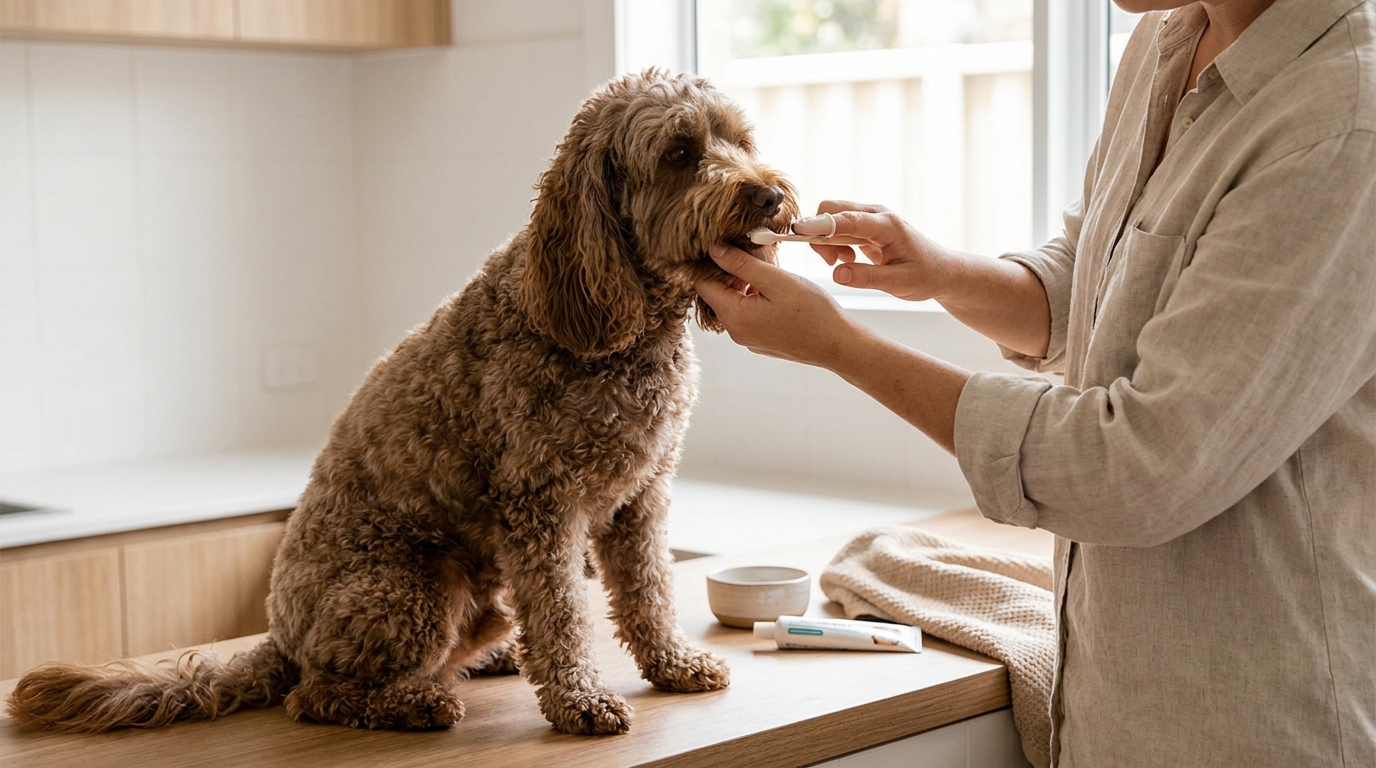
How to brush: a simple dog toothbrush guide
This routine is designed to help you brush your dog’s teeth with minimal fuss. Go slowly and keep sessions short at first—think 30 seconds, not five minutes.
-
Step 1: Let them taste the toothpaste
Put a small amount on your finger and let your dog lick it. This builds a positive association before you introduce the brush.
-
Step 2: Touch and lift the lips
Gently lift your dog’s lip for one second, then reward. Repeat a few times so handling around the mouth becomes normal.
-
Step 3: Start with the outside surfaces
Most plaque sits on the cheek-side of the teeth. Angle the bristles at about 45 degrees to the gumline and use small circles on the back molars first.
-
Step 4: Keep it light and brief
Use gentle pressure—scrubbing hard can irritate gums. Aim for a few seconds per side and stop while it’s still going well.
-
Step 5: Gradually add more teeth
Over a week or two, extend to the canines and front teeth. Many dogs don’t love the front at first, so build up slowly.
-
Step 6: Reward and finish
End with praise and a reward. Consistency matters more than perfection, especially while your dog is learning.
Quick tip: If your dog pulls away, don’t chase their mouth with the brush. Pause, reward calm behaviour, and restart with just one or two teeth so the session ends on a win.
For dogs who resist a standard brush, a finger brush can be a gentler stepping stone. Once your dog is comfortable, switching to a bristled brush often improves plaque removal on the tooth surface.
Best dog toothpaste and toothbrush basics
The “best” options are the ones your dog will accept consistently. A flashier brush won’t help if your dog won’t let it near their mouth.
- Toothbrush shape: A small head helps you reach back molars. Softer bristles are usually more comfortable for sensitive mouths.
- Finger brush vs standard brush: Finger brushes can feel less intimidating when you’re starting out. Standard brushes can make it easier to reach along the gumline once your dog is ready.
- Toothpaste choice: Pick a dog toothpaste your pet enjoys the taste of—acceptance is the biggest win. Always use pet-safe toothpaste (human products can be unsuitable for dogs).
If you’re unsure what to start with, browse our Dental Care range and choose a simple brush plus dog toothpaste. Once brushing is established, you can decide whether your dog benefits from extra oral care add-ons.
How often to brush and what to look for
For best results, brush daily. If that’s not realistic, aim for at least 3–4 times a week—doing something consistently beats doing a “perfect” session once in a while.
While you’re brushing, keep an eye out for signs that your dog’s mouth needs extra attention:
- Bad breath that returns quickly after brushing
- Red, puffy, or sore-looking gums, especially along the gumline
- Yellow-brown tartar on molars and canines
- Pawing at the mouth, dropping food, or reluctance to chew
- Bleeding gums (a tiny smear when you first start can happen if gums are already irritated, but ongoing bleeding isn’t normal)
- Loose or missing teeth, swelling, or obvious pain when touched
Veterinary safety note: If you notice persistent bad breath, heavy tartar, ongoing bleeding, loose teeth, swelling, or your dog seems painful, book a veterinary dental check. Some dogs need a professional clean and assessment before home brushing is comfortable or effective.
To support your routine, consider adding dental-friendly chews or oral care add-ons from our Dental Care category. These can complement brushing, especially for dogs prone to build-up.
Troubleshooting: make it easier for you and your dog
Some dogs take to toothbrushing quickly; others need a slower approach. Use these fixes to keep dog dental hygiene on track without stressing your dog (or you).
- My dog won’t let me near their mouth: Break it down. Spend a few days rewarding lip lifts and gentle cheek rubs before introducing toothpaste or a brush.
- They chew the toothbrush: That’s common. Let them “hold” the brush for a second, then redirect to short circular strokes, rewarding calm stillness.
- They hate the toothpaste flavour: Try a different dog-safe flavour and reintroduce it by letting them lick it first.
- I can’t reach the back teeth: Focus on the outer surfaces and back molars first—they’re high-impact areas. Better to do a few key teeth well than struggle for every tooth.
- My dog is anxious: Brush after exercise, keep the environment quiet, and keep sessions short. Calm repetition builds acceptance.
Mistakes to avoid
- Rushing the first week: If your dog is stressed, go back a step and build confidence again.
- Using human toothpaste: Stick with dog toothpaste designed to be safe when swallowed.
- Scrubbing hard: Firm pressure isn’t needed and can irritate gums.
- Trying to brush every tooth straight away: Prioritise the outside surfaces—especially back molars—then expand gradually.
- Only brushing when you remember: Link it to a daily routine (after dinner, after the evening walk) so it becomes automatic.
If you’re working with a puppy, start early with gentle handling and tiny sessions. Building the habit before adult teeth fully settle can make lifelong care much easier.
Frequently Asked Questions
Can I use human toothpaste to brush my dog’s teeth?
No. Human toothpaste can contain ingredients that aren’t suitable for dogs. Use a toothpaste made for dogs, designed to be safe if swallowed in small amounts.
What if my dog’s gums bleed when I start brushing?
A small amount of bleeding can happen if gums are already irritated and you’re starting a new routine. However, if bleeding persists, worsens, or your dog seems sore, stop brushing and book a veterinary dental check to rule out significant gum disease, fractures, or other issues.
Are dental chews enough on their own?
Dental chews can help reduce build-up for some dogs, but they work best as a support tool rather than a complete replacement. Brushing remains the most direct way to remove plaque from the tooth surface, especially along the gumline.
Ready to upgrade your routine? Explore our Dental Care essentials to find brushes, toothpastes, and add-ons that suit your dog—then chat to your vet if you’re unsure what’s best for your pet’s mouth.