


Choosing the best puppy food early sets your pup up for steady growth, comfortable digestion, and strong immune support. With so many formulas and feeding styles, it’s easy to feel unsure about what belongs in a growing dog’s bowl. This practical guide breaks down what puppies need, how to read labels, and how to build a routine that works in real life—whether you’re raising a beach-loving Labrador in Queensland humidity or a tiny terrier in a Melbourne winter.
What puppies need from their food
Puppies aren’t just small dogs. They grow rapidly, so they need more energy per kilogram, plus the right building blocks for bones, muscles, organs, skin and brain development.
In most homes, a high-quality puppy diet is one that’s complete and balanced for growth, with appropriate protein and fat, plus a controlled balance of minerals (especially calcium and phosphorus) to support healthy skeletal development. DHA (an omega-3) is commonly included to support brain and eye development, while fibre and prebiotics can help keep stools firm and digestion settled.
- Protein: supports muscle growth and tissue repair.
- Healthy fats: provide energy plus skin and coat support.
- Calcium/phosphorus balance: important for growing bones and joints (especially in larger breeds).
- Digestive support: fibre, prebiotics and gentle ingredients can support stool quality.
Large-breed puppy note: if your puppy is expected to be a larger adult dog, controlled growth is the goal. Large-breed puppy foods are typically formulated with carefully managed calcium and mineral balance to support steady skeletal development. Avoid “more is better” thinking—extra calcium from powders or high-calcium add-ons can be a risk for growing joints when it isn’t medically indicated.
How to choose the right food for your puppy
The best puppy food for your home depends on your pup’s age, breed size, activity level and sensitivities. Start with a puppy-specific food, then narrow it down using these practical checkpoints.
- Life stage: choose a puppy formula (or “all life stages” only if it clearly states it’s suitable for growth).
- Breed size: small-breed puppies often do better with smaller kibble and higher energy density; large-breed puppies benefit from growth formulas designed to support controlled growth and joint development.
- Ingredient tolerance: if your puppy has itchy skin, excess gas, or persistently soft stools, consider simpler recipes and avoid rapid, frequent changes.
- Food format: dry, wet, fresh or a mix can all work—what matters is nutritional completeness and consistent feeding.
If you’re comparing options, browse puppy-suitable choices in our dog food and treats range and filter by life stage and size. Choosing a consistent, premium diet early can make toilet training and routine much easier because meal timing and stool quality are more predictable.
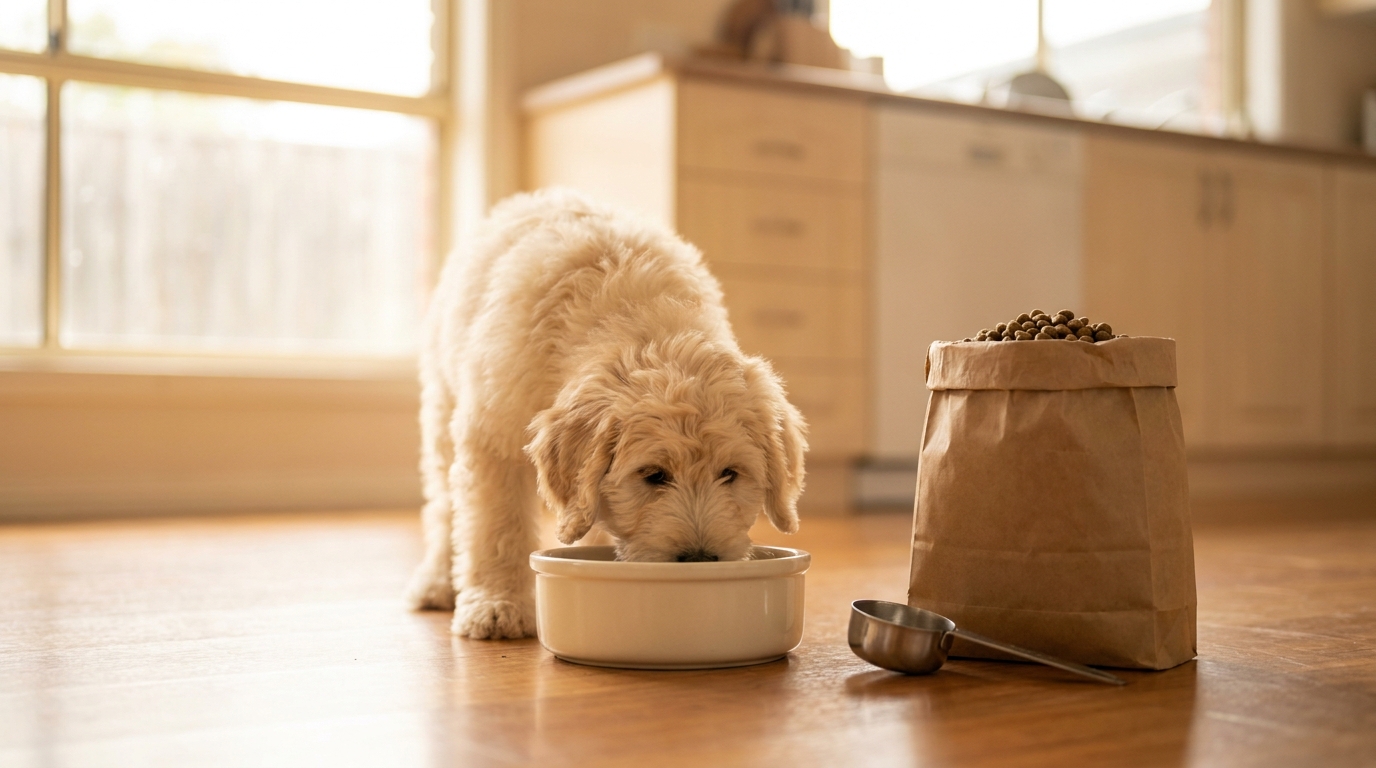
How to read the label: complete and balanced, and feeding guides
Two label areas do most of the heavy lifting when you’re choosing a food: the nutritional adequacy statement and the feeding guide.
“Complete and balanced” statements: look for wording that indicates the food is formulated to meet recognised standards for growth (often referenced via AAFCO or FEDIAF). This matters because “premium” marketing language isn’t the same as meeting a nutritional profile. A complete and balanced puppy food is designed to provide all essential nutrients in appropriate proportions for a growing dog when fed as directed.
How to use the feeding guide: feeding charts are starting points, not rules. They’re typically based on your puppy’s current weight and age (or expected adult size), with daily amounts that you’ll split into meals. To get the best results:
- Measure the daily total first, then divide by the number of meals (for example, three meals a day means one-third per meal).
- Adjust for body condition and growth trend: if your pup is gaining too quickly, reduce slightly; if they’re not maintaining a healthy condition, increase gradually.
- Account for treats and extras: training treats, chews and table scraps all count towards daily intake.
If you’re ever unsure, your vet can help you interpret the label in the context of your puppy’s breed, expected adult size, and growth pattern.
Feeding schedule, portions, and routine
A dependable routine is the backbone of any puppy feeding guide. Puppies thrive when meals happen at consistent times, with measured portions and fresh water available.
- 8–12 weeks: 4 meals per day to support small stomachs and steady energy.
- 3–6 months: 3 meals per day (many pups settle beautifully here).
- 6–12 months: 2 meals per day, depending on breed size and maturity.
Use the feeding chart on your chosen food as a baseline, then adjust based on body condition. You should be able to feel ribs with light pressure and see a defined waist from above. Keep in mind that Australian summers can reduce appetite (especially during heatwaves), while cooler months may increase food motivation—so assess your pup, not just the bowl.
Quick tip: Weigh your puppy weekly for the first few months and take quick photos from the side and above. Small, early adjustments to portions help prevent overfeeding before it becomes a habit.
For smoother day-to-day feeding, stock up on the basics like measuring scoops, slow feeders and age-appropriate bowls in our puppy supplies collection.
Changing foods safely (without tummy troubles)
Puppy digestion can be sensitive, so sudden changes often cause loose stools, gassiness or fussiness. If you need to change your puppy diet—whether due to growth stage, supply, or tolerance—transition slowly over 7–10 days.
- Days 1–3: 75% old food, 25% new food
- Days 4–6: 50% old food, 50% new food
- Days 7–9: 25% old food, 75% new food
- Day 10: 100% new food
If stools soften, pause at the current ratio for a couple of days before increasing again. Keep treats minimal during transitions so you can clearly see how your pup is responding to the new food.
Common puppy feeding mistakes to avoid
Most feeding issues come down to a handful of common habits. Avoiding these will help your puppy stay comfortable and make training easier.
- Free-feeding all day: it can make toilet training harder and can hide appetite changes.
- Too many treats: treats should be a small portion of daily intake; use tiny training treats and count them.
- Adult food too early: adult formulas may not provide the right nutrient balance for growth.
- Overfeeding “just in case”: extra weight stresses developing joints—particularly in large breeds.
- Constantly switching foods: frequent changes can upset digestion and encourage picky eating.
Safety check: foods to avoid. Some common household foods are unsafe for dogs, including grapes and raisins, onion and garlic, chocolate, and products sweetened with xylitol. If your puppy scavenges something concerning, contact your vet for advice promptly.
Supplements: if you’re feeding a complete and balanced puppy food, avoid adding extra calcium, fish oils (including DHA oils), vitamins, or mineral powders unless your vet specifically recommends it. Supplementing on top of a complete diet can unbalance nutrition—particularly for large-breed puppies where mineral balance matters.
Finally, remember that hydration matters. In hot Australian weather, some puppies drink less than you’d expect—add extra water bowls, and consider mixing in wet food if your pup needs encouragement (as long as total calories stay appropriate).
Frequently Asked Questions
How do I know if my puppy is eating the right amount?
Use the food’s feeding guide as a starting point, then adjust based on body condition and weekly weight trends. Consistently soft stools, rapid weight gain, or loss of a visible waist can signal that portions need tweaking.
Should I feed dry food, wet food, or a mix?
Any format can work if it’s complete and balanced for growth. Dry food is convenient and easy to measure, wet food can improve palatability and hydration, and a mix can suit fussy eaters—just measure total daily intake so calories don’t creep up.
How many treats per day is appropriate for a puppy?
Keep treats as a small part of your puppy’s daily intake and prioritise tiny, low-mess options for training. If you’re doing lots of training sessions, reduce the meal portion slightly to compensate, or use part of your puppy’s measured kibble as training rewards.
What if my puppy won’t eat?
First, check the basics: is your puppy otherwise bright and playful, drinking water, and passing normal stools? Heat, stress (such as moving homes), over-treating, and too many food changes can all reduce interest in meals. Stick to a consistent schedule, remove the bowl after a short window, and avoid creating a habit of constantly offering new toppers. If your puppy is very young, seems unwell, vomits, has diarrhoea, or misses multiple meals, contact your vet promptly.
When should I move from puppy food to adult food?
It depends on breed size: small breeds often mature sooner, while large breeds may need puppy-formulated nutrition for longer. Transition when your puppy is near adult size and your chosen food recommends the change for their size category.
Ready to build a better bowl from day one? Explore our premium dog food and treats and essentials in puppy supplies to set your pup up for success—then chat to your vet if you’re unsure about the best option for your puppy’s breed, growth rate, or appetite changes.